Notice: تابع WP_Block_Type_Registry::register به طورنادرست فراخوانی شد. نامهای نوع بلوک نباید حروف بزرگ داشته باشند. لطفاً برای اطلاعات بیشتر، اشکال زدایی در وردپرس را مشاهده کنید. (این پیام در نگارش 5.0.0 افزوده شده است.) in /home/ethicsho/public_html/wp-includes/functions.php on line 5313
Warning: Use of undefined constant TDC_PATH_LEGACY - assumed 'TDC_PATH_LEGACY' (this will throw an Error in a future version of PHP) in /home/ethicsho/public_html/wp-content/plugins/td-composer/td-composer.php on line 109
Warning: Use of undefined constant TDSP_THEME_PATH - assumed 'TDSP_THEME_PATH' (this will throw an Error in a future version of PHP) in /home/ethicsho/public_html/wp-content/plugins/td-composer/td-composer.php on line 113 بایگانیهای 1961 - خانه اخلاق پژوهان جوان Notice: Trying to access array offset on value of type bool in /home/ethicsho/public_html/wp-content/plugins/wp-ulike/inc/general-functions.php on line 807
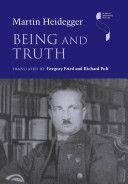
In these lectures, delivered in 1933–1934 while he was Rector of the University of Freiburg and an active supporter of the National Socialist regime, Martin Heidegger addresses the history of metaphysics and the notion of truth from Heraclitus to Hegel. First published in German in 2001, these two lecture courses offer a sustained encounter with Heidegger’s thinking during a period when he attempted to give expression to his highest ambitions for a philosophy engaged with politics and the world. While the lectures are strongly nationalistic and celebrate the revolutionary spirit of the time, they also attack theories of racial supremacy in an attempt to stake out a distinctively Heideggerian understanding of what it means to be a people. This careful and faithful translation offers valuable insight into Heidegger’s views on language, truth, animality, and life, as well as his political thought and activity.
Much of the intense current interest in collective memory concerns the politics of memory. In a book that asks, “Is there an ethics of memory?” Avishai Margalit addresses a separate, perhaps more pressing, set of concerns. The idea he pursues is that the past, connecting people to each other, makes possible the kinds of “thick” relations we can call truly ethical. Thick relations, he argues, are those that we have with family and friends, lovers and neighbors, our tribe and our nation–and they are all dependent on shared memories. But we also have “thin” relations with total strangers, people with whom we have nothing in common except our common humanity. A central idea of the ethics of memory is that when radical evil attacks our shared humanity, we ought as human beings to remember the victims. Margalit’s work offers a philosophy for our time, when, in the wake of overwhelming atrocities, memory can seem more crippling than liberating, a force more for revenge than for reconciliation. Morally powerful, deeply learned, and elegantly written, The Ethics of Memory draws on the resources of millennia of Western philosophy and religion to provide us with healing ideas that will engage all of us who care about the nature of our relations to others.
Art, Emotion, and Ethics is a systematic investigation of the relation of art to morality, a topic that has been of central and recurring interest to the philosophy of art since Plato. Berys Gaut explores the various positions that have been taken in this debate, and argues that an artwork is always aesthetically flawed insofar as it possesses a moral defect that is aesthetically relevant. Three main arguments are developed for this view; these involve showing how moral goodness is itself a kind of beauty, that artworks can teach us about morality and that this is often an aesthetic merit in them, and that our emotional responses to works of art are properly guided in part by moral considerations. Art, Emotion, and Ethics also contains detailed interpretations of a wide range of artworks, including Rembrandt’s Bathsheba and Nabokov’s Lolita, which show that ethical criticism can yield rich and plausible accounts of individual works. Gaut develops a new theory of the nature of aesthetic value, explores how art can teach us about the world and what we morally ought to do by guiding our imaginings, and argues that we can have genuine emotions towards people and events that we know are merely fictional. Characterised by its clarity and sustained argument, this book will be of interest to anyone who wants to understand the relation of art to morality.
Amos Tversky (1937–1996), a towering figure in cognitive and mathematical psychology, devoted his professional life to the study of similarity, judgment, and decision making. He had a unique ability to master the technicalities of normative ideals and then to intuit and demonstrate experimentally their systematic violation due to the vagaries and consequences of human information processing. He created new areas of study and helped transform disciplines as varied as economics, law, medicine, political science, philosophy, and statistics.This book collects forty of Tversky’s articles, selected by him in collaboration with the editor during the last months of Tversky’s life. It is divided into three sections: Similarity, Judgment, and Preferences. The Preferences section is subdivided into Probabilistic Models of Choice, Choice under Risk and Uncertainty, and Contingent Preferences. Included are several articles written with his frequent collaborator, Nobel Prize-winning economist Daniel Kahneman.
ما از اخلاق چه انتظاری داریم؟ این سوال شاید تاحدودی برای عموم مردم و یا متخصصان این رشته قابل پاسخ باشد؛ اینکه خوب بودن را به ما بیاموزد و در تنظیم روابط فردی م...

جشن کتاب تهران به ایستگاه سی و یکم رسیده است. حال و احوال نشر کتاب خوب نیست و باید فرهنگدوستان را به خرید و هدیه دادن کتاب ترغیب نمود. خانه اخلاقپژوهان جوان ب...

بنیاد کتابهای اخلاق اسلامی عمدتا پالایش جان از آلودگیها و آراستن آن به زیباییها است. اندیشه محوری این قبیل کتابها آن است که انسان فعلی آنی نیست که باید باشد...

-
0 Comments