Notice: تابع WP_Block_Type_Registry::register به طورنادرست فراخوانی شد. نامهای نوع بلوک نباید حروف بزرگ داشته باشند. لطفاً برای اطلاعات بیشتر، اشکال زدایی در وردپرس را مشاهده کنید. (این پیام در نگارش 5.0.0 افزوده شده است.) in /home/ethicsho/public_html/wp-includes/functions.php on line 5313
Warning: Use of undefined constant TDC_PATH_LEGACY - assumed 'TDC_PATH_LEGACY' (this will throw an Error in a future version of PHP) in /home/ethicsho/public_html/wp-content/plugins/td-composer/td-composer.php on line 109
Warning: Use of undefined constant TDSP_THEME_PATH - assumed 'TDSP_THEME_PATH' (this will throw an Error in a future version of PHP) in /home/ethicsho/public_html/wp-content/plugins/td-composer/td-composer.php on line 113 بایگانیهای 1940 - خانه اخلاق پژوهان جوان Notice: Trying to access array offset on value of type bool in /home/ethicsho/public_html/wp-content/plugins/wp-ulike/inc/general-functions.php on line 807
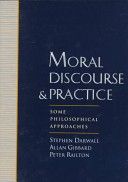
What are ethical judgments about? And what is their relation to practice? How can ethical judgment aspire to objectivity? The past two decades have witnessed a resurgence of interest in metaethics, placing questions such as these about the nature and status of ethical judgment at the very center of contemporary moral philosophy. Moral Discourse and Practice: Some Philosophical Approaches is a unique anthology which collects important recent work, much of which is not easily available elsewhere, on core metaethical issues. Naturalist moral realism, once devastated by the charge of “naturalistic fallacy,” has been reinvigorated, as have versions of moral realism that insist on the discontinuity between ethics and science. Irrealist, expressivist programs have also developed with great subtlety, encouraging the thought that a noncognivist account may actually be able to explain ethical judgments’ aspirations to objectivity. Neo-Kantian constructivist theories have flourished as well, offering hope that morality can be grounded in a plausible conception of reasonable conduct. Together, the positions advanced in the essays collected here address these recent developments, constituting a rich array of approaches to contemporary moral philosophy’s most fundamental debates. An extensive introduction by Darwall, Gibbard, and Railton is also included, making this volume the most comprehensive and up-to-date work of its kind. Moral Discourse is ideally suited for use in courses in contemporary ethics, ethical theory, and metaethics.
A provocative discussion of recent wars and the issues that surround them, written by a preeminent political theorist. Michael Walzer is one of the world’s most eminent philosophers on the subject of war and ethics. Now, for the first time since his classic Just and Unjust Wars was published almost three decades ago, this volume brings together his most provocative arguments about contemporary military conflicts and the ethical issues they raise. The essays in the book are divided into three sections. The first deals with issues such as humanitarian intervention, emergency ethics, and terrorism. The second consists of Walzer’s responses to particular wars, including the first Gulf War, Kosovo, Afghanistan, and Iraq. And the third presents an essay in which Walzer imagines a future in which war might play a less significant part in our lives. In his introduction, Walzer reveals how his thinking has changed over time. Written during a period of intense debate over the proper use of armed force, this book gets,to the heart of difficult problems and argues persuasively for a moral perspective on war.
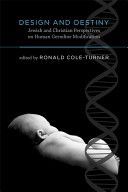
We are approaching the day when advances in biotechnology will allow parents to “design” a baby with the traits they want. The continuing debate over the possibilities of genetic engineering has been spirited, but so far largely confined to the realms of bioethics and public policy. Design and Destiny approaches the question in religious terms, discussing human germline modification (the genetic modification of the embryonic cells that become the eggs or sperm of a developing organism) from the viewpoints of traditional Christian and Jewish teaching. The contributors, leading religious scholars and writers, call our attention not to technology but to humanity, reflecting upon the meaning and destiny of human life in a technological age.Many of these scholars argue that religious teaching can support human germline modification implemented for therapeutic reasons, although they offer certain moral conditions that must be met. The essays offer a surprising variety of opinions, including a discussion of Judaism’s traditional presumption in favor of medicine, an argument that Catholic doctrine could accept germline modification if it is therapeutic for the embryo, an argument implying that “traditional” Christian teaching permits germline modification whether for therapy or enhancement, and a “classical” Protestant view that germline modification should be categorically opposed.Contributors:Lisa Sowle Cahill, Nigel M. de S. Cameron, Ronald Cole-Turner, Amy Michelle DeBaets, Celia Deane-Drummond, Elliot Dorff, H. Tristram Engelhardt, Jr., Thomas A. Shannon, James J. Walter.
ما از اخلاق چه انتظاری داریم؟ این سوال شاید تاحدودی برای عموم مردم و یا متخصصان این رشته قابل پاسخ باشد؛ اینکه خوب بودن را به ما بیاموزد و در تنظیم روابط فردی م...

جشن کتاب تهران به ایستگاه سی و یکم رسیده است. حال و احوال نشر کتاب خوب نیست و باید فرهنگدوستان را به خرید و هدیه دادن کتاب ترغیب نمود. خانه اخلاقپژوهان جوان ب...

بنیاد کتابهای اخلاق اسلامی عمدتا پالایش جان از آلودگیها و آراستن آن به زیباییها است. اندیشه محوری این قبیل کتابها آن است که انسان فعلی آنی نیست که باید باشد...

-
0 Comments