Notice: تابع WP_Block_Type_Registry::register به طورنادرست فراخوانی شد. نامهای نوع بلوک نباید حروف بزرگ داشته باشند. لطفاً برای اطلاعات بیشتر، اشکال زدایی در وردپرس را مشاهده کنید. (این پیام در نگارش 5.0.0 افزوده شده است.) in /home/ethicsho/public_html/wp-includes/functions.php on line 5313
Warning: Use of undefined constant TDC_PATH_LEGACY - assumed 'TDC_PATH_LEGACY' (this will throw an Error in a future version of PHP) in /home/ethicsho/public_html/wp-content/plugins/td-composer/td-composer.php on line 109
Warning: Use of undefined constant TDSP_THEME_PATH - assumed 'TDSP_THEME_PATH' (this will throw an Error in a future version of PHP) in /home/ethicsho/public_html/wp-content/plugins/td-composer/td-composer.php on line 113 بایگانیهای 1899 - خانه اخلاق پژوهان جوان Notice: Trying to access array offset on value of type bool in /home/ethicsho/public_html/wp-content/plugins/wp-ulike/inc/general-functions.php on line 807
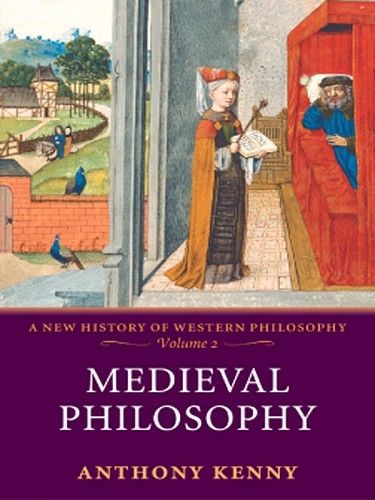
Sir Anthony Kenny here continues his fascinating account of the history of philosophy, focusing on the thousand-year-long medieval period. This is the second volume of a four-book set in which Kenny will unfold a magisterial new history of Western philosophy, the first major single-author history of philosophy to appear in decades. In this volume, Kenny takes us on a fascinating tour through more than a millennium of thought from 400 AD onwards, charting the story of philosophy from the founders of Christian and Islamic thought through to the Renaissance. The Middle Ages saw a great flourishing of philosophy, and the intellectual endeavor of the era reaches its climax in the thirteenth and fourteenth centuries, with the systems of the great schoolmen such as Thomas Aquinas and John Duns Scotus. With Kenny as guide, we see these major philosophers through the eyes of a man who has spent a lifetime contemplating their work. Thus we do not simply get an overview of philosophy, but also a penetrating and insightful critique of it. Kenny offers an illuminating account of various thinkers and schools of thought, from Augustine to Maimonides and from Grosseteste to Pomponazzi. And he offers much insight into medieval thinking about logic and language, knowledge, physics, metaphysics, the mind, the soul, and God. Vividly written, but serious and deep enough to offer a genuine understanding of the great philosophers, Kenny’s lucid and stimulating history will become the definitive work for anyone interested in the people and ideas that shaped the course of Western thought.
This book is an investigation into the descriptive task of moral philosophy. Nora Hèamèalèainen explores the challenge of providing rich and accurate pictures of the moral conditions, values, virtues, and norms under which people live and have lived, along with relevant knowledge about the human animal and human nature. While modern moral philosophy has focused its energies on normative and metaethical theory, the task of describing, uncovering, and inquiring into moral frameworks and moral practices has mainly been left to social scientists and historians. Nora Hèamèalèainen argues that this division of labour has detrimental consequences for moral philosophy and that a reorientation toward descriptive work is needed in moral philosophy. She traces resources for a descriptive philosophical ethics in the work of four prominent philosophers of the twentieth century: John Dewey, Ludwig Wittgenstein, Michel Foucault, and Charles Taylor, while also calling on thinkers inspired by them. Nora Hèamèalèainen is Associate Professor (docent) in philosophy at the University of Helsinki, Finland. She is the author ofLiterature and Moral Theory and has co-edited the volume Language, Ethics and Animal Life — Wittgenstein and Beyond (with Niklas Forsberg and Mikel Burley).
Our self-image as moral, well-behaved creatures is dogged by scepticism, relativism, hypocrisy, and nihilism, by the fear that in a Godless world science has unmasked us as creatures fated by our genes to be selfish and tribalistic, or competitive and aggressive. In this clear introduction to ethics Simon Blackburn tackles the major moral questions surrounding birth, death, happiness, desire and freedom, showing us how we should think about the meaning of life, and how we should mistrust the soundbite-sized absolutes that often dominate moral debates.
Schopenhauer’s treatise on ethics is presented here in E. F. J. Payne’s definitive translation, based on the Hubscher edition). This edition includes an Introduction by David Cartwright, a translator’s preface, biographical note, selected bibliography, and an index. For convenient reference to passages in Kant’s work discussed by Schopenhauer, Academy edition numbers have been added.
ما از اخلاق چه انتظاری داریم؟ این سوال شاید تاحدودی برای عموم مردم و یا متخصصان این رشته قابل پاسخ باشد؛ اینکه خوب بودن را به ما بیاموزد و در تنظیم روابط فردی م...

جشن کتاب تهران به ایستگاه سی و یکم رسیده است. حال و احوال نشر کتاب خوب نیست و باید فرهنگدوستان را به خرید و هدیه دادن کتاب ترغیب نمود. خانه اخلاقپژوهان جوان ب...

بنیاد کتابهای اخلاق اسلامی عمدتا پالایش جان از آلودگیها و آراستن آن به زیباییها است. اندیشه محوری این قبیل کتابها آن است که انسان فعلی آنی نیست که باید باشد...

-
0 Comments