Notice: تابع WP_Block_Type_Registry::register به طورنادرست فراخوانی شد. نامهای نوع بلوک نباید حروف بزرگ داشته باشند. لطفاً برای اطلاعات بیشتر، اشکال زدایی در وردپرس را مشاهده کنید. (این پیام در نگارش 5.0.0 افزوده شده است.) in /home/ethicsho/public_html/wp-includes/functions.php on line 5313
Warning: Use of undefined constant TDC_PATH_LEGACY - assumed 'TDC_PATH_LEGACY' (this will throw an Error in a future version of PHP) in /home/ethicsho/public_html/wp-content/plugins/td-composer/td-composer.php on line 109
Warning: Use of undefined constant TDSP_THEME_PATH - assumed 'TDSP_THEME_PATH' (this will throw an Error in a future version of PHP) in /home/ethicsho/public_html/wp-content/plugins/td-composer/td-composer.php on line 113 بایگانیهای 1788 - خانه اخلاق پژوهان جوان Notice: Trying to access array offset on value of type bool in /home/ethicsho/public_html/wp-content/plugins/wp-ulike/inc/general-functions.php on line 807
Everywhere people share certain moral principles–it is bad to steal, to kill, to lie–and yet we often subvert these rules. As Robert Hinde points out in this provocative book, the politician will vote with his party instead of his conscience, a lawyer will argue a point that he or she personally abhors. And this constant bending the rules ultimately endangers our world. Hinde, an eminent Cambridge biologist and psychologist, here presents a new approach to morality–combining insights from evolutionary science with observations on how people actually behave. Featuring contributions by Nobel Peace Laureate Sir Joseph Rotblat, the book illuminates how rule-bending–hardening in-group boundaries, putting duty over other moral obligations, and much more–occurs within personal relationships, law, science, medicine, politics, business, and war. Hinde argues that many of the world’s problems are related to the disregard of moral rules–for instance, racism, religious intolerance, excessive consumerism, and global warming. With growing reliance on nuclear weapons, we are heading for a world ruled by threat and fear, instead of one ruled by law and mutual understanding. We need a new understanding of morality, its nature, sources, and importance for communal living. This book helps to provide that understanding.
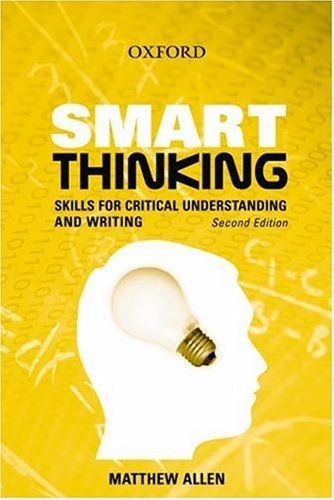
Smart Thinking: Skills for Critical Understanding and Writing 2E is a practical step-by-step guide to improving skills in analysis, critical thinking, and the effective communication of arguments and explanations. The book combines an accessible and straightforward style, with a strong foundation of knowledge. The text treats reasoning as an aspect of communication, not an abstract exercise in logic. The book not only provides detailed advice on how to practise analytical skills, but also demonstrates how these skills can be used in research and writing. In particular, it emphasises how to develop arguments that are coherent and that take account of their audience and context.
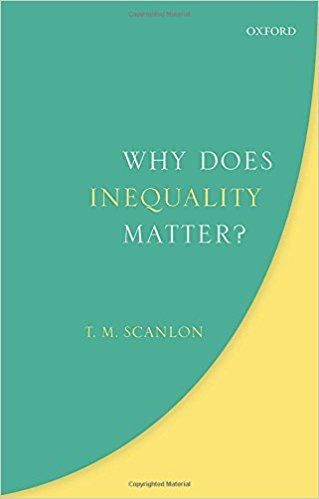
Inequality is widely regarded as morally objectionable: T. M. Scanlon investigates why it matters to us. Demands for greater equality can seem puzzling, because it can be unclear what reason people have for objecting to the difference between what they have and what others have, as opposed simply to wanting to be better off. This book examines six such reasons. Inequality can be objectionable because it arises from a failure of some agent to give equal concern to the interests of different parties to whom it is obligated to provide some good. It can be objectionable because it involves or gives rise to objectionable inequalities in status. It can be objectionable because it gives the rich unacceptable forms of control over the lives of those who have less. It can be objectionable because it interferes with the procedural fairness of economic institutions, or because it deprives some people of substantive opportunity to take part in those institutions. Inequality can be objectionable because it interferes with the fairness of political institutions. Finally, inequality in wealth and income can be objectionable because it is unfair: the institutional mechanisms that produce it cannot be justified in the relevant way. Scanlon’s aims is to provide a moral anatomy of these six reasons, and the ideas of equality that they involve. He also examines objections to the pursuit of equality on the ground that it involves objectionable interference with individual liberty, and argues that ideas of desert do not provide a basis either for justifying significant economic inequality or for objecting to it.
In his groundbreaking book, Marc Hauser puts forth a revolutionary new theory: that humans have evolved a universal moral instinct, unconsciously propelling us to deliver judgments of right and wrong independent of gender, education, and religion. Combining his cutting-edge research with the latest findings in cognitive psychology, linguistics, neuroscience, evolutionary biology, economics, and anthropology, Hauser explores the startling implications of his provocative theory vis-à-vis contemporary bioethics, religion, the law, and our everyday lives.
Sir Anthony Kenny is one of the most distinguished and prolific philosophers of our time. In the wide range and historical breadth of his interests, he has influenced many parts of the philosophical landscape, especially in the philosophy of mind and the theory of human action and responsibility. In contrast to many of his contemporaries, who have played down philosophy’s debt to its past, Kenny’s work has always been rooted in the great tradition of Western philosophical inquiry. Mind, Method and Morality celebrates Kenny’s work by focusing on the four great philosophers to whom Kenny has given special attention, namely Aristotle, Aquinas, Descartes, and Wittgenstein. It contains sixteen essays (four on each philosopher) written by leading specialists in the relevant area. Strongly linked together by their focus on philosophy of mind, action and responsibility, the papers make a significant contribution to those areas of philosophy that Kenny has made particularly his own, and constitute a timely celebration of his work. While keeping to the highest standards of scholarship and philosophical rigor, the volume aims to be engaging and comprehensible to a wide audience, thus mirroring the clarity and accessibility that are the hallmarks of Kenny’s own philosophical writings. A preface by the Editors describes Anthony Kenny’s philosophical career, and the volume also includes a complete bibliography of his writings.
ما از اخلاق چه انتظاری داریم؟ این سوال شاید تاحدودی برای عموم مردم و یا متخصصان این رشته قابل پاسخ باشد؛ اینکه خوب بودن را به ما بیاموزد و در تنظیم روابط فردی م...

جشن کتاب تهران به ایستگاه سی و یکم رسیده است. حال و احوال نشر کتاب خوب نیست و باید فرهنگدوستان را به خرید و هدیه دادن کتاب ترغیب نمود. خانه اخلاقپژوهان جوان ب...

بنیاد کتابهای اخلاق اسلامی عمدتا پالایش جان از آلودگیها و آراستن آن به زیباییها است. اندیشه محوری این قبیل کتابها آن است که انسان فعلی آنی نیست که باید باشد...

-
0 Comments