Notice: تابع WP_Block_Type_Registry::register به طورنادرست فراخوانی شد. نامهای نوع بلوک نباید حروف بزرگ داشته باشند. لطفاً برای اطلاعات بیشتر، اشکال زدایی در وردپرس را مشاهده کنید. (این پیام در نگارش 5.0.0 افزوده شده است.) in /home/ethicsho/public_html/wp-includes/functions.php on line 5313
Warning: Use of undefined constant TDC_PATH_LEGACY - assumed 'TDC_PATH_LEGACY' (this will throw an Error in a future version of PHP) in /home/ethicsho/public_html/wp-content/plugins/td-composer/td-composer.php on line 109
Warning: Use of undefined constant TDSP_THEME_PATH - assumed 'TDSP_THEME_PATH' (this will throw an Error in a future version of PHP) in /home/ethicsho/public_html/wp-content/plugins/td-composer/td-composer.php on line 113 بایگانیهای 1769 - خانه اخلاق پژوهان جوان Notice: Trying to access array offset on value of type bool in /home/ethicsho/public_html/wp-content/plugins/wp-ulike/inc/general-functions.php on line 807
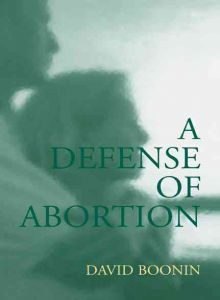
The central thesis of philosopher David Boonin is that the moral case against abortion can be shown to be unsuccessful on terms that critics of abortion can and do accept. Critically examining a wide array of arguments that have attempted to establish that every human fetus has a right to life, Boonin posits that all of these arguments fail on their own terms. He then argues that even if the fetus does have a right to life, abortion can still be shown to be morally permissible on the critic of abortion’s own terms. Finally, Boonin considers a number of arguments against abortion that do not depend on the claim that the fetus has a right to life, including those based on the golden rule, considerations of uncertainty and a commitment to certain feminist principles, and asserts that these positions, too, are ultimately unsuccessful. The result is the most thorough and detailed case for the moral permissibility of abortion that has yet been written. David Boonin is professor of philosophy at the University of Colorado. He is the author of Thomas Hobbes and the Science of Moral Virtue (Cambridge, 1994).
Written by internationally renowned scholars, this Companion maps the moral teachings of the world’s religions, and also charts new directions for work in the field of religious ethics. Now available in paperback, this is a rich resource for understanding the moral teachings and practices of the world’s religions Includes detailed discussions of issues in moral theory Offers extensive treatment of the world’s major religious traditions, including Judaism, Christianity, Islam, Buddhism, Hinduism, Chinese religions and African religions Compares the ways in which the religions provide resources for addressing current moral challenges in areas such as ecology, economics, global dynamics, religious war, human rights and other topics.
This major collection of essays stands at the border of aesthetics and ethics and deals with charged issues of practical import: art and morality, the ethics of taste, and censorship. As such its potential interest is by no means confined to professional philosophers; it should also appeal to art historians and critics, literary theorists, and students of film. Prominent philosophers in both aesthetics and ethics tackle a wide array of issues. Some of the questions explored in the volume include: Can art be morally enlightening and, if so, how? If a work of art is morally better does that make it better as art? Is morally deficient art to be shunned, or even censored? Do subjects of artworks have rights as to how they are represented? Do artists have duties as artists and duties as human beings, and if so, to whom? How much tension is there between the demands of art and the demands of life?
ما از اخلاق چه انتظاری داریم؟ این سوال شاید تاحدودی برای عموم مردم و یا متخصصان این رشته قابل پاسخ باشد؛ اینکه خوب بودن را به ما بیاموزد و در تنظیم روابط فردی م...

جشن کتاب تهران به ایستگاه سی و یکم رسیده است. حال و احوال نشر کتاب خوب نیست و باید فرهنگدوستان را به خرید و هدیه دادن کتاب ترغیب نمود. خانه اخلاقپژوهان جوان ب...

بنیاد کتابهای اخلاق اسلامی عمدتا پالایش جان از آلودگیها و آراستن آن به زیباییها است. اندیشه محوری این قبیل کتابها آن است که انسان فعلی آنی نیست که باید باشد...

-
0 Comments