Notice: تابع WP_Block_Type_Registry::register به طورنادرست فراخوانی شد. نامهای نوع بلوک نباید حروف بزرگ داشته باشند. لطفاً برای اطلاعات بیشتر، اشکال زدایی در وردپرس را مشاهده کنید. (این پیام در نگارش 5.0.0 افزوده شده است.) in /home/ethicsho/public_html/wp-includes/functions.php on line 5313
Warning: Use of undefined constant TDC_PATH_LEGACY - assumed 'TDC_PATH_LEGACY' (this will throw an Error in a future version of PHP) in /home/ethicsho/public_html/wp-content/plugins/td-composer/td-composer.php on line 109
Warning: Use of undefined constant TDSP_THEME_PATH - assumed 'TDSP_THEME_PATH' (this will throw an Error in a future version of PHP) in /home/ethicsho/public_html/wp-content/plugins/td-composer/td-composer.php on line 113 بایگانیهای 1701 - خانه اخلاق پژوهان جوان Notice: Trying to access array offset on value of type bool in /home/ethicsho/public_html/wp-content/plugins/wp-ulike/inc/general-functions.php on line 807
Contractualism/Contractarianism collects, for the first time, both major classical sources and central contemporary discussions of these important approaches to philosophical ethics. Edited and introduced by Stephen Darwall, these readings are essential for anyone interested in normative ethics.With a helpful introduction by Stephen Darwall, examines key topics in the contractarian and contractualist moral theory.Includes six contemporary essays which respond to the classic sources.Includes an insightful discussion of contractualism by Gary Watson.Includes classic excerpts by key figures such as Hobbes, Rousseau, and Kant, and recent reactions to this work by philosophers, including David Gauthier, Gilbert Harman, John Rawls, and T. M. Scanlon.
Emmanuel Levinas was a significant contributor to the field of philosophy, phenomenology and religion. A key interpreter of Husserl, he stressed the importance of attitudes to other people in any philosophical system. For Levinas, to be a subject is to take responsibility for others as well as yourself. He regarded ethics as the foundation for all other philosophy, but later admitted it could also be the foundation for theology. Michael Purcell outlines the basic themes of Levinas’ thought and the ways in which they might be deployed in fundamental and practical theology, and the study of the phenomenon of religion.
Widely regarded as one of the foremost figures in contemporary philosophy of religion, Linda Zagzebski has written a new book that will be seen as a major contribution to ethical theory and theological ethics. At the core of the book lies a new form of virtue theory based on the emotions. Quite distinct from deontological, consequentialist and teleological virtue theories, this one has a particular theological, indeed Christian, foundation. The new theory helps to resolve philosophical problems and puzzles of various kinds: the dispute between cognitivism and non-cognitivism in moral psychology, the claims and counterclaims of realism and anti-realism in the metaphysics of value, and paradoxes of perfect goodness in natural theology, including the problem of evil. As with Zagzebski’s previous Cambridge book Virtues of the Mind, this new book will be sought out eagerly by a broad swathe of professionals and graduate students in philosophy and religious studies.
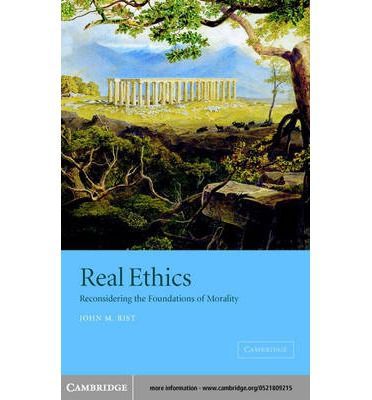
John Rist surveys the history of ethics from Plato to the present and offers a vigorous defence of an ethical theory based on a revised version of Platonic realism. In a wide-ranging discussion he examines well-known alternatives to Platonism, in particular–Epicurus, Hobbes, Hume and Kant, as well as contemporary “practical reasoners”. His accessible study is enhanced by a strong sense of philosophical history, and will be of interest to students and scholars of ethics.
ما از اخلاق چه انتظاری داریم؟ این سوال شاید تاحدودی برای عموم مردم و یا متخصصان این رشته قابل پاسخ باشد؛ اینکه خوب بودن را به ما بیاموزد و در تنظیم روابط فردی م...

جشن کتاب تهران به ایستگاه سی و یکم رسیده است. حال و احوال نشر کتاب خوب نیست و باید فرهنگدوستان را به خرید و هدیه دادن کتاب ترغیب نمود. خانه اخلاقپژوهان جوان ب...

بنیاد کتابهای اخلاق اسلامی عمدتا پالایش جان از آلودگیها و آراستن آن به زیباییها است. اندیشه محوری این قبیل کتابها آن است که انسان فعلی آنی نیست که باید باشد...

-
0 Comments