Notice: تابع WP_Block_Type_Registry::register به طورنادرست فراخوانی شد. نامهای نوع بلوک نباید حروف بزرگ داشته باشند. لطفاً برای اطلاعات بیشتر، اشکال زدایی در وردپرس را مشاهده کنید. (این پیام در نگارش 5.0.0 افزوده شده است.) in /home/ethicsho/public_html/wp-includes/functions.php on line 5313
Warning: Use of undefined constant TDC_PATH_LEGACY - assumed 'TDC_PATH_LEGACY' (this will throw an Error in a future version of PHP) in /home/ethicsho/public_html/wp-content/plugins/td-composer/td-composer.php on line 109
Warning: Use of undefined constant TDSP_THEME_PATH - assumed 'TDSP_THEME_PATH' (this will throw an Error in a future version of PHP) in /home/ethicsho/public_html/wp-content/plugins/td-composer/td-composer.php on line 113 بایگانیهای 1648 - خانه اخلاق پژوهان جوان Notice: Trying to access array offset on value of type bool in /home/ethicsho/public_html/wp-content/plugins/wp-ulike/inc/general-functions.php on line 807
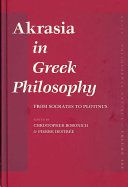
Discussions on akrasia (lack of control, or weakness of will) in Greek philosophy have been particularily vivid and intense for the past two decades. Standard stories that presented Socrates as the philosopher who simply denied the phenomenon, and Plato and Aristotle as rehabilitating it straightforwardly against Socrates, have been challenged in many different ways. Building on those challenges, this collective provides new, and in some cases opposed ways of reading well-known as well as more neglected texts. Its 13 contributions, written by experts in the field, cover the whole history of Greek ethics, from Socrates to Plotinus, through Plato, Aristotle, and the Stoics (Cleanthes, Chrysippus, Epictetus).
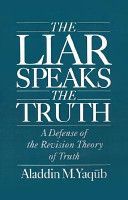
In this book, Yaqub describes a simple conception of truth and shows that it yields a semantical theory that accommodates the whole range of our seemingly conflicting intuitions about truth. This conception takes the Tarskian biconditionals (such as “The sentence ‘Johannes loved Clara’ is true if and only if Johannes loved Clara”) as correctly and completely defining the notion of truth. The semantical theory, which is called the revision theory, that emerges from this conception paints a metaphysical picture of truth as a property whose applicability is given by a revision process rather than by a fixed extension. The main advantage of this revision process is its ability to explain why truth seems in many cases almost redundant, in others substantial, and yet in others paradoxical (as in the famous Liar). Yaqub offers a comprehensive defense of the revision theory of truth by developing consistent and adequate formal semantics for languages in which all sorts of problematic sentences (Liar and company) can be constructed. Yaqub concludes by introducing a logic of truth that further demonstrates the adequacy of the revision theory.
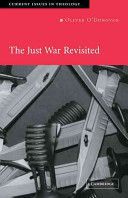
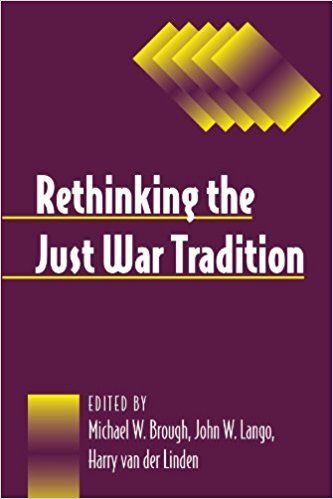
Leading political theologian Oliver ODonovan here takes a fresh look at some traditional moral arguments about war. Modern Christians differ widely on this issue. A few hold that absolute pacifism is the only viable Christian position, others subscribe in various ways to concepts of ‘just war developed out of a Western tradition that arose from the legacies of Augustine and Aquinas, while others still adopt more pragmatically realist postures. Professor ODonovan re-examines questions of contemporary urgency including the use of biological and nuclear weapons, military intervention, economic sanctions, war crimes trials and the roles of the Geneva Convention, international conventions and the UN. His enquiry opens with a challenging dedication to the new Archbishop of Canterbury and proceeds to shed new light on vital topics with which the Archbishop and others will be very directly engaged. It should be read by anyone concerned with the ethics of warfare.
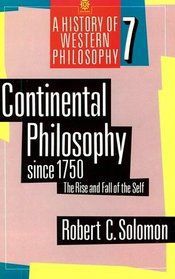
The flowering of creative and speculative philosophy that emerged in modern Europe–particularly in Germany–is a thrilling adventure story as well as an essential chapter in the history of philosophy. In this integrative narrative, Solomon provides an accessible introduction to the major authors and movements of modern European philosophy, including the Enlightenment and Romanticism, Rousseau, German Idealism, Kant, Fichte, Schelling and the Romantics, Hegel, Schopenhauer, Kierkegaard, Feuerbach, Max Brentano, Meinong, Frege, Dilthey, Bergson, Nietzsche, Husserl, Freud, Wittgenstein, Heidegger, hermeneutics, Sartre, Postmodernism, Structuralism, Foucault, and Derrida.
ما از اخلاق چه انتظاری داریم؟ این سوال شاید تاحدودی برای عموم مردم و یا متخصصان این رشته قابل پاسخ باشد؛ اینکه خوب بودن را به ما بیاموزد و در تنظیم روابط فردی م...

جشن کتاب تهران به ایستگاه سی و یکم رسیده است. حال و احوال نشر کتاب خوب نیست و باید فرهنگدوستان را به خرید و هدیه دادن کتاب ترغیب نمود. خانه اخلاقپژوهان جوان ب...

بنیاد کتابهای اخلاق اسلامی عمدتا پالایش جان از آلودگیها و آراستن آن به زیباییها است. اندیشه محوری این قبیل کتابها آن است که انسان فعلی آنی نیست که باید باشد...

-
0 Comments