Notice: تابع WP_Block_Type_Registry::register به طورنادرست فراخوانی شد. نامهای نوع بلوک نباید حروف بزرگ داشته باشند. لطفاً برای اطلاعات بیشتر، اشکال زدایی در وردپرس را مشاهده کنید. (این پیام در نگارش 5.0.0 افزوده شده است.) in /home/ethicsho/public_html/wp-includes/functions.php on line 5313
Warning: Use of undefined constant TDC_PATH_LEGACY - assumed 'TDC_PATH_LEGACY' (this will throw an Error in a future version of PHP) in /home/ethicsho/public_html/wp-content/plugins/td-composer/td-composer.php on line 109
Warning: Use of undefined constant TDSP_THEME_PATH - assumed 'TDSP_THEME_PATH' (this will throw an Error in a future version of PHP) in /home/ethicsho/public_html/wp-content/plugins/td-composer/td-composer.php on line 113 بایگانیهای 1631 - خانه اخلاق پژوهان جوان Notice: Trying to access array offset on value of type bool in /home/ethicsho/public_html/wp-content/plugins/wp-ulike/inc/general-functions.php on line 807
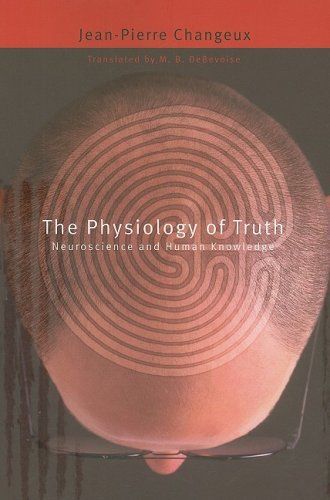
In this wide-ranging book, one of the boldest thinkers in modern neuroscience confronts an ancient philosophical problem: can we know the world as it really is?Drawing on provocative new findings about the psychophysiology of perception and judgment in both human and nonhuman primates, and also on the cultural history of science, Jean-Pierre Changeux makes a powerful case for the reality of scientific progress and argues that it forms the basis for a coherent and universal theory of human rights. On this view, belief in objective knowledge is not a mere ideological slogan or a nave confusion; it is a characteristic feature of human cognition throughout evolution, and the scientific method its most sophisticated embodiment. Seeking to reconcile science and humanism, Changeux holds that the capacity to recognize truths that are independent of subjective personal experience constitutes the foundation of a human civil society.
Adam Smith is best known as the founder of scientific economics and as an early proponent of the modern market economy. Political economy, however, was only one part of Smith’s comprehensive intellectual system. Consisting of a theory of mind and its functions in language, arts, science, and social intercourse, Smith’s system was a towering contribution to the Scottish Enlightenment. His ideas on social intercourse also served as the basis for a moral theory that provided both historical and theoretical accounts of law, politics, and economics. This Companion volume provides an examination of all aspects of Smith’s thought. Collectively, the essays take into account Smith’s multiple contexts – Scottish, British, European, Atlantic; biographical, institutional, political, philosophical – and they draw on all of his works, including student notes from his lectures. Pluralistic in approach, the volume provides a contextualist history of Smith, as well as direct philosophical engagement with his ideas.
Freedom of the sort implicated in acting freely or with free will is important to the truth of different sorts of moral judgment, such as judgments of moral responsibility and those of moral obligation. Little thought, however, has been invested into whether appraisals of good or evil presuppose free will. This important topic has not commanded the attention it deserves owing to what is perhaps a prevalent assumption that freedom leaves judgments concerning good and evil largely unaffected. The central aim of this book is to dispute this assumption by arguing for the relevance of free will to the truth of two sorts of such judgment: welfare-ranking judgments or judgments of personal well-being (when is one’s life intrinsically good for the one who lives it?), and world-ranking judgments (when is a possible world intrinsically better than another?). The book also examines free will’s impact on the truth of such judgments for central issues in moral obligation and in the free will debate. This book should be of interest to those working on intrinsic value, personal well-being, moral obligation, and free will.
ما از اخلاق چه انتظاری داریم؟ این سوال شاید تاحدودی برای عموم مردم و یا متخصصان این رشته قابل پاسخ باشد؛ اینکه خوب بودن را به ما بیاموزد و در تنظیم روابط فردی م...

جشن کتاب تهران به ایستگاه سی و یکم رسیده است. حال و احوال نشر کتاب خوب نیست و باید فرهنگدوستان را به خرید و هدیه دادن کتاب ترغیب نمود. خانه اخلاقپژوهان جوان ب...

بنیاد کتابهای اخلاق اسلامی عمدتا پالایش جان از آلودگیها و آراستن آن به زیباییها است. اندیشه محوری این قبیل کتابها آن است که انسان فعلی آنی نیست که باید باشد...

-
0 Comments