Notice: تابع WP_Block_Type_Registry::register به طورنادرست فراخوانی شد. نامهای نوع بلوک نباید حروف بزرگ داشته باشند. لطفاً برای اطلاعات بیشتر، اشکال زدایی در وردپرس را مشاهده کنید. (این پیام در نگارش 5.0.0 افزوده شده است.) in /home/ethicsho/public_html/wp-includes/functions.php on line 5313
Warning: Use of undefined constant TDC_PATH_LEGACY - assumed 'TDC_PATH_LEGACY' (this will throw an Error in a future version of PHP) in /home/ethicsho/public_html/wp-content/plugins/td-composer/td-composer.php on line 109
Warning: Use of undefined constant TDSP_THEME_PATH - assumed 'TDSP_THEME_PATH' (this will throw an Error in a future version of PHP) in /home/ethicsho/public_html/wp-content/plugins/td-composer/td-composer.php on line 113 بایگانیهای 1614 - خانه اخلاق پژوهان جوان Notice: Trying to access array offset on value of type bool in /home/ethicsho/public_html/wp-content/plugins/wp-ulike/inc/general-functions.php on line 807
This book provides a novel formulation and defence of moral error theory. It also provides a novel solution to the so-called now what question; viz., the question what we should do with our moral thought and talk after moral error theory. The novel formulation of moral error theory uses pragmatic presupposition rather than conceptual entailment to argue that moral judgments carry a non-negotiable commitment to categorical moral reasons. The new answer to the now what question is pragmatic presupposition substitutionism: we should substitute our current moral judgments, which pragmatically presuppose the existence of categorical moral reasons with ‘schmoral’ judgments that pragmatically presuppose the existence of a specific class of prudential reasons. These are prudential reasons that, when we act on them, contribute to the satisfaction of what the author calls ‘the fundamental desire’; namely, the desire to live in a world with mutually beneficial cooperation.
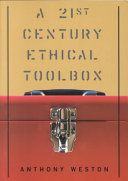
Taking a refreshingly hands-on approach to introductory ethics, A 21st Century Ethical Toolbox provides students with a set of tools to help them understand and make a constructive difference in real-life moral controversies. Thoroughly optimistic, it invites students to approach ethical issues with a reconstructive intent, making room for more and better options than the traditional “pro” and “con” positions that have grown up around tough problems like abortion and animal rights. Ideal for introductory and applied ethics courses, this unique text does not treat ethics as a purely academic, historical, or theoretical subject, but as a wide-ranging and ongoing set of challenges that calls for multiple and interwoven kinds of intelligence. It covers the skills that are most vital to making real progress in ethics, including paying careful attention to the values at stake on all sides of an issue; looking for creative opportunities within difficult problems; critical-thinking skills such as defining key terms and making sure to judge similar cases alike; and learning how to engage in constructive dialogue. Instructors can readily use the experiential and applied activities inspired by this “toolbox” of practical skills to design an interactive and collaborative ethics course. Students can carry these essential skills directly from this book into such projects as campaigning for environmental awareness and staffing local homeless shelters. In addition to his own discussion, Weston includes gripping and provocative short selections from essayists, activists, and philosophers, and also cites his own students. Extensive “Exercises and Notes” sections end each chapter, and a detailed appendix offers instructors advice on how to use the Toolbox in the classroom.
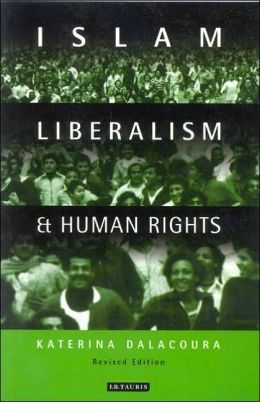
In Islam, Liberalism and Human Rights, Katerina Dalacoura explores the concept of human rights, and debate between understanding them as a simply universal norm, or a ‘Western’ value, and therefore inappropriate and irrelevant for other cultures. She examines Islam’s influence on the understanding of human rights in Muslim societies, and whether there is an inherent antithesis between Islam as a religion and the value of human rights.
Poverty, inequality, violence, environmental degradation, and tyranny continue to afflict the world. Ethics of Global Development offers a moral reflection on the ends and means of local, national, and global efforts to overcome these five scourges. After emphasizing the role of ethics in development studies, policy-making, and practice, David A. Crocker analyzes and evaluates Amartya Sen’s philosophy of development in relation to alternative ethical outlooks. He argues that Sen’s turn to robust ideals of human agency and democracy improves on both Sen’s earlier emphasis on ‘capabilities and functionings’ and Martha Nussbaum’s version of the capability orientation. This agency-focused capability approach is then extended and strengthened by applying it to the challenges of consumerism and hunger, the development responsibilities of affluent individuals and nations, and the dilemmas of globalization. Throughout the book the author argues for the importance of more inclusive and deliberative democratic institutions.
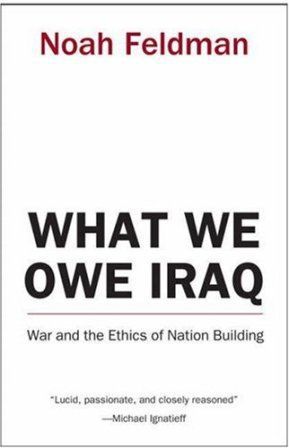
What do we owe Iraq? America is up to its neck in nation building–but the public debate, focused on getting the troops home, devotes little attention to why we are building a new Iraqi nation, what success would look like, or what principles should guide us.What We Owe Iraqsets out to shift the terms of the debate, acknowledging that we are nation building to protect ourselves while demanding that we put the interests of the people being governed–whether in Iraq, Afghanistan, Kosovo, or elsewhere–ahead of our own when we exercise power over them. Noah Feldman argues that to prevent nation building from turning into a paternalistic, colonialist charade, we urgently need a new, humbler approach. Nation builders should focus on providing security, without arrogantly claiming any special expertise in how successful nation-states should be made. Drawing on his personal experiences in Iraq as a constitutional adviser, Feldman offers enduring insights into the power dynamics between the American occupiers and the Iraqis, and tackles issues such as Iraqi elections, the prospect of successful democratization, and the way home. Elections do not end the occupier’s responsibility. Unless asked to leave, we must resist the temptation of a military pullout before a legitimately elected government can maintain order and govern effectively. But elections that create a legitimate democracy are also the only way a nation builder can put itself out of business and–eventually–send its troops home. Feldman’s new afterword brings the Iraq story up-to-date since the book’s original publication in 2004, and asks whether the United States has acted ethically in pushing the political process in Iraq while failing to control the security situation; it also revisits the question of when, and how, to withdraw.
ما از اخلاق چه انتظاری داریم؟ این سوال شاید تاحدودی برای عموم مردم و یا متخصصان این رشته قابل پاسخ باشد؛ اینکه خوب بودن را به ما بیاموزد و در تنظیم روابط فردی م...

جشن کتاب تهران به ایستگاه سی و یکم رسیده است. حال و احوال نشر کتاب خوب نیست و باید فرهنگدوستان را به خرید و هدیه دادن کتاب ترغیب نمود. خانه اخلاقپژوهان جوان ب...

بنیاد کتابهای اخلاق اسلامی عمدتا پالایش جان از آلودگیها و آراستن آن به زیباییها است. اندیشه محوری این قبیل کتابها آن است که انسان فعلی آنی نیست که باید باشد...

-
0 Comments