Notice: تابع WP_Block_Type_Registry::register به طورنادرست فراخوانی شد. نامهای نوع بلوک نباید حروف بزرگ داشته باشند. لطفاً برای اطلاعات بیشتر، اشکال زدایی در وردپرس را مشاهده کنید. (این پیام در نگارش 5.0.0 افزوده شده است.) in /home/ethicsho/public_html/wp-includes/functions.php on line 5313
Warning: Use of undefined constant TDC_PATH_LEGACY - assumed 'TDC_PATH_LEGACY' (this will throw an Error in a future version of PHP) in /home/ethicsho/public_html/wp-content/plugins/td-composer/td-composer.php on line 109
Warning: Use of undefined constant TDSP_THEME_PATH - assumed 'TDSP_THEME_PATH' (this will throw an Error in a future version of PHP) in /home/ethicsho/public_html/wp-content/plugins/td-composer/td-composer.php on line 113 بایگانیهای 1507 - خانه اخلاق پژوهان جوان Notice: Trying to access array offset on value of type bool in /home/ethicsho/public_html/wp-content/plugins/wp-ulike/inc/general-functions.php on line 807
Alexander Skutch–world famous ornithologist, philosopher and author of over 30 books–believed that to build a satisfying moral edifice we need an ample and firm foundation. Moral Foundations brilliantly lays out for the reader the ways in which we are products of harmonization, a process that unites the crude elements of the world in harmonious patterns, A tour de force of analysis and critical thinking, Moral Foundations is also an important contribution to the study of ethics and philosophy.
Taking Wittgenstein at His Word is an experiment in reading organized around a central question: What kind of interpretation of Wittgenstein’s later philosophy emerges if we adhere strictly to his claims that he is not in the business of presenting and defending philosophical theses and that his only aim is to expose persistent conceptual misunderstandings that lead to deep philosophical perplexities? Robert Fogelin draws out the therapeutic aspects of Wittgenstein’s later work by closely examining his account of rule-following and how he applies the idea in the philosophy of mathematics.The first of the book’s two parts focuses on rule-following, Wittgenstein’s “paradox of interpretation,” and his naturalistic response to this paradox, all of which are persistent and crucial features of his later philosophy. Fogelin offers a corrective to the frequent misunderstanding that the paradox of interpretation is a paradox about meaning, and he emphasizes the importance of Wittgenstein’s often undervalued appeals to natural responses. The second half of the book examines how Wittgenstein applies his reflections on rule-following to the status of mathematical propositions, proofs, and objects, leading to remarkable, demystifying results.Taking Wittgenstein at His Word shows that what Wittgenstein claims to be doing and what he actually does are much closer than is often recognized. In doing so, the book underscores fundamental–but frequently underappreciated–insights about Wittgenstein’s later philosophy.
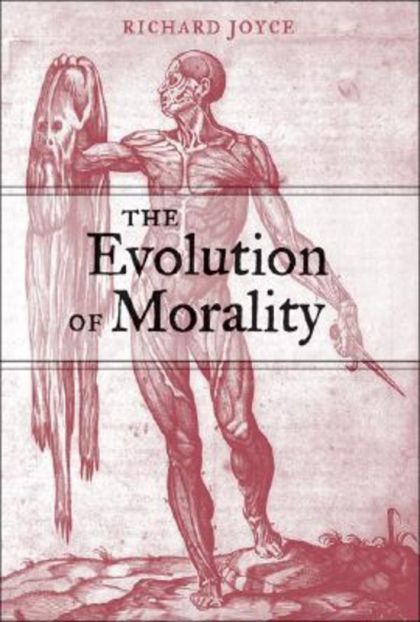
Moral thinking pervades our practical lives, but where did this way of thinking come from, and what purpose does it serve? Is it to be explained by environmental pressures on our ancestors a million years ago, or is it a cultural invention of more recent origin? In The Evolution of Morality, Richard Joyce takes up these controversial questions, finding that the evidence supports an innate basis to human morality. As a moral philosopher, Joyce is interested in whether any implications follow from this hypothesis. Might the fact that the human brain has been biologically prepared by natural selection to engage in moral judgment serve in some sense to vindicate this way of thinking—staving off the threat of moral skepticism, or even undergirding some version of moral realism? Or if morality has an adaptive explanation in genetic terms—if it is, as Joyce writes, “just something that helped our ancestors make more babies”—might such an explanation actually undermine morality’s central role in our lives? He carefully examines both the evolutionary “vindication of morality” and the evolutionary “debunking of morality,” considering the skeptical view more seriously than have others who have treated the subject.Interdisciplinary and combining the latest results from the empirical sciences with philosophical discussion, The Evolution of Morality is one of the few books in this area written from the perspective of moral philosophy. Concise and without technical jargon, the arguments are rigorous but accessible to readers from different academic backgrounds. Joyce discusses complex issues in plain language while advocating subtle and sometimes radical views. The Evolution of Morality lays the philosophical foundations for further research into the biological understanding of human morality.
ما از اخلاق چه انتظاری داریم؟ این سوال شاید تاحدودی برای عموم مردم و یا متخصصان این رشته قابل پاسخ باشد؛ اینکه خوب بودن را به ما بیاموزد و در تنظیم روابط فردی م...

جشن کتاب تهران به ایستگاه سی و یکم رسیده است. حال و احوال نشر کتاب خوب نیست و باید فرهنگدوستان را به خرید و هدیه دادن کتاب ترغیب نمود. خانه اخلاقپژوهان جوان ب...

بنیاد کتابهای اخلاق اسلامی عمدتا پالایش جان از آلودگیها و آراستن آن به زیباییها است. اندیشه محوری این قبیل کتابها آن است که انسان فعلی آنی نیست که باید باشد...

-
0 Comments