Notice: تابع WP_Block_Type_Registry::register به طورنادرست فراخوانی شد. نامهای نوع بلوک نباید حروف بزرگ داشته باشند. لطفاً برای اطلاعات بیشتر، اشکال زدایی در وردپرس را مشاهده کنید. (این پیام در نگارش 5.0.0 افزوده شده است.) in /home/ethicsho/public_html/wp-includes/functions.php on line 5313
Warning: Use of undefined constant TDC_PATH_LEGACY - assumed 'TDC_PATH_LEGACY' (this will throw an Error in a future version of PHP) in /home/ethicsho/public_html/wp-content/plugins/td-composer/td-composer.php on line 109
Warning: Use of undefined constant TDSP_THEME_PATH - assumed 'TDSP_THEME_PATH' (this will throw an Error in a future version of PHP) in /home/ethicsho/public_html/wp-content/plugins/td-composer/td-composer.php on line 113 بایگانیهای 1411 - خانه اخلاق پژوهان جوان Notice: Trying to access array offset on value of type bool in /home/ethicsho/public_html/wp-content/plugins/wp-ulike/inc/general-functions.php on line 807
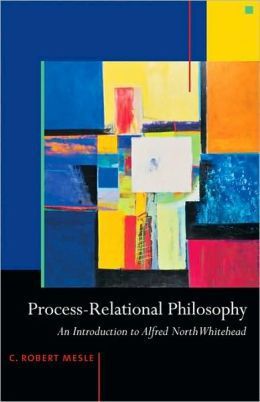
Process-Relational Philosophy provides a basic introduction to Alfred North Whitehead’s Process and Reality, the vision that underlies much of contemporary process philosophy, theology, political theory, educational theory, and the religion-science dialogue. A companion volume to the author’s acclaimed Process Theology: A Basic Introduction, it shows the way beyond both reductive materialism and the traps of Cartesian dualism to a world of continual process and becoming, where each person relates to every other and to all of nature.
This work explains how human beings can live more peacefully with one another by understanding the conditions of possibility for dialogue. Philosophically, this challenge is articulated as the problem of: how dialogue as dia-logos is possible when the shared logos is precisely that which is in question. Emmanuel Levinas, in demonstrating that the shared logos is a function of interhuman relationship, helps us to make some progress in understanding the possibilities for dialogue in this situation. If the terms of the argument to his point are taken largely from Levina’s 1961 Totality & Infinity, Dudiak further proposes that Levina’s 1974 Otherwise than Being can be read as a deepening of these earlier analyses, delineating, both the conditions of possibility & impossibility for discourse itself. Throughout these analyses Dudiak discovers that in Levina’s view dialogue is ultimately possible, only for a gracious subjectivity already graced by God by way of the other, but where the word God is inseparable from my subjectivity as a graciousness to the other. Finally, for Levinas, the facilitation of dialogue, the facilitation of peace, comes down to the subject’s capacity & willingness to be who he or she is, to take the beautiful risk of a peaceful gesture offered to the other & that peace, in this gesture itself. As Levinas himself puts it: “Peace then is under my responsibility. I am a hostage, for I am alone to wage it, running a fine risk, dangerously.” Levinas’s philosophical discourse is precisely itself to be read as such a gesture.
Civil War officer, Reconstruction “carpetbagger,” best-selling novelist, and relentless champion of equal rights, Albion Tourgee battled his entire life for racial justice. Now, in this engaging biography, Mark Elliott offers an insightful portrait of a fearless lawyer, jurist, and writer, who fought for equality long after most Americans had abandoned the ideals of Reconstruction. Elliott provides a fascinating account of Tourgee’s life, from his childhood in the Western Reserve region of Ohio (then a hotbed of abolitionism), to his years as a North Carolina judge during Reconstruction, to his memorable role as lead plaintiff’s counsel in the landmark Supreme Court case Plessy v. Ferguson. Tourgee’s brief coined the phrase that justice should be “color-blind,” and his career was one long campaign to made good on that belief. A redoubtable lawyer and an accomplished jurist, Tourgee wrote fifteen political novels, eight books of historical and social criticism, and several hundred newspaper and magazine articles that all told represent a mountain of dissent against the prevailing tide of racial oppression.
It is axiomatic that every valuation of a business or business interest must contain a definition or standard of value. Each standard of value contains numerous assumptions, and there can be significant variation in the application of a particular standard of value and its underlying assumptions. Standards of Value addresses many of the ambiguities inherent in applying common standards of value. Written by Jay Fishman, Shannon Pratt, and William Morrison–three renowned valuation practitioners who deal with these issues on a daily basis–this book discusses the interaction between valuation theory and its judicial and regulatory application. A must-read for appraisers, accountants, judges, attorneys, and appraisal users, this insightful book addresses standards of value as applied in four distinct contexts: estate and gift taxation; shareholder dissent and oppression; divorce; and financial reporting. Here, practitioners will discover some of the intricacies of performing services in these venues, and appraisers will find this book helpful in understanding why the practitioners are asking such questions. Providing expert direction on interpreting and applying standards of value, this guide includes: Valuations for estate and gift tax, shareholder dissent and oppression, and divorce matters presented within their respective judicial frameworksCase-by-case reasoning behind appraisal-related decisionsState-by-state analyses that provide a clearer idea of how a state’s established case law may give insight on the standard of valueA general overview of the concepts of value, cost, and priceFair market value in estate and gift tax valuationsFair value in dissenting and oppressed shareholder mattersThe premises and standards of value used when valuing a business in divorceCurrent and proposed standards for the reporting of assets and liabilities for corporations as established by the Financial Accounting Standards Board (FASB) of the AICPA
ما از اخلاق چه انتظاری داریم؟ این سوال شاید تاحدودی برای عموم مردم و یا متخصصان این رشته قابل پاسخ باشد؛ اینکه خوب بودن را به ما بیاموزد و در تنظیم روابط فردی م...

جشن کتاب تهران به ایستگاه سی و یکم رسیده است. حال و احوال نشر کتاب خوب نیست و باید فرهنگدوستان را به خرید و هدیه دادن کتاب ترغیب نمود. خانه اخلاقپژوهان جوان ب...

بنیاد کتابهای اخلاق اسلامی عمدتا پالایش جان از آلودگیها و آراستن آن به زیباییها است. اندیشه محوری این قبیل کتابها آن است که انسان فعلی آنی نیست که باید باشد...

-
0 Comments