Notice: تابع WP_Block_Type_Registry::register به طورنادرست فراخوانی شد. نامهای نوع بلوک نباید حروف بزرگ داشته باشند. لطفاً برای اطلاعات بیشتر، اشکال زدایی در وردپرس را مشاهده کنید. (این پیام در نگارش 5.0.0 افزوده شده است.) in /home/ethicsho/public_html/wp-includes/functions.php on line 5313
Warning: Use of undefined constant TDC_PATH_LEGACY - assumed 'TDC_PATH_LEGACY' (this will throw an Error in a future version of PHP) in /home/ethicsho/public_html/wp-content/plugins/td-composer/td-composer.php on line 109
Warning: Use of undefined constant TDSP_THEME_PATH - assumed 'TDSP_THEME_PATH' (this will throw an Error in a future version of PHP) in /home/ethicsho/public_html/wp-content/plugins/td-composer/td-composer.php on line 113 بایگانیهای 1308 - خانه اخلاق پژوهان جوان Notice: Trying to access array offset on value of type bool in /home/ethicsho/public_html/wp-content/plugins/wp-ulike/inc/general-functions.php on line 807
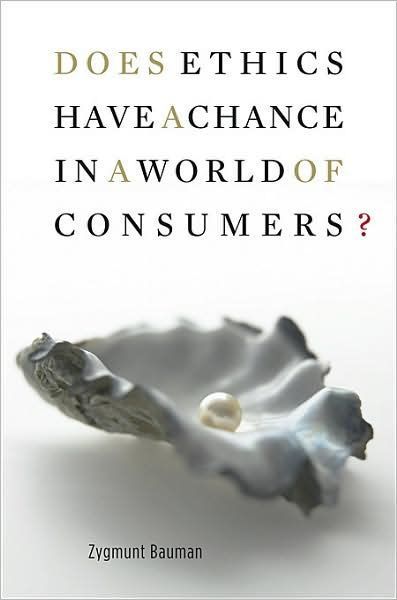
Zygmunt Bauman is one of the most admired social thinkers of our time. Once a Marxist sociologist, he has surrendered the narrowness of both Marxism and sociology, and dares to write in language that ordinary people can understand—about problems they feel ill equipped to solve. This book is no dry treatise but is instead what Bauman calls “a report from a battlefield,” part of the struggle to find new and adequate ways of thinking about the world in which we live. Rather than searching for solutions to what are perhaps the insoluble problems of the modern world, Bauman proposes that we reframe the way we think about these problems. In an era of routine travel, where most people circulate widely, the inherited beliefs that aid our thinking about the world have become an obstacle. Bauman seeks to liberate us from the thinking that renders us hopeless in the face of our own domineering governments and threats from unknown forces abroad. He shows us we can give up belief in a hierarchical arrangement of states and powers. He challenges members of the “knowledge class” to overcome their estrangement from the rest of society. Gracefully, provocatively, Bauman urges us to think in new ways about a newly flexible, newly challenging modern world. As Bauman notes, quoting Vaclav Havel, “hope is not a prognostication.” It is, rather, alongside courage and will, a mundane, common weapon that is too seldom used.
In this cogent and accessible introduction to philosophy, the distinguished author of Mortal Questions and The View From Nowhere sets forth the central problems of philosophical inquiry for the beginning student. Arguing that the best way to learn about philosophy is to think about its questions directly, Thomas Nagel considers possible solutions to nine problems–knowledge of the world beyond our minds, knowledge of other minds, the mind-body problem, free will, the basis of morality, right and wrong, the nature of death, the meaning of life, and the meaning of words. Although he states his own opinions clearly, Nagel leaves these fundamental questions open, allowing students to entertain other solutions and encouraging them to think for themselves.
Monte Johnson examines the most controversial aspects of Aristiotle’snatural philosophy: his teleology. Is teleology about causation or explanation?Does it exclude or obviate mechanism, determinism, or materialism? Is it focusedon the good of individual organisms, or is god or man the ultimate end of allprocesses and entities? Is teleology restricted to living things, or does itapply to the cosmos as a whole? Does it identify objectively existent causes inthe world, or is it merely a heuristic for our understanding of other causalprocesses? Johnson argues that Aristotle’s aporetic approach drives a middlecourse between these traditional oppositions, and avoids the dilemma, frequentlyurged against teleology, between backwards causation and anthropomorphism.Although these issues have been debated with extraordinary depth by Aristotlescholars, and touched upon by many in the wider philosophical and scientificcommunity as well, there is no comprehensive historical treatment of the issue. Aristotle is commonly considered the inventor of teleology, although the preciseterm originated in the eighteenth century. If teleology means the use of endsand goals in natural science, then Aristotle was rather a critical innovator ofteleological explanation. Teleological notions were widespread among hispredecessors, but Aristotle rejected their conception of extrinsic causes suchas mind or god as the primary causes for natural things. Aristotle’s radicalalternative was to assert nature itself as an internal principle of change andan end, and his teleological explanations focus on the intrinsic ends of naturalsubstances – those ends that benefit the natural thing itself. Aristotle’s use of ends was subsequently conflated with incompatible’teleological’ notions, including proofs for the existence of a providential ordesigner god, vitalism and animism, opposition to mechanism and non-teleologicalcausation, and anthropocentrism. Johnson addresses these misconceptions throughan elaboration of Aristotle’s methodological statements, as well as anexamination of the explanations actually offered in the scientific works.
The vast amount of suffering in the world is often held as a particularly powerful reason to deny that God exists. Now, one of the world’s most distinguished philosophers of religion presents his own position on the problem of evil. Highly accessible and sensitively argued, Peter van Inwagen’s book argues that such reasoning does not hold: his conclusion is not that God exists, but that suffering cannot be shown to prove that He does not.
ما از اخلاق چه انتظاری داریم؟ این سوال شاید تاحدودی برای عموم مردم و یا متخصصان این رشته قابل پاسخ باشد؛ اینکه خوب بودن را به ما بیاموزد و در تنظیم روابط فردی م...

جشن کتاب تهران به ایستگاه سی و یکم رسیده است. حال و احوال نشر کتاب خوب نیست و باید فرهنگدوستان را به خرید و هدیه دادن کتاب ترغیب نمود. خانه اخلاقپژوهان جوان ب...

بنیاد کتابهای اخلاق اسلامی عمدتا پالایش جان از آلودگیها و آراستن آن به زیباییها است. اندیشه محوری این قبیل کتابها آن است که انسان فعلی آنی نیست که باید باشد...

-
0 Comments