Notice: تابع WP_Block_Type_Registry::register به طورنادرست فراخوانی شد. نامهای نوع بلوک نباید حروف بزرگ داشته باشند. لطفاً برای اطلاعات بیشتر، اشکال زدایی در وردپرس را مشاهده کنید. (این پیام در نگارش 5.0.0 افزوده شده است.) in /home/ethicsho/public_html/wp-includes/functions.php on line 5313
Warning: Use of undefined constant TDC_PATH_LEGACY - assumed 'TDC_PATH_LEGACY' (this will throw an Error in a future version of PHP) in /home/ethicsho/public_html/wp-content/plugins/td-composer/td-composer.php on line 109
Warning: Use of undefined constant TDSP_THEME_PATH - assumed 'TDSP_THEME_PATH' (this will throw an Error in a future version of PHP) in /home/ethicsho/public_html/wp-content/plugins/td-composer/td-composer.php on line 113 بایگانیهای 130 - خانه اخلاق پژوهان جوان Notice: Trying to access array offset on value of type bool in /home/ethicsho/public_html/wp-content/plugins/wp-ulike/inc/general-functions.php on line 807
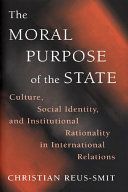
This book seeks to explain why different systems of sovereign states have built different types of fundamental institutions to govern interstate relations. Why, for example, did the ancient Greeks operate a successful system of third-party arbitration, while international society today rests on a combination of international law and multilateral diplomacy? Why did the city-states of Renaissance Italy develop a system of oratorical diplomacy, while the states of absolutist Europe relied on naturalist international law and “old diplomacy”? Conventional explanations of basic institutional practices have difficulty accounting for such variation. Christian Reus-Smit addresses this problem by presenting an alternative, “constructivist” theory of international institutional development, one that emphasizes the relationship between the social identity of the state and the nature and origin of basic institutional practices.Reus-Smit argues that international societies are shaped by deep constitutional structures that are based on prevailing beliefs about the moral purpose of the state, the organizing principle of sovereignty, and the norm of procedural justice. These structures inform the imaginations of institutional architects as they develop and adjust institutional arrangements between states. As he shows with detailed reference to ancient Greece, Renaissance Italy, absolutist Europe, and the modern world, different cultural and historical contexts lead to profoundly different constitutional structures and institutional practices. The first major study of its kind, this book is a significant addition to our theoretical and empirical understanding of international relations, past and present.
Defending Life is arguably the most comprehensive defense of the prolife position on abortion – morally, legally, and politically – that has ever been published in an academic monograph. It offers a detailed and critical analysis of Roe v. Wade and Planned Parenthood v. Casey as well as arguments by those who defend a Rawlsian case for abortion-choice, such as J. J. Thomson. The author defends the substance view of persons as the view with the most explanatory power. The substance view entails that the unborn is a subject of moral rights from conception. While defending this view, the author responds to the arguments of thinkers such as Boonin, Dworkin, Stretton, Ford, and Brody. He also critiques Thomson’s famous violinist argument and its revisions by Boonin and McDonagh. Defending Life includes chapters critiquing arguments found in popular politics and the controversy over cloning and stem cell research.
Containing material from hundreds of highly distinguished contributors representing the world’s top universities and institutions, the second edition has a truly global perspective. It contains more than 2,100 entries — including more than 450 new articles. Among the many topics covered are African, Islamic, Jewish, Russian, Chinese, and Buddhist philosophies; bioethics and biomedical ethics; art and aesthetics; epistemology; metaphysics; peace and war; social and political philosophy; the Holocaust; feminist thought; and much more. Additionally, the second edition also features 1,000 biographical entries on major figures in philosophical thought throughout history.
ما از اخلاق چه انتظاری داریم؟ این سوال شاید تاحدودی برای عموم مردم و یا متخصصان این رشته قابل پاسخ باشد؛ اینکه خوب بودن را به ما بیاموزد و در تنظیم روابط فردی م...

جشن کتاب تهران به ایستگاه سی و یکم رسیده است. حال و احوال نشر کتاب خوب نیست و باید فرهنگدوستان را به خرید و هدیه دادن کتاب ترغیب نمود. خانه اخلاقپژوهان جوان ب...

بنیاد کتابهای اخلاق اسلامی عمدتا پالایش جان از آلودگیها و آراستن آن به زیباییها است. اندیشه محوری این قبیل کتابها آن است که انسان فعلی آنی نیست که باید باشد...

-
0 Comments