Notice: تابع WP_Block_Type_Registry::register به طورنادرست فراخوانی شد. نامهای نوع بلوک نباید حروف بزرگ داشته باشند. لطفاً برای اطلاعات بیشتر، اشکال زدایی در وردپرس را مشاهده کنید. (این پیام در نگارش 5.0.0 افزوده شده است.) in /home/ethicsho/public_html/wp-includes/functions.php on line 5313
Warning: Use of undefined constant TDC_PATH_LEGACY - assumed 'TDC_PATH_LEGACY' (this will throw an Error in a future version of PHP) in /home/ethicsho/public_html/wp-content/plugins/td-composer/td-composer.php on line 109
Warning: Use of undefined constant TDSP_THEME_PATH - assumed 'TDSP_THEME_PATH' (this will throw an Error in a future version of PHP) in /home/ethicsho/public_html/wp-content/plugins/td-composer/td-composer.php on line 113 بایگانیهای 1274 - خانه اخلاق پژوهان جوان Notice: Trying to access array offset on value of type bool in /home/ethicsho/public_html/wp-content/plugins/wp-ulike/inc/general-functions.php on line 807
New York, Bern, Berlin, Bruxelles, Frankfurt/M., Oxford, Wien. In his three Critiques, Immanuel Kant provides a system of philosophy that encompasses ethics, aesthetics, metaphysics, and epistemology. As Kant’s is a seemingly complete system, one may reasonably infer that it contains an account of the nature of truth. However, Kant’s elliptical remarks on the subject make it difficult to specify the precise nature of his account. This book considers explanations by a number of authors concerning Kant’s account of truth, and proposes an alternative to these views.
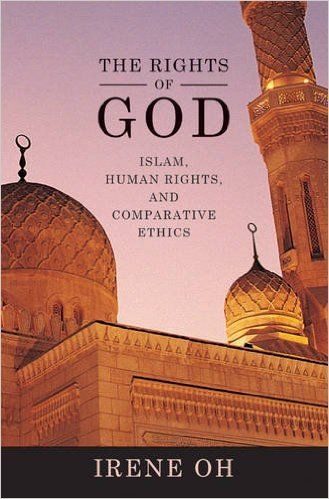
Promoting Islam as a defender of human rights is laden with difficulties. Advocates of human rights will readily point out numerous humanitarian failures carried out in the name of Islam. In The Rights of God, Irene Oh looks at human rights and Islam as a religious issue rather than a political or legal one and draws on three revered Islamic scholars to offer a broad range of perspectives that challenge our assumptions about the role of religion in human rights. The theoretical shift from the conception of morality based in natural duty and law to one of rights has created tensions that hinder a fruitful exchange between human rights theorists and religious thinkers. Does the static identification of human rights with lists of specific rights, such as those found in the Universal Declaration of Human Rights, make sense given the cultural, historical, and religious diversity of the societies in which these rights are to be respected and implemented? In examining human rights issues of the contemporary Islamic world, Oh illustrates how the value of religious scholarship cannot be overestimated. Oh analyzes the commentaries of Abul A’la Maududi, Sayyid Qutb, and Abdolkarim Soroush — all prominent and often controversial Islamic thinkers — on the topics of political participation, religious toleration, and freedom of conscience. While Maududi and Qutb represent traditional Islam, and Soroush a more reform and Western-friendly approach, all three contend that Islam is indeed capable of accommodating and advocating human rights. Whereas disentangling politics and culture from religion is never easy, Oh shows that the attempt must be made in order to understand and overcome the historical obstacles that prevent genuine dialogue from taking place across religious and cultural boundaries.
More than any other field in education, the social and cultural foundations of education reflect many of the conflicts, tensions, and forces in American society. This is hardly surprising, since the area focuses on issues such as race, gender, socioeconomic class, the impact of technology on learning, what it means to be educated, and the role of teaching and learning in a societal context.The Encyclopedia of the Social and Cultural Foundations of Education provides a comprehensive introduction to the social and cultural foundations of education. With more than 400 entries, the three volumes of this indispensable resource offer a thorough and interdisciplinary view of the field for all those interested in issues involving schools and society.Key Features· Provides an interdisciplinary perspective from areas such as comparative education, educational anthropology, educational sociology, the history of education, and the philosophy of education· Presents essays on major movements in the field, including the Free School and Visual Instruction movements· Includes more than 130 biographical entries on important men and women in education· Offers interpretations of legal material including Brown v. Board of Education(1954) and the GI Bill of Rights· Explores theoretical debates fundamental to the field such as religion in the public school curriculum, rights of students and teachers, surveillance in schools, tracking and detracking, and many more · Contains a visual history of American education with nearly 350 images and an accompanying narrativeKey Themes· Arts, Media, and Technology· Curriculum· Economic Issues· Equality and Social Stratification· Evaluation, Testing, and Research Methods· History of Education· Law and Public Policy· Literacy· Multiculturalism and Special Populations· Organizations, Schools, and Institutions· Religion and Social Values· School Governance· Sexuality and Gender· Teachers· Theories, Models, and Philosophical Perspectives· A Visual History of American Education
In this book Linda Trinkaus Zagzebski gives an extended argument that the self-reflective person is committed to belief on authority. Epistemic authority is compatible with autonomy, but epistemic self-reliance is incoherent. She argues that epistemic and emotional self-trust are rational and inescapable, that consistent self-trust commits us to trust in others, and that among those we are committed to trusting are some whom we ought to treat as epistemic authorities, modeled on the well-known principles of authority of Joseph Raz. Some of these authorities can be in the moral and religious domains. Why have people for thousands of years accepted epistemic authority in religious communities? A religious community’s justification for authority is typically based on beliefs unique to that community. Unfortunately, that often means that from the community’s perspective, its justifying claims are insulated from the outside; whereas from an outside perspective, epistemic authority in the community appears unjustified. But as Zagzebski’s argument shows, an individual’s acceptance of authority in her community can be justified by principles that outsiders accept, and the particular beliefs justified by that authority are not immune to external critiques. Why have people for thousands of years accepted epistemic authority in religious communities? A religious community’s justification for authority is typically based on beliefs unique to that community. Unfortunately, that often means that from the community’s perspective, its justifying claims are insulated from the outside; whereas from an outside perspective, epistemic authority in the community appears unjustified. But as Zagzebski’s argument shows, an individual’s acceptance of authority in her community can be justified by principles that outsiders accept, and the particular beliefs justified by that authority are not immune to external critiques.
ما از اخلاق چه انتظاری داریم؟ این سوال شاید تاحدودی برای عموم مردم و یا متخصصان این رشته قابل پاسخ باشد؛ اینکه خوب بودن را به ما بیاموزد و در تنظیم روابط فردی م...

جشن کتاب تهران به ایستگاه سی و یکم رسیده است. حال و احوال نشر کتاب خوب نیست و باید فرهنگدوستان را به خرید و هدیه دادن کتاب ترغیب نمود. خانه اخلاقپژوهان جوان ب...

بنیاد کتابهای اخلاق اسلامی عمدتا پالایش جان از آلودگیها و آراستن آن به زیباییها است. اندیشه محوری این قبیل کتابها آن است که انسان فعلی آنی نیست که باید باشد...

-
0 Comments