Notice: تابع WP_Block_Type_Registry::register به طورنادرست فراخوانی شد. نامهای نوع بلوک نباید حروف بزرگ داشته باشند. لطفاً برای اطلاعات بیشتر، اشکال زدایی در وردپرس را مشاهده کنید. (این پیام در نگارش 5.0.0 افزوده شده است.) in /home/ethicsho/public_html/wp-includes/functions.php on line 5313
Warning: Use of undefined constant TDC_PATH_LEGACY - assumed 'TDC_PATH_LEGACY' (this will throw an Error in a future version of PHP) in /home/ethicsho/public_html/wp-content/plugins/td-composer/td-composer.php on line 109
Warning: Use of undefined constant TDSP_THEME_PATH - assumed 'TDSP_THEME_PATH' (this will throw an Error in a future version of PHP) in /home/ethicsho/public_html/wp-content/plugins/td-composer/td-composer.php on line 113 بایگانیهای 1019 - خانه اخلاق پژوهان جوان Notice: Trying to access array offset on value of type bool in /home/ethicsho/public_html/wp-content/plugins/wp-ulike/inc/general-functions.php on line 807
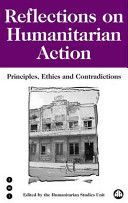
Humanitarian action has become a subject for serious debate in light of recent conflicts across the globe. The debacle in Somalia, the policy of intervention in Bosnia, and domestic conflicts in the West over intervention in Kosovo have given rise to many complex questions surrounding humanitarian action. The contributors to this volume provide a systematic overview of the issues involved from a wide range of viewpoints.The book examines the central problems of humanitarian action: the judicial question and the right to humanitarian assistance; the ethical framework of humanitarian action; the challenge of coordination of all the actors involved in humanitarian action; the recipients in the aid chain; the link between aid, development and emergency action; the role of the media; and a practical evaluation of Operation Lifeline Sudan.
Equality is the endangered species of political ideals. Even left-of-center politicians reject equality as an ideal: government must combat poverty, they say, but need not strive that its citizens be equal in any dimension. In his new book Ronald Dworkin insists, to the contrary, that equality is the indispensable virtue of democratic sovereignty. A legitimate government must treat all its citizens as equals, that is, with equal respect and concern, and, since the economic distribution that any society achieves is mainly the consequence of its system of law and policy, that requirement imposes serious egalitarian constraints on that distribution. What distribution of a nation’s wealth is demanded by equal concern for all? Dworkin draws upon two fundamental humanist principles–first, it is of equal objective importance that all human lives flourish, and second, each person is responsible for defining and achieving the flourishing of his or her own life–to ground his well-known thesis that true equality means equality in the value of the resources that each person commands, not in the success he or she achieves. Equality, freedom, and individual responsibility are therefore not in conflict, but flow from and into one another as facets of the same humanist conception of life and politics. Since no abstract political theory can be understood except in the context of actual and complex political issues, Dworkin develops his thesis by applying it to heated contemporary controversies about the distribution of health care, unemployment benefits, campaign finance reform, affirmative action, assisted suicide, and genetic engineering.
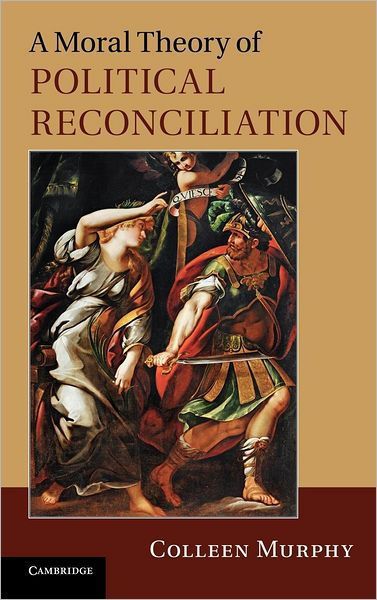
Following extended periods of conflict or repression, political reconciliation is indispensable to the establishment or restoration of democratic relationships and critical to the pursuit of peacemaking globally. In this important new book, Colleen Murphy offers an innovative analysis of the moral problems plaguing political relationships under the strain of civil conflict and repression. Focusing on the unique moral damage that attends the deterioration of political relationships, Murphy identifies the precise kinds of repair and transformation that processes of political reconciliation ought to promote. Building on this analysis, she proposes a normative model of political relationships. A Moral Theory of Political Reconciliation delivers an original account of the failure and restoration of political relationships, which will be of interest to philosophers, social scientists, legal scholars, policy analysts, and all those who are interested in transitional justice, global politics, and democracy.
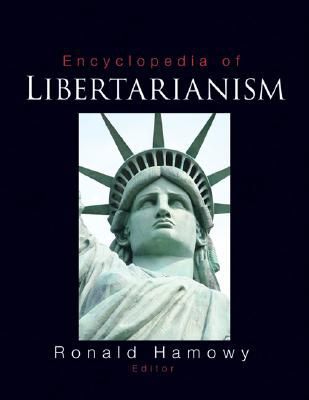
As a continuation of the older tradition of classical liberalism, libertarian thinking draws on a rich body of thought and scholarship. Contemporary libertarian scholars are continuing that tradition by making substantial contributions to such fields as philosophy, jurisprudence, economics, evolutionary psychology, political theory, and history, in both academia and politics. With more than 300 A-to-Z signed entries written by top scholars, The Encyclopedia of Libertarianism is purposed to be a useful compilation of and introduction to libertarian scholarship. The Encyclopedia starts with an introductory essay offering an extensive historical and thematic overview of key thinkers, events, and publications in the development of libertarian thought. The Reader’s Guide groups content for researchers and students alike, allowing them to study libertarianism topically, biographically, and by public policy issues.Key FeaturesEntries conclude with bibliographies and references for further reading and cross-references to related entries.Each entry provides an introduction to a topic or policy question relevant to libertarianism or a biography of a person who has had an impact on libertarianism.Editors take special care to ensure entries clearly explain libertarian approaches to issues, do not take sides on disputed matters or engage in polemics, and represent the views of all sides fairly and accurately.
The Latin root of the English word culture ties together both worship and the tilling of the soil. In each case, the focus is the same: a rightly-directed culture produces either a bountiful harvest or falls short of the mark, materially or spiritually. This volume critically explores the nature and depth of our contemporary cultural crisis: its lack of traditional orientation and moral understanding. Prime among the issues at stake are the meaning and significance of birth, copulation, suffering, and death, expressed in debates regarding human embryo-experimentation and stem cell research, the character of moral and scientific norms, as well as more fundamentally, the character of an adequate epistemology for coming to appreciate the deep nature of reality and its normative implications. Given varying background ontological, epistemological, and axiological presuppositions, different moral positions and political objections will appear as not merely morally permissible but as socially and politically obligatory. The volume is addressed to philosophers, theologians, bioethicists and public policy professionals as it critically assesses the increasing void between the traditional Christian metaphysical and moral understandings that guided the flourishing of Christian culture and today’s very secular, and frequently empty, cultural backdrop.
ما از اخلاق چه انتظاری داریم؟ این سوال شاید تاحدودی برای عموم مردم و یا متخصصان این رشته قابل پاسخ باشد؛ اینکه خوب بودن را به ما بیاموزد و در تنظیم روابط فردی م...

جشن کتاب تهران به ایستگاه سی و یکم رسیده است. حال و احوال نشر کتاب خوب نیست و باید فرهنگدوستان را به خرید و هدیه دادن کتاب ترغیب نمود. خانه اخلاقپژوهان جوان ب...

بنیاد کتابهای اخلاق اسلامی عمدتا پالایش جان از آلودگیها و آراستن آن به زیباییها است. اندیشه محوری این قبیل کتابها آن است که انسان فعلی آنی نیست که باید باشد...

-
0 Comments