Notice: تابع WP_Block_Type_Registry::register به طورنادرست فراخوانی شد. نامهای نوع بلوک نباید حروف بزرگ داشته باشند. لطفاً برای اطلاعات بیشتر، اشکال زدایی در وردپرس را مشاهده کنید. (این پیام در نگارش 5.0.0 افزوده شده است.) in /home/ethicsho/public_html/wp-includes/functions.php on line 5313
Warning: Use of undefined constant TDC_PATH_LEGACY - assumed 'TDC_PATH_LEGACY' (this will throw an Error in a future version of PHP) in /home/ethicsho/public_html/wp-content/plugins/td-composer/td-composer.php on line 109
Warning: Use of undefined constant TDSP_THEME_PATH - assumed 'TDSP_THEME_PATH' (this will throw an Error in a future version of PHP) in /home/ethicsho/public_html/wp-content/plugins/td-composer/td-composer.php on line 113 بایگانیهای 940.54/050952 - خانه اخلاق پژوهان جوان Notice: Trying to access array offset on value of type bool in /home/ethicsho/public_html/wp-content/plugins/wp-ulike/inc/general-functions.php on line 807
Is all human behavior based on self-interest? Many social and biological theories would argue so, but such a perspective does not explain the many truly heroic acts committed by people willing to risk their lives to help others. In The Heart of Altruism, Kristen Renwick Monroe boldly lays the groundwork for a social theory receptive to altruism by examining the experiences described by altruists themselves: from Otto, a German businessman who rescued over a hundred Jews in Nazi Germany, to Lucille, a newspaper poetry editor, who, armed with her cane, saved a young girl who was being raped. Monroe’s honest and moving interviews with these little-known heroes enable her to explore the causes of altruism and the differences between altruists and other people. By delineating an overarching perspective of humanity shared by altruists, Monroe demonstrates how social theories may begin to account for altruism and debunks the notions of scientific inevitability that stem from an overemphasis on self-interest.As Monroe has discovered, the financial and religious backgrounds of altruists vary greatly–as do their views on issues such as welfare, civil rights, and morality. Altruists do, however, share a certain way of looking at the world: where the rest of us see a stranger, altruists see a fellow human being. It is this perspective that many social theories overlook. Monroe restores altruism to a general theory of ethical political behavior. She argues that to understand what makes one person act out of concern for others and not the self, we need to ask how that individual’s perspective sets the range of options he or she finds available.
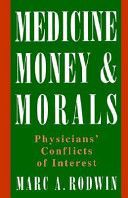
Marc A. Rodwin draws on his own experience as a health lawyer–and his research in health ethics, law, and policy–to reveal how financial conflicts of interest can and do negatively affect the quality of patient care. He shows that the problem has become worse over the last century and provides many actual examples of how doctors’ decisions are influenced by financial considerations. We learn how two California physicians, for example, resumed referrals to Pasadena General Hospital only after the hospital started paying $70 per patient (their referrals grew from 14 in one month to 82 in the next). As Rodwin writes, incentives such as this can inhibit a doctor from taking action when a hospital fails to provide proper service, and may also lead to the unnecessary hospitalization of patients. We also learn of a Wyeth-Ayerst Labs promotion in which physicians who started patients on INDERAL (a drug for high blood pressure, angina, and migraines) received 1000 mileage points on American Airlines for each patient (studies show that promotions such as this have a direct effect on a doctor’s choice of drug). Rodwin reveals why the medical community has failed to regulate conflicts of interest: peer review has little authority, state licensing boards are usually ignorant of abuses, and the AMA code of ethics has historically been recommended rather than required. He examines what can be learned from the way society has coped with the conflicts of interest of other professionals –lawyers, government officials, and businessmen–all of which are held to higher standards of accountability than doctors. And he recommends that efforts be made to prohibit and regulate certain kinds of activity (such as kickbacks and self-referrals), to monitor and regulate conduct, and to provide penalties for improper conduct. Our failure to face physicians’ conflicts of interest has distorted the way medicine is practiced, compromised the loyalty of doctors to patients, and harmed society, the integrity of the medical profession, and patients. For those concerned with the quality of health care or medical ethics, Medicine, Money and Morals is a provocative look into the current health care crisis and a powerful prescription for change.
ما از اخلاق چه انتظاری داریم؟ این سوال شاید تاحدودی برای عموم مردم و یا متخصصان این رشته قابل پاسخ باشد؛ اینکه خوب بودن را به ما بیاموزد و در تنظیم روابط فردی م...

جشن کتاب تهران به ایستگاه سی و یکم رسیده است. حال و احوال نشر کتاب خوب نیست و باید فرهنگدوستان را به خرید و هدیه دادن کتاب ترغیب نمود. خانه اخلاقپژوهان جوان ب...

بنیاد کتابهای اخلاق اسلامی عمدتا پالایش جان از آلودگیها و آراستن آن به زیباییها است. اندیشه محوری این قبیل کتابها آن است که انسان فعلی آنی نیست که باید باشد...

-
0 Comments