Notice: تابع WP_Block_Type_Registry::register به طورنادرست فراخوانی شد. نامهای نوع بلوک نباید حروف بزرگ داشته باشند. لطفاً برای اطلاعات بیشتر، اشکال زدایی در وردپرس را مشاهده کنید. (این پیام در نگارش 5.0.0 افزوده شده است.) in /home/ethicsho/public_html/wp-includes/functions.php on line 5313
Warning: Use of undefined constant TDC_PATH_LEGACY - assumed 'TDC_PATH_LEGACY' (this will throw an Error in a future version of PHP) in /home/ethicsho/public_html/wp-content/plugins/td-composer/td-composer.php on line 109
Warning: Use of undefined constant TDSP_THEME_PATH - assumed 'TDSP_THEME_PATH' (this will throw an Error in a future version of PHP) in /home/ethicsho/public_html/wp-content/plugins/td-composer/td-composer.php on line 113 بایگانیهای 823.912 - خانه اخلاق پژوهان جوان Notice: Trying to access array offset on value of type bool in /home/ethicsho/public_html/wp-content/plugins/wp-ulike/inc/general-functions.php on line 807
“By explicitly addressing moral knowledge from a particularists perspective, this book can engage with an established and vibrant area of moral philosophy whilst making a distinctive and productive contribution to a relatively neglected dimension of it”–
At a time when age-old political structures are crumbling, civil strife abounds, and economic uncertainty permeates the air, loyalty offers us security in our relationships with associates, friends, and family. Yet loyalty is a suspect virtue. It is not impartial. It is not blind. Itviolates the principles of morality that have dominated Western thought for the last two hundred years.Loyalties are also thought to be irrational and contrary to the spirit of Capitalism. In a free market society, we are encouraged to move to the competition when we are not happy. This way of thinking has invaded our personal relationships and undermined our capacities for friendship and loyaltyto those who do not serve our immediate interests. As George P. Fletcher writes, it is time for loyal bonds, born of history and experience, to prevail both over impartial morality and the self-interested thinking of the market trader.In this extended essay, George P. Fletcher offers an account of loyalty that illuminates its role in our relationships with family and friends, our ties to country, and the commitment of the religious to God and their community. Fletcher opposes the traditional view of the moral self as detachedfrom context and history. He argues instead that loyalty, not impartial detachment, should be the central feature of our moral and political lives. Writing as a political “liberal,” he claims that a commitment to country is necessary to improve the lot of the poor and disadvantaged. This commitmentto country may well require greater reliance on patriotic rituals in education and a reconsideration of the Supreme Court’s extending the First Amendment to protect flag burning. Given the worldwide currents of parochialism and political decentralization, the task for us, Fletcher argues, is torenew our commitment to a single nation united in its diversity.Bringing to bear his expertise as a law professor, Fletcher reasons that the legal systems should defer to existing relationships of loyalty. Familial, professional, and religious loyalties should be respected as relationships beyond the limits of the law. Thus surrogate mothers should not beforced to surrender and betray their children, spouses should not be required to testify against each other in court, parents should not be prevented from willing their property to their children, and the religiously committed should not be forced to act contrary to conscience.Yet the question remains: Aren’t loyalty, and particularly patriotism, dangerously one-sided? Indeed, they are, but no more than are love and friendship. The challenge, Fletcher maintains, is to overcome the distorting effects of impartial morality and to develop a morality of loyalty properlysuited to our emotional and spiritual lives. Justice has its sphere, as do loyalties. In this book, Fletcher provides the first step toward a new way of thinking that recognizes the complexity of our moral and political lives.
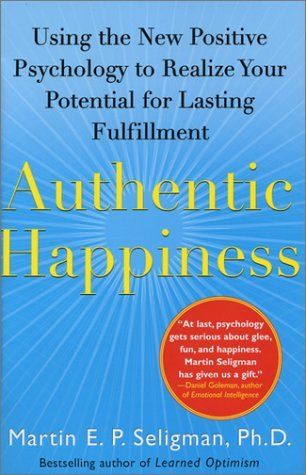
In this national bestseller — Martin Seligman’s most stimulating, persuasive book to date — the acclaimed author of Learned Optimism introduces yet another revolutionary idea. Drawing on groundbreaking scientific research, Seligman shows how Positive Psychology is shifting the profession’s paradigm away from its narrow-minded focus on pathology, victimology, and mental illness to positive emotion and mental health. Happiness, studies show, is not the result of good genes or luck. It can be cultivated by identifying and nurturing traits that we already possess — including kindness, originality, humor, optimism, and generosity.Seligman provides the tools you need in order to ascertain your most positive traits or strengths. Then he explains how, by frequently calling upon these “signature strengths” in all the crucial realms of life — health, relationships, career — you will not only develop natural buffers against misfortune and negative emotion, but also achieve new and sustainable levels of authentic contentment, gratification, and meaning.
Richard Popkin has assembled 63 leading scholars to forge a highly approachable chronological account of the development of Western philosophical traditions. From Plato to Wittgenstein and from Aquinas to Heidegger, this volume provides lively, in-depth, and up-to-date historical analysis of all the key figures, schools, and movements of Western philosophy.The Columbia History significantly broadens the scope of Western philosophy to reveal the influence of Middle Eastern and Asian thought, the vital contributions of Jewish and Islamic philosophers, and the role of women within the tradition. Along with a wealth of new scholarship, recently discovered works in 17th- and 18th-century philosophy are considered, such as previously unpublished works by Locke that inspire a new assessment of the evolution of his ideas. Popkin also emphasizes schools and developments that have traditionally been overlooked. Sections on Aristotle and Plato are followed by a detailed presentation on Hellenic philosophy and its influence on the modern developments of materialism and scepticism. A chapter has been dedicated to Jewish and Moslem philosophical development during the Middle Ages, focusing on the critical role of figures such as Averroės and Moses Maimonides in introducing Christian thinkers to classical philosophy. Another chapter considers Renaissance philosophy and its seminal influence on the development of modern humanism and science.Turning to the modern era, contributors consider the importance of the Kaballah to Spinoza, Leibniz, and Newton and the influence of popular philosophers like Moses Mendelssohn upon the work of Kant. This volume gives equal attention to both sides of the current rift in philosophy between continental and analytic schools, charting the development of each right up to the end of the 20th century.Each chapter includes an introductory essay, and Popkin provides notes that draw connections among the separate articles. The rich bibliographic information and the indexes of names and terms make the volume a valuable resource.Combining a broad scope and penetrating analysis with a keen sense of what is relevant for the modern reader, The Columbia History of Western Philosophywill prove an accessible introduction for students and an informative overview for general readers.
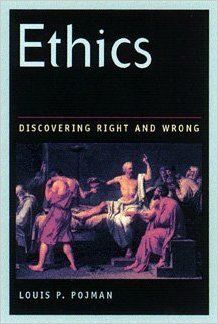
This comprehensive theories text includes examples from classical and contemporary sources, challenging students to develop their own moral theories and to solve various problems for themselves. It is written in an interesting and conversational manner.
ما از اخلاق چه انتظاری داریم؟ این سوال شاید تاحدودی برای عموم مردم و یا متخصصان این رشته قابل پاسخ باشد؛ اینکه خوب بودن را به ما بیاموزد و در تنظیم روابط فردی م...

جشن کتاب تهران به ایستگاه سی و یکم رسیده است. حال و احوال نشر کتاب خوب نیست و باید فرهنگدوستان را به خرید و هدیه دادن کتاب ترغیب نمود. خانه اخلاقپژوهان جوان ب...

بنیاد کتابهای اخلاق اسلامی عمدتا پالایش جان از آلودگیها و آراستن آن به زیباییها است. اندیشه محوری این قبیل کتابها آن است که انسان فعلی آنی نیست که باید باشد...

-
0 Comments