Notice: تابع WP_Block_Type_Registry::register به طورنادرست فراخوانی شد. نامهای نوع بلوک نباید حروف بزرگ داشته باشند. لطفاً برای اطلاعات بیشتر، اشکال زدایی در وردپرس را مشاهده کنید. (این پیام در نگارش 5.0.0 افزوده شده است.) in /home/ethicsho/public_html/wp-includes/functions.php on line 5313
Warning: Use of undefined constant TDC_PATH_LEGACY - assumed 'TDC_PATH_LEGACY' (this will throw an Error in a future version of PHP) in /home/ethicsho/public_html/wp-content/plugins/td-composer/td-composer.php on line 109
Warning: Use of undefined constant TDSP_THEME_PATH - assumed 'TDSP_THEME_PATH' (this will throw an Error in a future version of PHP) in /home/ethicsho/public_html/wp-content/plugins/td-composer/td-composer.php on line 113 بایگانیهای 809 - خانه اخلاق پژوهان جوان Notice: Trying to access array offset on value of type bool in /home/ethicsho/public_html/wp-content/plugins/wp-ulike/inc/general-functions.php on line 807
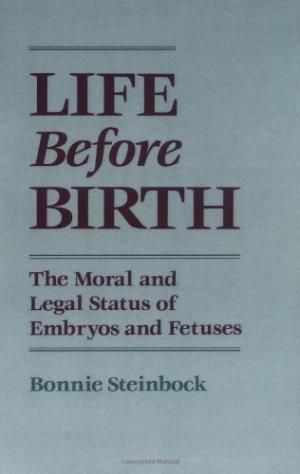
Life Before Birth provides a coherent framework for addressing bioethical issues in which the moral status of embryos and fetuses is relevant. It is based on the “interest view” which ascribes moral standing to beings with interests, and connects the possession of interests with the capacity for conscious awareness or sentience. The theoretical framework is applied to ethical and legal topics, including abortion, prenatal torts, wrongful life, the crime of feticide, substance abuse by pregnant women, compulsory cesareans, assisted reproduction, and stem cell research. Along the way, difficult philosophical problems, such as identity and the non-identity problem are thoroughly explored. The book will be of interest not only to philosophers, but also physicians, lawyers, policy makers, and anyone perplexed by the many difficulties surrounding the unborn.”Bonnie Steinbock’s excellent book is . . . consistent, thoroughgoing, and intelligible.” –Nature”Steinbock’s book is valuable for all interested in the ethical/legal issues surrounding abortion, prenatal injury and liability, maternal-fetal conflict, and fetal/embryo research. The author provides an excellent historical overview of these issues, but she also addresses the issues from the stance of a particular theory of moral status, namely, interest theory. This gives coherence to her discussion as well as allowing testing of the viability of interest theory.” –Choice”A focused, lucid, analytically fine-grained discussion of a wide variety of problems. . . extremely useful as a survey of the current state of the debate.” –Religious Studies Review”Merits serious consideration by physicians. Steinbock’s interests-based approach treats all questions as open — another and most welcome breath of fresh air.” -New England Journal of Medicine”An extremely valuable contribution to the literature. The author carefully identifies the many bioethical issues to which the status of embryos and fetuses is relevant….She thoroughly reviews the extensive medical, bioethical, and legal literature on all of these issues, offering well-developed critiques of many standard positions. She articulates and thoughtfully defends interesting positions on all of theses topics. Anyone with an interest in these issues will learn a great deal from her knowledgeable and judicious treatment of them.” — The Journal of Clinical Ethics
This book is the first systematic treatment of ‘responsibilist’ or character-based virtue epistemology, an approach to epistemology that focuses on intellectual character virtues like open-mindedness, fair-mindedness, inquisitiveness, and intellectual courage, rigor, and carefulness. Baehr distinguishes four main varieties of character-based virtue epistemology and develops a comprehensive assessment of each. For students and professional philosophers looking for an introduction to this important and exciting new field, Baehr provides a brief history of virtue epistemology, an overview of contemporary research in the field, and an introduction to the intellectual virtues that distinguishes them from intellectual talents, temperaments, faculties, and skills. For specialists in epistemology, the book offers the most in depth examination to date of the role that the concept of intellectual virtue should play in a philosophical account of knowledge. Baehr also argues for expanding the borders of epistemology proper to include a more immediate concern with intellectual virtues and their role in a good intellectual life. For virtue theorists and moral psychologists, Baehr defends a ‘personal worth’ account of the nature and structure of an intellectual virtue, situating this account vis-à-vis several related accounts of moral and intellectual virtue in the literature. The book also contains chapter-length analyses of two individual character virtues (open-mindedness and intellectual courage) and an appendix on the relation between intellectual virtues and moral virtues. Overall, the book is a comprehensive and groundbreaking treatment of an important topic in philosophy.
This exceptional book examines and explains Plato’s answer to the normative question, “How ought we to live?” It discusses Plato’s conception of the virtues; his views about the connection between the virtues and happiness; and the account of reason, desire, and motivation that underlies his arguments about the virtues. Plato’s answer to the epistemological question, “How can we know how we ought to live?” is also discussed. His views on knowledge, belief, and inquiry, and his theory of Forms, are examined, insofar as they are relevant to his ethical view. Terence Irwin traces the development of Plato’s moral philosophy, from the Socratic dialogues to its fullest exposition in the Republic. Plato’s Ethics discusses Plato’s reasons for abandoning or modifying some aspects of Socratic ethics, and for believing that he preserves Socrates’ essential insights. A brief and selective discussion of the Statesmen, Philebus, and Laws is included. Replacing Irwin’s earlier Plato’s Moral Theory (Oxford, 1977), this book gives a clearer and fuller account of the main questions and discusses some recent controversies in the interpretation of Plato’s ethics. It does not presuppose any knowledge of Greek or any extensive knowledge of Plato.
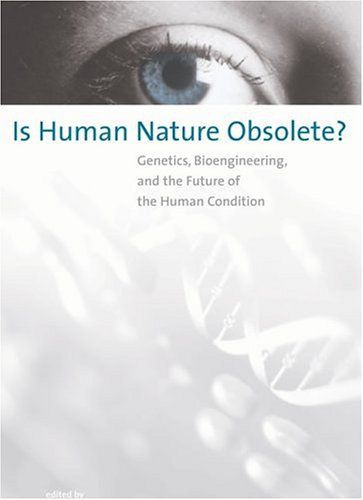
As our scientific and technical abilities expand at breathtaking speeds, concern that modern genetics and bioengineering are leading us to a posthuman future is growing. Is Human Nature Obsolete? poses the overarching question of what it is to be human against the background of these current advances in biotechnology. Its perspective is philosophical and interdisciplinary rather than technical; the focus is on questions of fundamental ontological importance rather than the specifics of medical or scientific practice.The authors—all distinguished scholars in their fields—take on questions about technology’s goals and values that are often ignored or sidelined in the face of rapid scientific advances and the highly specialized nature of technical knowledge. The essays included represent a rich variety of thought, ranging from finely nuanced philosophical and theological arguments to historical studies and cultural commentaries. Several explore the historical background of today’s biotechnology: Timothy Casey traces such developments as the emergence of cybernetic humanity from Cartesian dualism, and Diane Paul presents the history of “positive” versus coerced eugenics. Jean Bethke Elshtain discusses cloning as a “messianic project” to perfect the body and exclude natural diversity—giving as an example the elimination of Down Syndrome as an acceptable human type—while Harold Baillie calls for an examination of the metaphysical roots of personhood. Robert Proctor finds no evidence in paleontology for any “essence of humanity,” and Tom Shannon argues against materialist reductionism. Addressing social concerns, Lisa Sowle Cahill finds the possibility of a political solution to the problems raised by genetic engineering in Catholic teachings on social justice, and Langdon Winner looks critically at the “scientific enthusiasts of a posthuman future.” Taken as a whole, the book provides a humanistic overview of a subject too often considered only in its technological aspect.
ما از اخلاق چه انتظاری داریم؟ این سوال شاید تاحدودی برای عموم مردم و یا متخصصان این رشته قابل پاسخ باشد؛ اینکه خوب بودن را به ما بیاموزد و در تنظیم روابط فردی م...

جشن کتاب تهران به ایستگاه سی و یکم رسیده است. حال و احوال نشر کتاب خوب نیست و باید فرهنگدوستان را به خرید و هدیه دادن کتاب ترغیب نمود. خانه اخلاقپژوهان جوان ب...

بنیاد کتابهای اخلاق اسلامی عمدتا پالایش جان از آلودگیها و آراستن آن به زیباییها است. اندیشه محوری این قبیل کتابها آن است که انسان فعلی آنی نیست که باید باشد...

-
0 Comments