Notice: تابع WP_Block_Type_Registry::register به طورنادرست فراخوانی شد. نامهای نوع بلوک نباید حروف بزرگ داشته باشند. لطفاً برای اطلاعات بیشتر، اشکال زدایی در وردپرس را مشاهده کنید. (این پیام در نگارش 5.0.0 افزوده شده است.) in /home/ethicsho/public_html/wp-includes/functions.php on line 5313
Warning: Use of undefined constant TDC_PATH_LEGACY - assumed 'TDC_PATH_LEGACY' (this will throw an Error in a future version of PHP) in /home/ethicsho/public_html/wp-content/plugins/td-composer/td-composer.php on line 109
Warning: Use of undefined constant TDSP_THEME_PATH - assumed 'TDSP_THEME_PATH' (this will throw an Error in a future version of PHP) in /home/ethicsho/public_html/wp-content/plugins/td-composer/td-composer.php on line 113 بایگانیهای 801.9 - خانه اخلاق پژوهان جوان Notice: Trying to access array offset on value of type bool in /home/ethicsho/public_html/wp-content/plugins/wp-ulike/inc/general-functions.php on line 807
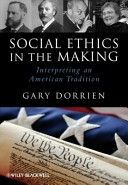
A CHOICE Outstanding Academic Title for 2009In the early 1880s, proponents of what came to be called “the social gospel” founded what is now known as social ethics. This ambitious and magisterial book describes the tradition of social ethics: one that began with the distinctly modern idea that Christianity has a social-ethical mission to transform the structures of society in the direction of social justice. Charts the story of social ethics – the idea that Christianity has a social-ethical mission to transform society – from its roots in the nineteenth century through to the present day Discusses and analyzes how different traditions of social ethics evolved in the realms of the academy, church, and general public Looks at the wide variety of individuals who have been prominent exponents of social ethics from academics and self-styled “public intellectuals” through to pastors and activists Set to become the definitive reference guide to the history and development of social ethics
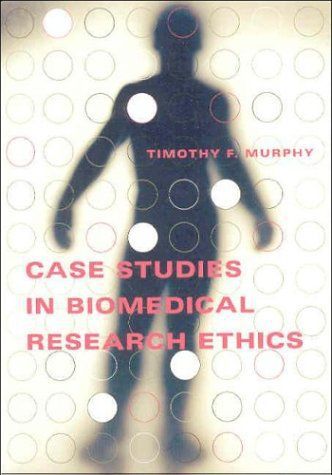
This textbook for instruction in biomedical research ethics can also serve as a valuable reference for professionals in the field of bioethics. The 149 cases included in the book are grouped in nine chapters, each of which covers a key area of debate in the field. Some of the case studies are classics, including the famous cases of the Tuskegee Syphilis Study (in which subjects with syphilis were not given treatment) and the Willowbrook hepatitis studies (in which institutionalized subjects were intentionally exposed to hepatitis). Others focus on such current issues as human embryonic stem cell research, cloning by somatic nuclear transfer, and the design and function of institutional review boards. Each chapter begins with a brief introduction that places the issues raised in context; this is followed by a number of cases (each of which is no more than a few pages). Study questions meant to encourage further discussion follow each case.After an introductory discussion of the history and tenets of ethics in medical research, the book’s chapters cover the topics of oversight and study design; informed consent; the selection of subjects; conflicts of interest; the social effects of research; embryos, fetuses, and children; genetic research; the use of animals; and authorship and publication. Following these chapters are appendixes with the texts of the Nuremburg Code and the World Declaration of Geneva, two key documents in the establishment of bioethical standards for research. Also included are a glossary, a table of cases by general category, and an alphabetical listing of cases.
Khaled Abou El Fadl’s book represents the first systematic examination of the idea and treatment of political resistance and rebellion in Islamic law. Pre-modern jurists produced an extensive and sophisticated discourse on the legality of rebellion and the treatment due to rebels under Islamic law. The book examines the emergence and development of these discourses from the eighth to the fifteenth centuries, and considers juristic responses to the various terror-inducing strategies employed by rebels–including assassination, stealth attacks and rape. The study demonstrates how Muslim jurists went about restructuring several competing doctrinal sources in order to construct a highly technical discourse on rebellion. Indeed many of these rulings may have a profound influence on contempoary practices. This is an important and challenging book which sheds light on the complexities of Islamic law, and pre-modern attitudes to dissidence and rebellion.
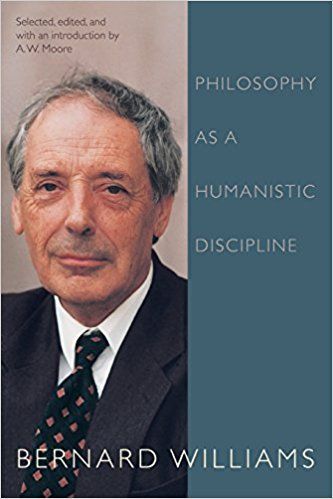
What can–and what can’t–philosophy do? What are its ethical risks–and its possible rewards? How does it differ from science? In Philosophy as a Humanistic Discipline, Bernard Williams addresses these questions and presents a striking vision of philosophy as fundamentally different from science in its aims and methods even though there is still in philosophy “something that counts as getting it right.” Written with his distinctive combination of rigor, imagination, depth, and humanism, the book amply demonstrates why Williams was one of the greatest philosophers of the twentieth century. Spanning his career from his first publication to one of his last lectures, the book’s previously unpublished or uncollected essays address metaphysics, epistemology, and ethics, as well as the scope and limits of philosophy itself. The essays are unified by Williams’s constant concern that philosophy maintain contact with the human problems that animate it in the first place. As the book’s editor, A. W. Moore, writes in his introduction, the title essay is “a kind of manifesto for Williams’s conception of his own life’s work.” It is where he most directly asks “what philosophy can and cannot contribute to the project of making sense of things”–answering that what philosophy can best help make sense of is “being human.”Philosophy as a Humanistic Discipline is one of three posthumous books by Williams to be published by Princeton University Press. In the Beginning Was the Deed: Realism and Moralism in Political Argument was published in the fall of 2005. The Sense of the Past: Essays in the History of Philosophy is being published shortly after the present volume.
ما از اخلاق چه انتظاری داریم؟ این سوال شاید تاحدودی برای عموم مردم و یا متخصصان این رشته قابل پاسخ باشد؛ اینکه خوب بودن را به ما بیاموزد و در تنظیم روابط فردی م...

جشن کتاب تهران به ایستگاه سی و یکم رسیده است. حال و احوال نشر کتاب خوب نیست و باید فرهنگدوستان را به خرید و هدیه دادن کتاب ترغیب نمود. خانه اخلاقپژوهان جوان ب...

بنیاد کتابهای اخلاق اسلامی عمدتا پالایش جان از آلودگیها و آراستن آن به زیباییها است. اندیشه محوری این قبیل کتابها آن است که انسان فعلی آنی نیست که باید باشد...

-
0 Comments