Notice: تابع WP_Block_Type_Registry::register به طورنادرست فراخوانی شد. نامهای نوع بلوک نباید حروف بزرگ داشته باشند. لطفاً برای اطلاعات بیشتر، اشکال زدایی در وردپرس را مشاهده کنید. (این پیام در نگارش 5.0.0 افزوده شده است.) in /home/ethicsho/public_html/wp-includes/functions.php on line 5313
Warning: Use of undefined constant TDC_PATH_LEGACY - assumed 'TDC_PATH_LEGACY' (this will throw an Error in a future version of PHP) in /home/ethicsho/public_html/wp-content/plugins/td-composer/td-composer.php on line 109
Warning: Use of undefined constant TDSP_THEME_PATH - assumed 'TDSP_THEME_PATH' (this will throw an Error in a future version of PHP) in /home/ethicsho/public_html/wp-content/plugins/td-composer/td-composer.php on line 113 بایگانیهای 660 - خانه اخلاق پژوهان جوان Notice: Trying to access array offset on value of type bool in /home/ethicsho/public_html/wp-content/plugins/wp-ulike/inc/general-functions.php on line 807
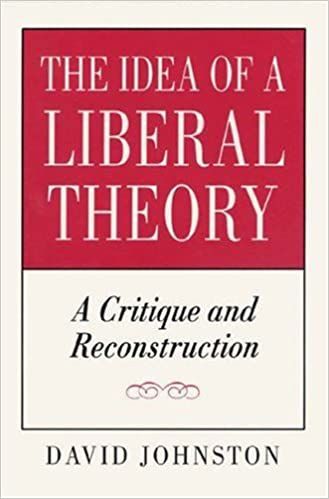
Liberalism, the founding philosophy of many constitutional democracies, has been criticized in recent years from both the left and the right for placing too much faith in individual rights and distributive justice. David Johnston argues for a reinterpretation of liberal principles he contends will restore liberalism to a position of intellectual leadership from which it can guide political and social reforms. He begins by surveying the three major contemporary schools of liberal political thought–rights-based, perfectionist, and political liberalism– and, by weeding out their weaknesses, sketches a new approach he calls humanist liberalism. Valuable not only for its contribution to academic scholarship but also as a means of introducing liberal political thought to serious undergraduate students.–Choice Raises … a tremendous number of criticisms of the standard accounts of liberal politics. The book is novel, built on solid foundations, [and] very powerful, clever, well thought out.–Alan Ryan, Princeton University This clear and useful new work moves through a swift yet thorough critique of three leading liberal philosophies to reach a sketch of a new, improved theory.–Virginia Quarterly Review
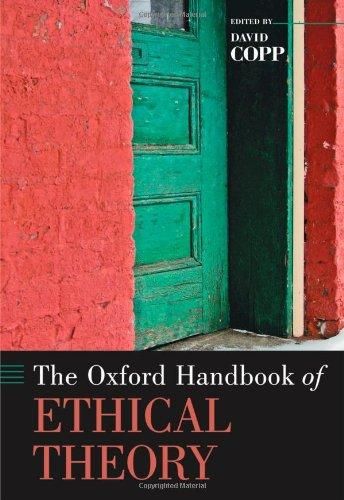
The Oxford Handbook of Ethical Theory is a major new reference work in ethical theory consisting of commissioned essays by leading moral philosophers. Ethical theories have always been of central importance to philosophy, and remain so; ethical theory is one of the most active areas of philosophical research and teaching today. Courses in ethics are taught in colleges and universities at all levels, and ethical theory is the organizing principle for all of them. The Handbook is divided into two parts, mirroring the field. The first part treats meta-ethical theory, which deals with theoretical questions about morality and moral judgment, including questions about moral language, the epistemology of moral belief, the truth aptness of moral claims, and so forth. The second part addresses normative theory, which deals with general moral issues, including the plausibility of various ethical theories and abstract principles of behavior. Examples of such theories are consequentialism and virtue theory. As with other Oxford Handbooks, the twenty-five contributors cover the field in a comprehensive and highly accessible way, while achieving three goals: exposition of central ideas, criticism of other approaches, and putting forth a distinct viewpoint.
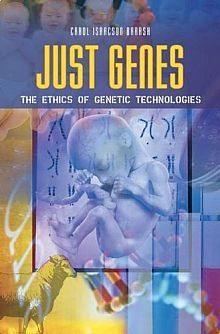
Advances in genetics research, largely, though not entirely, spawned by the Human Genome Project, have led to a broad array of new technologies that promise to revolutionize life as we have known it. Medicine and agriculture are already starting to utilize new technologies to greatly improve disease prevention and treatment and food production. Yet, these “improvements” often raise ethical questions that are not easy to untangle. Some have gone as far to as to argue that certain applications, such as embryonic stem cell research, threaten the very fiber of our moral compass. While the application of scientific advances to better mankind has always raised thorny ethical issues, the ethical impact of genetic advances arguably reaches a new height because the applicability of advances is exceptionally broad, deep, and potentially irreversible. To utilize such technologies could mean saving thousands of lives, but where and how do we draw the line? Here, Barash sheds light on the actual ethical concerns surrounding various types of genetic technologies, introducing readers to the competing issues at stake in the arguments about the scientific application of the new technologies available and those on the horizon. She begins by illustrating the history of genetic advances, their societal applications, and the ethical issues that have arisen from those applications. Using case studies and examples throughout, she walks readers through the various considerations involved in a variety of areas related to the application of genetic technologies currently available and possible in the future. Covering topics ranging from stem cell research to genetically modified food, genetic mapping to cloning, this book offers a thoughtful approach to the complex issues at play in the various fields of genetic technologies.
Postmodernism has had a significant and divisive impact on late-Twentieth Century thought. Proponents of the postmodernist critique of absolute knowledge have felt it necessary to jettison the Enlightenment concepts of truth, reason and the self. Opponents of postmodernism have seized on this abandonment of rational standards only to ignore the very real problems raised by the postmodernists. Michael Luntley provides a lively introduction to debate and offers a clear and careful exposition of how rational debate can survive even if the main postmodernist critique of the Enlightenment is accepted.Reason, Truth and Selfcovers many of the key questions of our age: the rationality of science; the availability of rational but non-scientific ways of understanding ourselves and our world; the nature of mind and of knowledge; the nature of moral judgement and the scope for accounts of the self that do justice to our situatedness in real historical circumstances.
ما از اخلاق چه انتظاری داریم؟ این سوال شاید تاحدودی برای عموم مردم و یا متخصصان این رشته قابل پاسخ باشد؛ اینکه خوب بودن را به ما بیاموزد و در تنظیم روابط فردی م...

جشن کتاب تهران به ایستگاه سی و یکم رسیده است. حال و احوال نشر کتاب خوب نیست و باید فرهنگدوستان را به خرید و هدیه دادن کتاب ترغیب نمود. خانه اخلاقپژوهان جوان ب...

بنیاد کتابهای اخلاق اسلامی عمدتا پالایش جان از آلودگیها و آراستن آن به زیباییها است. اندیشه محوری این قبیل کتابها آن است که انسان فعلی آنی نیست که باید باشد...

-
0 Comments