Notice: تابع WP_Block_Type_Registry::register به طورنادرست فراخوانی شد. نامهای نوع بلوک نباید حروف بزرگ داشته باشند. لطفاً برای اطلاعات بیشتر، اشکال زدایی در وردپرس را مشاهده کنید. (این پیام در نگارش 5.0.0 افزوده شده است.) in /home/ethicsho/public_html/wp-includes/functions.php on line 5313
Warning: Use of undefined constant TDC_PATH_LEGACY - assumed 'TDC_PATH_LEGACY' (this will throw an Error in a future version of PHP) in /home/ethicsho/public_html/wp-content/plugins/td-composer/td-composer.php on line 109
Warning: Use of undefined constant TDSP_THEME_PATH - assumed 'TDSP_THEME_PATH' (this will throw an Error in a future version of PHP) in /home/ethicsho/public_html/wp-content/plugins/td-composer/td-composer.php on line 113 بایگانیهای 503 - خانه اخلاق پژوهان جوان Notice: Trying to access array offset on value of type bool in /home/ethicsho/public_html/wp-content/plugins/wp-ulike/inc/general-functions.php on line 807
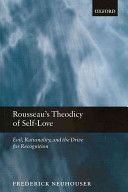
This book is the first comprehensive study of Rousseau’s rich and complex theory of the type of self-love (amour propre ) that, for him, marks the central difference between humans and the beasts. Amour propre is the passion that drives human individuals to seek the esteem, approval, admiration, or love–the recognition –of their fellow beings. Neuhouser reconstructs Rousseau’s understanding of what the drive for recognition is, why it is so problematic, and how its presence opens up far-reaching developmental possibilities for creatures that possess it. One of Rousseau’s central theses is that amour propre in its corrupted, manifestations–pride or vanity–is the principal source of an array of evils so widespread that they can easily appear to be necessary features of the human condition: enslavement, conflict, vice, misery, and self-estrangement. Yet Rousseau also argues that solving these problems depends not on suppressing or overcoming the drive for recognition but on cultivating it so that it contributes positively to the achievement of freedom, peace, virtue, happiness, and unalienated selfhood. Indeed, Rousseau goes so far as to claim that, despite its many dangers, the need for recognition is a condition of nearly everything that makes human life valuable and that elevates it above mere animal existence: rationality, morality, freedom–subjectivity itself–would be impossible for humans if it were not for amour propre and the relations to others it impels us to establish.
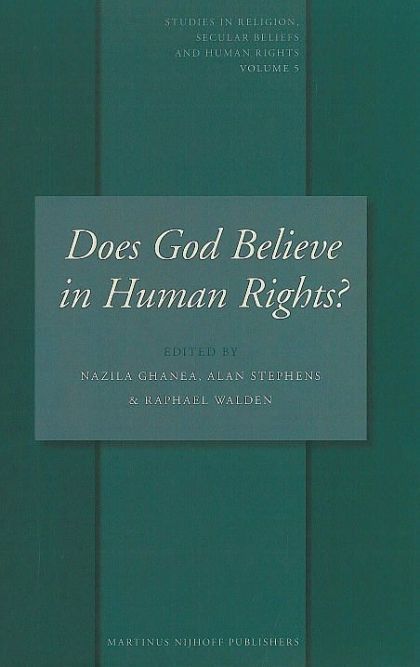
Where can religions find sources of legitimacy for human rights? How do, and how should, religious leaders and communities respond to human rights as defined in modern International Law? When religious precepts contradict human rights standards – for example in relation to freedom of expression or in relation to punishments – which should trump the other, and why? Can human rights and religious teachings be interpreted in a manner which brings reconciliation closer? Do the modern concept and system of human rights undermine the very vision of society that religions aim to impart? Is a reference to God in the discussion of human rights misplaced? Do human fallibilities with respect to interpretation, judicial reasoning and the understanding of human oneness and dignity provide the key to the undeniable and sometimes devastating conflicts that have arisen between, and within, religions and the human rights movement? In this volume, academics and lawyers tackle these most difficult questions head-on, with candour and creativity, and the collection is rendered unique by the further contributions of a remarkable range of other professionals, including senior religious leaders and representatives, journalists, diplomats and civil servants, both national and international. Most notably, the contributors do not shy away from the boldest question of all – summed up in the book’s title. The thoroughly edited and revised papers which make up this collection were originally prepared for a ground-breaking conference organised by the Clemens Nathan Research Centre, the University of London Institute of Commonwealth Studies and Martinus Nijhoff/Brill.
All students and advocates of human rights will be interested in this concerted exploration of the human rights moral obligations that fall, not directly on states, but on private and public organisations. Such an approach to human rights opens up the possibility of holding corporations and bureaucracies to account for human rights violations even when they have acted in accordance with the law. This interdisciplinary and international project brings together eminent philosophers, lawyers, social scientists and practitioners to articulate theoretically and develop in practical contexts the moral implications of human rights for non-state actors. What emerges from the book as a whole is a distinctive contemporary vision of the emerging moral impact of human rights and its significance for organisational behaviour and performance.
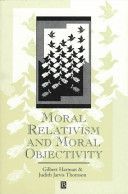
Do moral questions have objective answers? In this great debate, Gilbert Harman explains and argues for relativism, emotivism, and moral scepticism. In his view, moral disagreements are like disagreements about what to pay for a house; there are no correct answers ahead of time, except in relation to one or another moral framework. Independently, Judith Jarvis Thomson examines what she takes to be the case against moral objectivity, and rejects it; she argues that it is possible to find out the correct answers to some moral questions. In her view, some moral disagreements are like disagreements about whether the house has a ghost. Harman and Thomson then reply to each other. This important, lively accessible exchange will be invaluable to all students of moral theory and meta-ethics.
ما از اخلاق چه انتظاری داریم؟ این سوال شاید تاحدودی برای عموم مردم و یا متخصصان این رشته قابل پاسخ باشد؛ اینکه خوب بودن را به ما بیاموزد و در تنظیم روابط فردی م...

جشن کتاب تهران به ایستگاه سی و یکم رسیده است. حال و احوال نشر کتاب خوب نیست و باید فرهنگدوستان را به خرید و هدیه دادن کتاب ترغیب نمود. خانه اخلاقپژوهان جوان ب...

بنیاد کتابهای اخلاق اسلامی عمدتا پالایش جان از آلودگیها و آراستن آن به زیباییها است. اندیشه محوری این قبیل کتابها آن است که انسان فعلی آنی نیست که باید باشد...

-
0 Comments