Notice: تابع WP_Block_Type_Registry::register به طورنادرست فراخوانی شد. نامهای نوع بلوک نباید حروف بزرگ داشته باشند. لطفاً برای اطلاعات بیشتر، اشکال زدایی در وردپرس را مشاهده کنید. (این پیام در نگارش 5.0.0 افزوده شده است.) in /home/ethicsho/public_html/wp-includes/functions.php on line 5313
Warning: Use of undefined constant TDC_PATH_LEGACY - assumed 'TDC_PATH_LEGACY' (this will throw an Error in a future version of PHP) in /home/ethicsho/public_html/wp-content/plugins/td-composer/td-composer.php on line 109
Warning: Use of undefined constant TDSP_THEME_PATH - assumed 'TDSP_THEME_PATH' (this will throw an Error in a future version of PHP) in /home/ethicsho/public_html/wp-content/plugins/td-composer/td-composer.php on line 113 بایگانیهای 371.200973 - خانه اخلاق پژوهان جوان Notice: Trying to access array offset on value of type bool in /home/ethicsho/public_html/wp-content/plugins/wp-ulike/inc/general-functions.php on line 807
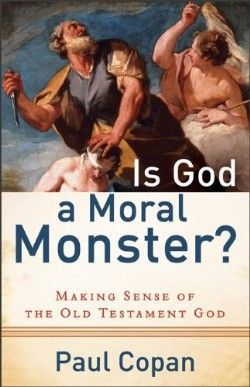
A recent string of popular-level books written by the New Atheists have leveled the accusation that the God of the Old Testament is nothing but a bully, a murderer, and a cosmic child abuser. This viewpoint is even making inroads into the church. How are Christians to respond to such accusations? And how are we to reconcile the seemingly disconnected natures of God portrayed in the two testaments?In this timely and readable book, apologist Paul Copan takes on some of the most vexing accusations of our time, including:God is arrogant and jealous God punishes people too harshly God is guilty of ethnic cleansing God oppresses women God endorses slavery Christianity causes violence and moreCopan not only answers God’s critics, he also shows how to read both the Old and New Testaments faithfully, seeing an unchanging, righteous, and loving God in both.
Is philosophy capable of establishing truths scientifically? If not, what can it do? What is its standing and what are its credentials? Is philosophy an essential element in humane study? Can philosophy establish anything at all? Philosophy asks questions about all areas of experience, but what about philosophy itself? In 2007 8, The Royal Institute of Philosophy, in its annual lecture series, asked distinguished philosophers to reflect on the nature, scope and possibility of philosophy. Contributors include Peter van Inwagen, Stephen Clark, John Cottingham, P. M. S. Hacker, Michela Massimi, Stephen Mullhall, Herman Philipse and Bryan Magel.
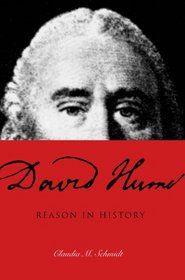
In his seminal Philosophy of David Hume (1941), Norman Kemp Smith called for a study of Hume “in all his manifold activities: as philosopher, as political theorist, as economist, as historian, and as man of letters, ” indicating that “Hume’s philosophy, as the attitude of mind which found for itself these various forms of expression, will then have been presented, adequately and in due perspective, for the first time.” Claudia Schmidt seeks to address this long-standing need in Hume scholarship. Against the charges that Hume holds no consistent philosophical position, offers no constructive account of rationality, and sees no positive relation between philosophy and other areas of inquiry, Schmidt argues for the overall coherence of Hume’s thought as a study of “reason in history.” She develops this interpretation by tracing Hume’s constructive account of human cognition and its historical dimension as a unifying theme across the full range of his writings. Hume, she shows, provides a positive account of the ways in which our concepts, beliefs, emotions, and standards of judgment in different areas of inquiry are shaped by experience, both in the personal history of the individual and in the life of a community. This book is valuable at many levels: for students, as an introduction to Hume’s writings and issues in their interpretation; for Hume specialists, as a unified and intriguing interpretation of his thought; for philosophers generally, as a synthesis of recent developments in Hume scholarship; and for scholars in other disciplines, as a guide to Hume’s contributions to their own fields.
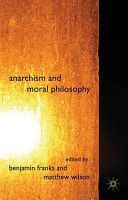
This collection explores the nature and role of ethics within anarchist thought and practice, examining normative, meta-ethical and applied ethical issues through some of the theoretical insights of anarchism. It comprises contributions from international scholars working within the fields of philosophy and political theory.
ما از اخلاق چه انتظاری داریم؟ این سوال شاید تاحدودی برای عموم مردم و یا متخصصان این رشته قابل پاسخ باشد؛ اینکه خوب بودن را به ما بیاموزد و در تنظیم روابط فردی م...

جشن کتاب تهران به ایستگاه سی و یکم رسیده است. حال و احوال نشر کتاب خوب نیست و باید فرهنگدوستان را به خرید و هدیه دادن کتاب ترغیب نمود. خانه اخلاقپژوهان جوان ب...

بنیاد کتابهای اخلاق اسلامی عمدتا پالایش جان از آلودگیها و آراستن آن به زیباییها است. اندیشه محوری این قبیل کتابها آن است که انسان فعلی آنی نیست که باید باشد...

-
0 Comments