Notice: تابع WP_Block_Type_Registry::register به طورنادرست فراخوانی شد. نامهای نوع بلوک نباید حروف بزرگ داشته باشند. لطفاً برای اطلاعات بیشتر، اشکال زدایی در وردپرس را مشاهده کنید. (این پیام در نگارش 5.0.0 افزوده شده است.) in /home/ethicsho/public_html/wp-includes/functions.php on line 5313
Warning: Use of undefined constant TDC_PATH_LEGACY - assumed 'TDC_PATH_LEGACY' (this will throw an Error in a future version of PHP) in /home/ethicsho/public_html/wp-content/plugins/td-composer/td-composer.php on line 109
Warning: Use of undefined constant TDSP_THEME_PATH - assumed 'TDSP_THEME_PATH' (this will throw an Error in a future version of PHP) in /home/ethicsho/public_html/wp-content/plugins/td-composer/td-composer.php on line 113 بایگانیهای 345/.0268 - خانه اخلاق پژوهان جوان Notice: Trying to access array offset on value of type bool in /home/ethicsho/public_html/wp-content/plugins/wp-ulike/inc/general-functions.php on line 807
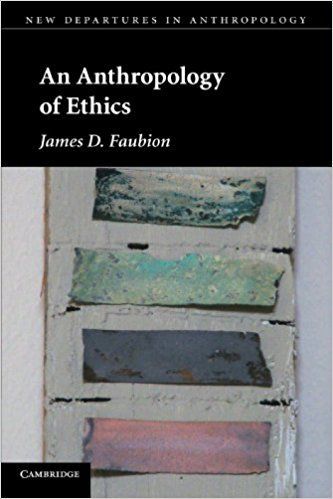
“Through an ambitious and critical revision of Michel Foucault’s investigation of ethics, James Faubion develops an original program of empirical inquiry into the ethical domain. From an anthropological perspective, Faubion argues that Foucault’s specification of the analytical parameters of this domain is the most productive point of departure in conceptualizing its distinctive features. He further argues that Foucault’s framework is in need of substantial revision to be of genuinely anthropological scope. In making this revision, Faubion illustrates his program with two extended case studies: one of a Portuguese marquis and the other of a dual subject made up of the author and a millenarian prophetess. The result is a conceptual apparatus that is able to accommodate ethical pluralism and yield an account of the limits of ethical variation, providing a novel resolution of the problem of relativism that has haunted anthropological inquiry into ethics since its inception”–
Book Summary of Aiming At Virtue In PlatoThis innovative study of Plato’s ethics focuses on the concept of virtue. Based on detailed readings of the most prominent Platonic dialogues on virtue, it argues that there is a central yet previously unnoticed conceptual distinction in Plato between the idea of virtue as the supreme aim of one’s actions and the determination of which action-tokens or -types are virtuous. Appreciating the ‘aiming/determining distinction’ provides detailed and mutually consistent readings of the most well-known Platonic dialogues on virtue as well as original interpretations of central Platonic questions. Unlike most examinations of Plato’s ethics, this study does not take as its centrepiece the ‘eudaimonist framework’, which focusses on the relationship between virtue and happiness. Instead Aiming at Virtue in Plato argues that the dialogues themselves begin with the idea of the supremacy of virtue, examine how that claim can be defended, and address how to determine what constitutes the virtuous action..
Oxford Studies in Metaethics is the only publication devoted exclusively to original philosophical work in the foundations of ethics. It provides an annual selection of much of the best new scholarship being done in the field. Its broad purview includes work being done at the intersection of ethical theory and metaphysics, epistemology, philosophy of language, and philosophy of mind. The essays included in the series provide an excellent basis for understanding recent developments in the field; those who would like to acquaint themselves with the current state of play in metaethics would do well to start here.
Religion is one of the most powerful forces running through human history, and although often presented as a force for good, its impact is frequently violent and divisive. This provocative work brings together cutting-edge research from both evolutionary and cognitive psychology to help readers understand the psychological structure of religious morality and the origins of religious violence. Introduces a fundamentally new approach to the analysis of religion in a style accessible to the general reader Applies insights from evolutionary and cognitive psychology to both Judaism and Christianity, and their texts, to help understand the origins of religious violence Argues that religious violence is grounded in the moral psychology of religion Illustrates its controversial argument with reference to the 9/11 terrorist attacks, and the response to the attacks from both the terrorists and the President. Suggests strategies for beginning to counter the divisive aspects of religion. Discusses the role of religion and religious criticism in the contemporary world. Argues for a position sceptical of the moral authority of religion, while also critiquing the excesses of the “new atheists” for failing to appreciate the moral contributions of religion.
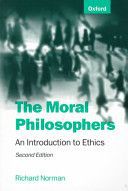
The Moral Philosophers adopts a historical approach to moral philosophy, taking in chronological sequence some of the major ethical philosophers of the past. Richard Norman introduces the thought of each figure as a coherent and comprehensive ethical theory, exploring their richness andcomplexity. Each theory is critically examined and presented as an attempt to surmount some of the deficiencies of its predecessor; and through this critical process the book moves towards some concluding suggestions about the content of an acceptable ethical theory. This new edition includes four new chapters: one on Nietzsche, and three which provide substantially extended coverage of twentieth-century moral philosophy, including discussions of contemporary utilitarianism, rights-based ethical theories, contractarian ethics and virtue ethics, and recentdebates between realism and anti-realism in ethics. The Moral Philosophers is designed for undergraduate students and the general reader, and is written in clear and non-technical language. It is intended for use as a basic text in an introductory course on ethics, with detailed recommended reading sections at the beginning of each chapter.
ما از اخلاق چه انتظاری داریم؟ این سوال شاید تاحدودی برای عموم مردم و یا متخصصان این رشته قابل پاسخ باشد؛ اینکه خوب بودن را به ما بیاموزد و در تنظیم روابط فردی م...

جشن کتاب تهران به ایستگاه سی و یکم رسیده است. حال و احوال نشر کتاب خوب نیست و باید فرهنگدوستان را به خرید و هدیه دادن کتاب ترغیب نمود. خانه اخلاقپژوهان جوان ب...

بنیاد کتابهای اخلاق اسلامی عمدتا پالایش جان از آلودگیها و آراستن آن به زیباییها است. اندیشه محوری این قبیل کتابها آن است که انسان فعلی آنی نیست که باید باشد...

-
0 Comments