Notice: تابع WP_Block_Type_Registry::register به طورنادرست فراخوانی شد. نامهای نوع بلوک نباید حروف بزرگ داشته باشند. لطفاً برای اطلاعات بیشتر، اشکال زدایی در وردپرس را مشاهده کنید. (این پیام در نگارش 5.0.0 افزوده شده است.) in /home/ethicsho/public_html/wp-includes/functions.php on line 5313
Warning: Use of undefined constant TDC_PATH_LEGACY - assumed 'TDC_PATH_LEGACY' (this will throw an Error in a future version of PHP) in /home/ethicsho/public_html/wp-content/plugins/td-composer/td-composer.php on line 109
Warning: Use of undefined constant TDSP_THEME_PATH - assumed 'TDSP_THEME_PATH' (this will throw an Error in a future version of PHP) in /home/ethicsho/public_html/wp-content/plugins/td-composer/td-composer.php on line 113 بایگانیهای 344 - خانه اخلاق پژوهان جوان Notice: Trying to access array offset on value of type bool in /home/ethicsho/public_html/wp-content/plugins/wp-ulike/inc/general-functions.php on line 807
This work returns to the 19th century tradition of a moral or ethical criticism in the context of important new thinking in the field of ethics and moral philosophy. “Shakespeare and Moral Agency” presents a collection of new essays by literary and philosophy scholars considering character and action in Shakespeare’s plays as heuristic models for the exploration of some salient problems in the field of moral inquiry. Together they offer a unified presentation of an emerging orientation in Shakespeare studies, drawing on recent work in ethics, philosophy of mind, and analytic aesthetics to construct a powerful framework for the critical analysis of Shakespeare’s works. Contributors suggest new possibilities for the interpretation of Shakespearean drama by engaging with the rich body of contemporary work in the field of moral philosophy, offering significant insights for literary criticism, for pedagogy, and also for theatrical performance. This title is part of major scholarly research monographs in “Shakespeare Studies from Continuum”.
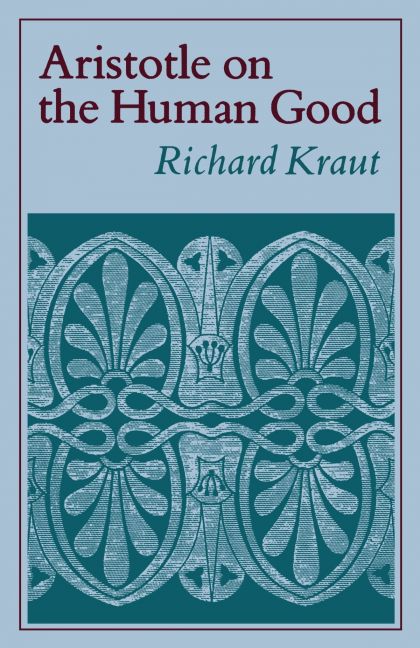
Aristotle’s Nicomachean Ethics, which equates the ultimate end of human life with happiness (eudaimonia), is thought by many readers to argue that this highest goal consists in the largest possible aggregate of intrinsic goods. Richard Kraut proposes instead that Aristotle identifies happiness with only one type of good: excellent activity of the rational soul. In defense of this reading, Kraut discusses Aristotle’s attempt to organize all human goods into a single structure, so that each subordinate end is desirable for the sake of some higher goal.This book also emphasizes the philosopher’s hierarchy of natural kinds, in which every type of creature achieves its good by imitating divine life. As Kraut argues, Aristotle’s belief that thinking is the sole activity of the gods leads him to an intellectualist conception of the ethical virtues. Aristotle values these traits because, by subordinating emotion to reason, they enhance our ability to lead a life devoted to philosophy or politics.
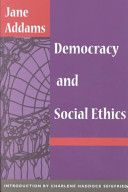
Nearly a century before the advent of “multiculturalism,” Jane Addams put forward her conception of the moral significance of diversity. Each member of a democracy, Addams believed, is under a moral obligation to seek out diverse experiences, making a daily effort to confront others’ perspectives. Morality must be seen as a social rather than an individual endeavour, and democracy as a way of life rather than merely a basis for laws. Failing this, both democracy and ethics remain sterile, empty concepts.In this, Addams’ earliest book on ethics – presented here with a substantial introduction by Charlene Haddock Seigfried – she reflects on the factors that hinder the ability of all members of society to determine their own well-being. Observing relationships between charitable workers and their clients, between factory owners and their employers, and between household employers and their servants, she identifies sources of friction and shows how conceiving of democracy as a social obligation can lead to new, mutually beneficial lines of conduct.She also considers the proper education of workers, struggles between parents and their adult daughters over conflicting family and social claims, and the merging of politics with the daily lives of constituents. “The sphere of morals is the sphere of action”, Addams proclaims. It is not enough to believe passively in the innate dignity of all human beings. Rather, one must work daily to root out racial, gender, class, and other prejudices from personal relationships.
Enlightenment philosophers are often credited with formulating many theories about humankind and society, and in our post-modern age, we still live with some of the very same compelling, contentious and often unresolved questions about ourselves and the world we live in. Author Aubrey Neal suggests that one of these issues that lingers with us today is scepticism, and in ‘How Skeptics do Ethics’, he unravels the thread of this philosophy from its origins in enlightenment thinking down to our present age. He contends that linguistics and language have not brought modern philosophy any closer to understanding the role and nature of ethics in our current science-based society. Going further, Neal suggests the contemporary reader meets traditional terms for ethical theory, plausible belief and moral action in a different world from the one in which they were coined. Instead, these considerations for modern thinkers require a coherent language practice suitable for the social context in which we live, and thus raise the question of the meaning of old philosophical debates and their value for our society today. Referencing such luminary thinkers as Hume, Kant, and Hegel, Neal seeks to re-ignite age old questions and awaken the reader to a sense that our contemporary modes of reference and understanding should be seen from a substantially different point of view. Challenging, bracing, and entirely unflinching, ‘How Skeptics do Ethics’ is a wake-up call for anyone who thinks seriously about our society, ourselves, and the world in which we live.
ما از اخلاق چه انتظاری داریم؟ این سوال شاید تاحدودی برای عموم مردم و یا متخصصان این رشته قابل پاسخ باشد؛ اینکه خوب بودن را به ما بیاموزد و در تنظیم روابط فردی م...

جشن کتاب تهران به ایستگاه سی و یکم رسیده است. حال و احوال نشر کتاب خوب نیست و باید فرهنگدوستان را به خرید و هدیه دادن کتاب ترغیب نمود. خانه اخلاقپژوهان جوان ب...

بنیاد کتابهای اخلاق اسلامی عمدتا پالایش جان از آلودگیها و آراستن آن به زیباییها است. اندیشه محوری این قبیل کتابها آن است که انسان فعلی آنی نیست که باید باشد...

-
0 Comments