Notice: تابع WP_Block_Type_Registry::register به طورنادرست فراخوانی شد. نامهای نوع بلوک نباید حروف بزرگ داشته باشند. لطفاً برای اطلاعات بیشتر، اشکال زدایی در وردپرس را مشاهده کنید. (این پیام در نگارش 5.0.0 افزوده شده است.) in /home/ethicsho/public_html/wp-includes/functions.php on line 5313
Warning: Use of undefined constant TDC_PATH_LEGACY - assumed 'TDC_PATH_LEGACY' (this will throw an Error in a future version of PHP) in /home/ethicsho/public_html/wp-content/plugins/td-composer/td-composer.php on line 109
Warning: Use of undefined constant TDSP_THEME_PATH - assumed 'TDSP_THEME_PATH' (this will throw an Error in a future version of PHP) in /home/ethicsho/public_html/wp-content/plugins/td-composer/td-composer.php on line 113 بایگانیهای 344.1044197 - خانه اخلاق پژوهان جوان Notice: Trying to access array offset on value of type bool in /home/ethicsho/public_html/wp-content/plugins/wp-ulike/inc/general-functions.php on line 807
This book evaluates the claim that in order to explore the changing social foundations of global power relations today, we need to include in our analysis an understanding of global civil society, particularly if we also wish to raise ethical questions about the changing political and institutional practices of transnational governance. The authors engage directly with the notion of global civil society in order to examines the ethical, social, and political conditions that make certain kinds of globalizing practices a reality today. They explore and utilize the normative dimensions of the civil discourse to further debate about the meaning of citizenship in a world of multi-level governance, as well as the changing characteristics of political community and democracy. Bridging the normative concerns of political theorists with the historical and institutional focus of scholars of international relations and international political economy, this book will be of broad interest to students andresearchers concerned with international relations, civil society, global governance and ethics.
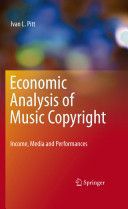
“Chris Anderson’s initial L̀ong Tail’ analysis was released in 2004 just as the wave of mergers and acquisitions was sweeping the music publishing and radio industries. Music industry executives began looking for Anderson’s L̀ong Tail’ effect and with it the implied redistribution of royalty income from popular songs to long dormant and forgotten works in their catalogs. These music publishers had hoped to further maximize the value of their copyright assets (lyrics and melody) in their existing music catalogs as the sale of compact disks diminished, and consumers switched their purchasing and listening habits to new digital formats in music technology such as the iPod.” “This book deals with the measurement of skewness, heavy tails and asymmetry in performance royalty income data in the music industry from an Economics of Art and Culture perspective. The book is divided into two parts. The first part is a general introduction to the many supply and demand economic factors that are related to music performance royalty payments. The second part is an applied econometrics section that provides modeling and in-depth analysis of income data from a songwriter, music publisher and blanket licensing perspective. The book will appeal to researchers and students in cultural economics, media and statistics as well as general readers and professionals in the music publishing industry.” “As a Senior Economist for the American Society of Composers, Authors, and Publishers (ASCAP) using both internal and licensed external proprietary data, the author found that the so-called s̀uperstar effects’ are still present in performance royalty income. Success is still concentrated on a relatively few copyright holders or members who can be grouped into h̀eavy tails’ of the empirical income distribution in a departure from Anderson’s L̀ong Tail’ analysis.”.
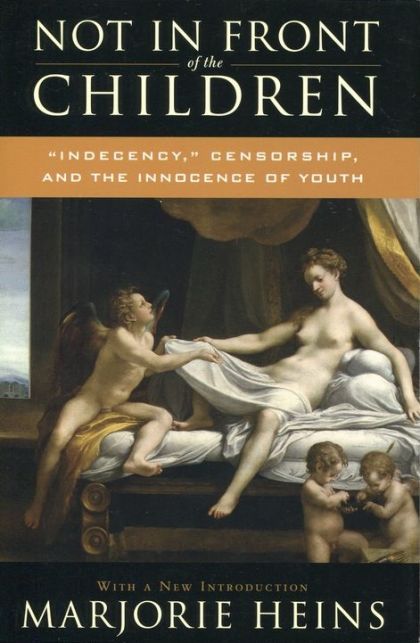
From Huckleberry Finn to Harry Potter, from Internet filters to the v-chip, censorship exercised on behalf of children and adolescents is often based on the assumption that they must be protected from “indecent” information that might harm their development—whether in art, in literature, or on a Web site. But where does this assumption come from, and is it true? In Not in Front of the Children, Marjorie Heins explores the fascinating history of “indecency” laws and other restrictions aimed at protecting youth. From Plato’s argument for rigid censorship, through Victorian laws aimed at repressing libidinous thoughts, to contemporary battles over sex education in public schools and violence in the media, Heins guides us through what became, and remains, an ideological minefield. With fascinating examples drawn from around the globe, she suggests that the “harm to minors” argument rests on shaky foundations.
This book discusses Alasdair MacIntyre’s engagement with Marxism from the early 1950s to the present. It begins with his early writings on Marxism and Christianity, moving through his period in the New Left and the Socialist Labour League and International Socialism in the late 1950s and 1960s. It then discusses MacIntyre’s break with Marxism by developing the brief but telling five-point critique he gives of Marxism in his 1981 volume After Virtue. Marxism, Ethics and Politics highlights MacIntyre’s continuing admiration for much in Marx’s thought, noting that his contemporary project is developed in response to what he now sees as the inadequacies of Marxism, particularly Marxist politics. It concludes by examining the place of Marxism in the contemporary MacIntyrean debate and by pointing out the contested nature of the claims about Marxism that MacIntyre makes.
Lies are often so subtle, so deftly woven into easily acceptable truths, that we can fail to recognize them. Turning Sisela Bok’s defense of truth in her book Lying on its head, Jeremy Campbell argues that deception should no longer be seen as artificial or deviant, but as a natural part of our world. Beginning with a study of evolutionary biology and the necessity (and ultimate value) of deceit in the animal kingdom, Campbell asks the difficult question of whether falsehood might, in fact, be instinctual. Guiding the reader through classical philosophy to more contemporary thinkers such as Freud and Nietzsche, Campbell links a multitude of disciplines and ideas in lucid and engaging prose. Unsettling some of our most firmly held beliefs about truth and ethics, The Liar’s Tale is a riveting work of intellectual history. “This challenging romp through the underbelly of intellectual history…is fascinating and troublesome.”–New York Times Book Review “[A] beautifully written book….a crisp and remarkably readable discussion.”–John Frohnmayer, The Wilson Quarterly
ما از اخلاق چه انتظاری داریم؟ این سوال شاید تاحدودی برای عموم مردم و یا متخصصان این رشته قابل پاسخ باشد؛ اینکه خوب بودن را به ما بیاموزد و در تنظیم روابط فردی م...

جشن کتاب تهران به ایستگاه سی و یکم رسیده است. حال و احوال نشر کتاب خوب نیست و باید فرهنگدوستان را به خرید و هدیه دادن کتاب ترغیب نمود. خانه اخلاقپژوهان جوان ب...

بنیاد کتابهای اخلاق اسلامی عمدتا پالایش جان از آلودگیها و آراستن آن به زیباییها است. اندیشه محوری این قبیل کتابها آن است که انسان فعلی آنی نیست که باید باشد...

-
0 Comments