Notice: تابع WP_Block_Type_Registry::register به طورنادرست فراخوانی شد. نامهای نوع بلوک نباید حروف بزرگ داشته باشند. لطفاً برای اطلاعات بیشتر، اشکال زدایی در وردپرس را مشاهده کنید. (این پیام در نگارش 5.0.0 افزوده شده است.) in /home/ethicsho/public_html/wp-includes/functions.php on line 5313
Warning: Use of undefined constant TDC_PATH_LEGACY - assumed 'TDC_PATH_LEGACY' (this will throw an Error in a future version of PHP) in /home/ethicsho/public_html/wp-content/plugins/td-composer/td-composer.php on line 109
Warning: Use of undefined constant TDSP_THEME_PATH - assumed 'TDSP_THEME_PATH' (this will throw an Error in a future version of PHP) in /home/ethicsho/public_html/wp-content/plugins/td-composer/td-composer.php on line 113 بایگانیهای 320.5/13 - خانه اخلاق پژوهان جوان Notice: Trying to access array offset on value of type bool in /home/ethicsho/public_html/wp-content/plugins/wp-ulike/inc/general-functions.php on line 807
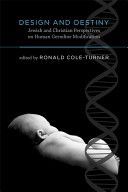
We are approaching the day when advances in biotechnology will allow parents to “design” a baby with the traits they want. The continuing debate over the possibilities of genetic engineering has been spirited, but so far largely confined to the realms of bioethics and public policy. Design and Destiny approaches the question in religious terms, discussing human germline modification (the genetic modification of the embryonic cells that become the eggs or sperm of a developing organism) from the viewpoints of traditional Christian and Jewish teaching. The contributors, leading religious scholars and writers, call our attention not to technology but to humanity, reflecting upon the meaning and destiny of human life in a technological age.Many of these scholars argue that religious teaching can support human germline modification implemented for therapeutic reasons, although they offer certain moral conditions that must be met. The essays offer a surprising variety of opinions, including a discussion of Judaism’s traditional presumption in favor of medicine, an argument that Catholic doctrine could accept germline modification if it is therapeutic for the embryo, an argument implying that “traditional” Christian teaching permits germline modification whether for therapy or enhancement, and a “classical” Protestant view that germline modification should be categorically opposed.Contributors:Lisa Sowle Cahill, Nigel M. de S. Cameron, Ronald Cole-Turner, Amy Michelle DeBaets, Celia Deane-Drummond, Elliot Dorff, H. Tristram Engelhardt, Jr., Thomas A. Shannon, James J. Walter.
Why should we avoid doing moral wrong? The inability of philosophy to answer this question in a compelling manner–along with the moral skepticism and ethical confusion that ensue–result, Stephen Darwall argues, from our failure to appreciate the essentially interpersonal character of moral obligation. After showing how attempts to vindicate morality have tended to change the subject–falling back on nonmoral values or practical, first-person considerations–Darwall elaborates the interpersonal nature of moral obligations: their inherent link to our responsibilities to one another as members of the moral community.As Darwall defines it, the concept of moral obligation has an irreducibly second-person aspect; it presupposes our authority to make claims and demands on one another. And so too do many other central notions, including those of rights, the dignity of and respect for persons, and the very concept of person itself. The result is nothing less than a fundamental reorientation of moral theory that enables it at last to account for morality’s supreme authority–an account that Darwall carries from the realm of theory to the practical world of second-person attitudes, emotions, and actions.
The second edition retains the selection of texts presented in the first edition but offers them in new translations by Richard J Regan — including that of his Aquinas, Treatise on Law (Hackett, 2000). A revised Introduction and glossary, an updated select bibliography, and the inclusion of summarising headnotes for each of the units — Conscience, Law, Justice, Property, War and Killing, Obedience and Rebellion, and Practical Wisdom and Statecraft — further enhance its usefulness.
ما از اخلاق چه انتظاری داریم؟ این سوال شاید تاحدودی برای عموم مردم و یا متخصصان این رشته قابل پاسخ باشد؛ اینکه خوب بودن را به ما بیاموزد و در تنظیم روابط فردی م...

جشن کتاب تهران به ایستگاه سی و یکم رسیده است. حال و احوال نشر کتاب خوب نیست و باید فرهنگدوستان را به خرید و هدیه دادن کتاب ترغیب نمود. خانه اخلاقپژوهان جوان ب...

بنیاد کتابهای اخلاق اسلامی عمدتا پالایش جان از آلودگیها و آراستن آن به زیباییها است. اندیشه محوری این قبیل کتابها آن است که انسان فعلی آنی نیست که باید باشد...

-
0 Comments