Notice: تابع WP_Block_Type_Registry::register به طورنادرست فراخوانی شد. نامهای نوع بلوک نباید حروف بزرگ داشته باشند. لطفاً برای اطلاعات بیشتر، اشکال زدایی در وردپرس را مشاهده کنید. (این پیام در نگارش 5.0.0 افزوده شده است.) in /home/ethicsho/public_html/wp-includes/functions.php on line 5313
Warning: Use of undefined constant TDC_PATH_LEGACY - assumed 'TDC_PATH_LEGACY' (this will throw an Error in a future version of PHP) in /home/ethicsho/public_html/wp-content/plugins/td-composer/td-composer.php on line 109
Warning: Use of undefined constant TDSP_THEME_PATH - assumed 'TDSP_THEME_PATH' (this will throw an Error in a future version of PHP) in /home/ethicsho/public_html/wp-content/plugins/td-composer/td-composer.php on line 113 بایگانیهای 305.4201 - خانه اخلاق پژوهان جوان Notice: Trying to access array offset on value of type bool in /home/ethicsho/public_html/wp-content/plugins/wp-ulike/inc/general-functions.php on line 807
When philosophers address personal identity, they usually explore numerical identity: what are the criteria for a person’s continuing existence? When non-philosophers address personal identity, they often have in mind narrative identity: Which characteristics of a particular person are salient to her self-conception? This book develops accounts of both senses of identity, arguing that both are normatively important, and is unique in its exploration of a range of issues in bioethics through the lens of identity. Defending a biological view of our numerical identity and a framework for understanding narrative identity, DeGrazia investigates various issues for which considerations of identity prove critical: the definition of death; the authority of advance directives in cases of severe dementia; the use of enhancement technologies; prenatal genetic interventions; and certain types of reproductive choices. He demonstrates the power of personal identity theory to illuminate issues in bioethics as they bring philosophical theory to life.
Literature often deals with moral issues. It focuses on human dilemmas and awakens our imagination to new possibilities. It compels us to rethink and revise our everyday assumptions, enabling us to consider ethical questions in creative ways. The Moral Life: An Introductory Reader in Ethics and Literature brings together an extensive and varied collection of 87 classical and contemporary readings on ethical theory and practice. The book is divided into four sections covering the nature of morality, moral theories, moral issues, and applied ethics. Integrating literature with philosophy in an innovative way, editor Louis Pojman uses literary works to enliven and make concrete the ethical theory or applied issues addressed in each chapter. Literary works by Hugo, Hawthorne, Melville, Tolstoy, Ibsen, Huxley, Orwell, Camus, LeGuin, Styron, and many others lead students into philosophical concepts and issues such as relativism, utilitarianism, virtue ethics, the meaning of life, freedom, sex, love and marriage, and environmental ethics. Once introduced, these topics are developed further through readings by philosophers including Aristotle, Sartre, Bernard Williams, Jane English, and Thomas E. Hill, Jr. This unique anthology emphasizes the personal dimension of ethics, which is often ignored or minimized in ethics texts. Featuring insightful part and chapter introductions as well as biographical sketches, abstracts, and study questions for each reading selection, The Moral Life is ideal for introductory ethics courses. It also provides an engaging gateway into personal and social ethics for the general reader.
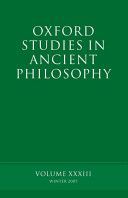
Oxford Studies in Ancient Philosophy is a volume of original articles on all aspects of ancient philosophy. The articles may be of substantial length, and include critical notices of major books. OSAP is now published twice yearly, in both hardback and paperback. This volume covers a wide chronological range of ancient philosophy, from the Presocratics, Heraclitus and Anaxagoras, to Galen and Aspasius in the second century AD. At the core of the volume are five articles on Aristotle.
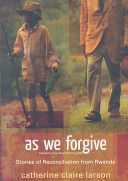
Can a country known for its radical brutality become a country known for an even more radical forgiveness? More than a decade after the 1994 genocide, the Rwandan government has released tens of thousands of murderers back into the communities they ravaged. Survivors and perpetrators have had to learn to live again as neighbors. Inspired by the award-winning film As We Forgive, this book explores the pain, the mystery, and the hope through seven compelling stories as victims, orphans, widows, and perpetrators journey toward reconciliation.
ما از اخلاق چه انتظاری داریم؟ این سوال شاید تاحدودی برای عموم مردم و یا متخصصان این رشته قابل پاسخ باشد؛ اینکه خوب بودن را به ما بیاموزد و در تنظیم روابط فردی م...

جشن کتاب تهران به ایستگاه سی و یکم رسیده است. حال و احوال نشر کتاب خوب نیست و باید فرهنگدوستان را به خرید و هدیه دادن کتاب ترغیب نمود. خانه اخلاقپژوهان جوان ب...

بنیاد کتابهای اخلاق اسلامی عمدتا پالایش جان از آلودگیها و آراستن آن به زیباییها است. اندیشه محوری این قبیل کتابها آن است که انسان فعلی آنی نیست که باید باشد...

-
0 Comments