Notice: تابع WP_Block_Type_Registry::register به طورنادرست فراخوانی شد. نامهای نوع بلوک نباید حروف بزرگ داشته باشند. لطفاً برای اطلاعات بیشتر، اشکال زدایی در وردپرس را مشاهده کنید. (این پیام در نگارش 5.0.0 افزوده شده است.) in /home/ethicsho/public_html/wp-includes/functions.php on line 5313
Warning: Use of undefined constant TDC_PATH_LEGACY - assumed 'TDC_PATH_LEGACY' (this will throw an Error in a future version of PHP) in /home/ethicsho/public_html/wp-content/plugins/td-composer/td-composer.php on line 109
Warning: Use of undefined constant TDSP_THEME_PATH - assumed 'TDSP_THEME_PATH' (this will throw an Error in a future version of PHP) in /home/ethicsho/public_html/wp-content/plugins/td-composer/td-composer.php on line 113 بایگانیهای 303.66 - خانه اخلاق پژوهان جوان Notice: Trying to access array offset on value of type bool in /home/ethicsho/public_html/wp-content/plugins/wp-ulike/inc/general-functions.php on line 807
This book is an expanded and revised edition of the author’s critically acclaimed volume Nuts and Bolts for the Social Sciences. In twenty-six succinct chapters, Jon Elster provides an account of the nature of explanation in the social sciences. He offers an overview of key explanatory mechanisms in the social sciences, relying on hundreds of examples and drawing on a large variety of sources-psychology, behavioral economics, biology, political science, historical writings, philosophy and fiction. Written in accessible and jargon-free language, Elster aims at accuracy and clarity while eschewing formal models.
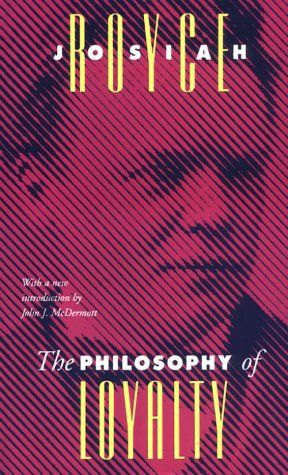
Josiah Royce (1855-1916), one of the outstanding classical American philosophers, is regarded by many as the foremost American idealist. A transitional book in the development of Royce’s thought, The Philosophy of Loyalty is a key to understanding his influence on the development of pragmatism. Royce’s basic argument is clear. Individual wills are a given, and social training is a natural aspect of community. But the two are not fully compatible, and conflicts naturally emerge. Loyalty to a cause unites many individuals into a community, but fanatical loyalty to causes often has inimical results. Long out of print and never before available in paperback, The Philosophy of Loyalty has many beneficial implications for understanding contemporary social passions and outlooks, especially for our own fragmented American culture. As Royce himself asserted nearly ninety years ago, in the preface of this book, “I am writing…not merely and not mainly for philosophers, but for all those who love…ideals, and also for those who love…their country – a country so ripe at present for idealism, and so confused, nevertheless, by the vastness and the complication of its social and political problems.” Royce speaks to these continuing concerns in a voice that is perceptive, learned, and sensitive to the human situation, and he offers powerful conceptual tools for our own troubled times.
Hamlet tells Horatio that there are more things in heaven and earth than are dreamt of in his philosophy. InDouble Vision, philosopher and literary critic Tzachi Zamir argues that there are more things in Hamlet than are dreamt of–or at least conceded–by most philosophers. Making an original and persuasive case for the philosophical value of literature, Zamir suggests that certain important philosophical insights can be gained only through literature. But such insights cannot be reached if literature is deployed merely as an aesthetic sugaring of a conceptual pill. Philosophical knowledge is not opposed to, but is consonant with, the literariness of literature. By focusing on the experience of reading literature as literature and not philosophy, Zamir sets a theoretical framework for a philosophically oriented literary criticism that will appeal both to philosophers and literary critics. Double Visionis concerned with the philosophical understanding induced by the aesthetic experience of literature. Literary works can function as credible philosophical arguments–not ones in which claims are conclusively demonstrated, but in which claims are made plausible. Such claims, Zamir argues, are embedded within an experiential structure that is itself a crucial dimension of knowing. Developing an account of literature’s relation to knowledge, morality, and rhetoric, and advancing philosophical-literary readings ofRichard III, Macbeth, Romeo and Juliet, Othello, Antony and Cleopatra, Hamlet, andKing Lear, Zamir shows how his approach can open up familiar texts in surprising and rewarding ways.
ما از اخلاق چه انتظاری داریم؟ این سوال شاید تاحدودی برای عموم مردم و یا متخصصان این رشته قابل پاسخ باشد؛ اینکه خوب بودن را به ما بیاموزد و در تنظیم روابط فردی م...

جشن کتاب تهران به ایستگاه سی و یکم رسیده است. حال و احوال نشر کتاب خوب نیست و باید فرهنگدوستان را به خرید و هدیه دادن کتاب ترغیب نمود. خانه اخلاقپژوهان جوان ب...

بنیاد کتابهای اخلاق اسلامی عمدتا پالایش جان از آلودگیها و آراستن آن به زیباییها است. اندیشه محوری این قبیل کتابها آن است که انسان فعلی آنی نیست که باید باشد...

-
0 Comments