Notice: تابع WP_Block_Type_Registry::register به طورنادرست فراخوانی شد. نامهای نوع بلوک نباید حروف بزرگ داشته باشند. لطفاً برای اطلاعات بیشتر، اشکال زدایی در وردپرس را مشاهده کنید. (این پیام در نگارش 5.0.0 افزوده شده است.) in /home/ethicsho/public_html/wp-includes/functions.php on line 5313
Warning: Use of undefined constant TDC_PATH_LEGACY - assumed 'TDC_PATH_LEGACY' (this will throw an Error in a future version of PHP) in /home/ethicsho/public_html/wp-content/plugins/td-composer/td-composer.php on line 109
Warning: Use of undefined constant TDSP_THEME_PATH - assumed 'TDSP_THEME_PATH' (this will throw an Error in a future version of PHP) in /home/ethicsho/public_html/wp-content/plugins/td-composer/td-composer.php on line 113 بایگانیهای Stephen Coburn Pepper - خانه اخلاق پژوهان جوان Notice: Trying to access array offset on value of type bool in /home/ethicsho/public_html/wp-content/plugins/wp-ulike/inc/general-functions.php on line 807
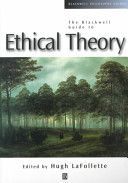
Ranging from moral realism to virtue ethics, this superb new volume presents a complete state-of-the-art survey of ethical theory.Written by an international assembly of leading moral philosophers, each of the twenty-one newly-commissioned papers develops the main tenets, arguments, themes, and problems of the main normative and meta-ethical philosophical outlooks. Contributors are Michael Smith, Simon Blackburn, Philip L. Quinn, James Rachels, Jeff McMahan, John D. Caputo, Elliott Sober, Laurence Thomas, R. G. Frey, Brad Hooker, F. M. Kamm, Thomas E. Hill, Jr., Geoffrey Sayre-McCord, David McNaughton, L. W. Sumner, Jan Narveson, Michael Slote, Alison Jagger, William R. Schroeder, Hugh LaFollette, and James P. Sterba.This volume is arguably the most ambitious and authoritative survey of ethical theory available today. It serves as a groundbreaking resource as well as a comprehensive guide for both students and general readers alike.
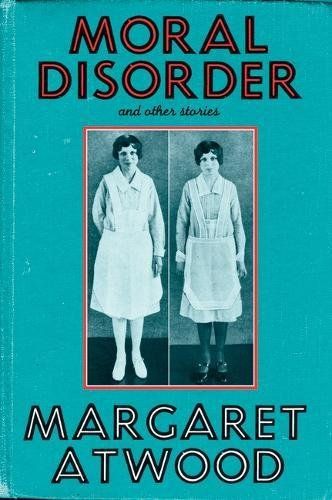
Margaret Atwood has frequently been cited as one of the foremost writers of our time. Moral Disorder, her new work of fiction, could be seen as a collection of ten stories that is almost a novel … or a novel broken up into ten stories. It resembles a photograph album – a series of clearly observed moments that trace the course of a life, and the lives intertwined with it – those of parents, siblings, children, friends, enemies, teachers and even animals. And as in a photograph album, times change; every decade is here, from the 1930s through the 50s, 60s and 70s to the present day. The settings are equally varied: large cities, suburbs, farms, northern forests. The first story, ‘The Bad News,’ is set in the present, as a couple no longer young situate themselves in a larger world no longer safe. Then the narrative switches time, as the central character moves through childhood and adolescence, in ‘The Art of Cooking and Serving’, ‘The Headless Horseman’ and ‘My Last Duchess’. We follow her into young adulthood in ‘The Other Place’, and then through a complex relationship, traced in three of the stories – ‘Monopoly’, ‘Moral Disorder’ and ‘The Entities’. The last two stories, ‘The Labrador Fiasco’ and ‘The Boys at the Lab’, deal with the heartbreaking old age of parents, but circle back to childhood again, to complete the cycle. By turns funny, moving, lyrical, incisive, tragic, earthy, shocking and deeply personal, Moral Disorder displays Atwood’s celebrated storytelling gifts and inimitable style to their best advantage. As the New York Times has said, ‘Atwood has complete access to her people’s emotional histories, complete understanding of their hearts and imaginations.’
Sentimental Rules is an ambitious and highly interdisciplinary work, which proposes and defends a new theory about the nature and evolution of moral judgment. In it, philosopher Shaun Nichols develops the theory that emotions play a critical role in both the psychological and the cultural underpinnings of basic moral judgment. Nichols argues that our norms prohibiting the harming of others are fundamentally associated with our emotional responses to those harms, and that such “sentimental rules” enjoy an advantage in cultural evolution, which partly explains the success of certain moral norms. This has sweeping and exciting implications for philosophical ethics. Nichols builds on an explosion of recent intriguing experimental work in psychology on our capacity for moral judgment and shows how this empirical work has broad import for enduring philosophical problems. The result is an account that illuminates fundamental questions about the character of moral emotions and the role of sentiment and reason in how we make our moral judgments. This work should appeal widely across philosophy and the other disciplines that comprise cognitive science.
“Organ shortage is an ongoing problem in many countries. The needless death and suffering which have resulted necessitate an investigation into potential solutions. This examination of contemporary ethical means, both practical and policy-oriented, of reducing the shortfall in organs draws on the experiences of a range of countries. The authors focus on the resolution and negotiation of ethical conflict, examine systems approaches such as the ‘Spanish model’ and the US Breakthrough Collaboratives, evaluate policy proposals relating to incentives, presumed consent, and modifications regarding end-of-life care, and evaluate the greatly increased use of (non-heart-beating) donors suffering circulatory death, as well as living donors. The proposed strategies and solutions are not only capable of resolving the UK’s own organ-shortage crisis, but also of being implemented in other countries grappling with how to address the growing gap between supply and demand for organs”–
More than any other field in education, the social and cultural foundations of education reflect many of the conflicts, tensions, and forces in American society. This is hardly surprising, since the area focuses on issues such as race, gender, socioeconomic class, the impact of technology on learning, what it means to be educated, and the role of teaching and learning in a societal context.The Encyclopedia of the Social and Cultural Foundations of Education provides a comprehensive introduction to the social and cultural foundations of education. With more than 400 entries, the three volumes of this indispensable resource offer a thorough and interdisciplinary view of the field for all those interested in issues involving schools and society.Key Features· Provides an interdisciplinary perspective from areas such as comparative education, educational anthropology, educational sociology, the history of education, and the philosophy of education· Presents essays on major movements in the field, including the Free School and Visual Instruction movements· Includes more than 130 biographical entries on important men and women in education· Offers interpretations of legal material including Brown v. Board of Education(1954) and the GI Bill of Rights· Explores theoretical debates fundamental to the field such as religion in the public school curriculum, rights of students and teachers, surveillance in schools, tracking and detracking, and many more · Contains a visual history of American education with nearly 350 images and an accompanying narrativeKey Themes· Arts, Media, and Technology· Curriculum· Economic Issues· Equality and Social Stratification· Evaluation, Testing, and Research Methods· History of Education· Law and Public Policy· Literacy· Multiculturalism and Special Populations· Organizations, Schools, and Institutions· Religion and Social Values· School Governance· Sexuality and Gender· Teachers· Theories, Models, and Philosophical Perspectives· A Visual History of American Education
ما از اخلاق چه انتظاری داریم؟ این سوال شاید تاحدودی برای عموم مردم و یا متخصصان این رشته قابل پاسخ باشد؛ اینکه خوب بودن را به ما بیاموزد و در تنظیم روابط فردی م...

جشن کتاب تهران به ایستگاه سی و یکم رسیده است. حال و احوال نشر کتاب خوب نیست و باید فرهنگدوستان را به خرید و هدیه دادن کتاب ترغیب نمود. خانه اخلاقپژوهان جوان ب...

بنیاد کتابهای اخلاق اسلامی عمدتا پالایش جان از آلودگیها و آراستن آن به زیباییها است. اندیشه محوری این قبیل کتابها آن است که انسان فعلی آنی نیست که باید باشد...

-
0 Comments