Notice: تابع WP_Block_Type_Registry::register به طورنادرست فراخوانی شد. نامهای نوع بلوک نباید حروف بزرگ داشته باشند. لطفاً برای اطلاعات بیشتر، اشکال زدایی در وردپرس را مشاهده کنید. (این پیام در نگارش 5.0.0 افزوده شده است.) in /home/ethicsho/public_html/wp-includes/functions.php on line 5313
Warning: Use of undefined constant TDC_PATH_LEGACY - assumed 'TDC_PATH_LEGACY' (this will throw an Error in a future version of PHP) in /home/ethicsho/public_html/wp-content/plugins/td-composer/td-composer.php on line 109
Warning: Use of undefined constant TDSP_THEME_PATH - assumed 'TDSP_THEME_PATH' (this will throw an Error in a future version of PHP) in /home/ethicsho/public_html/wp-content/plugins/td-composer/td-composer.php on line 113 بایگانیهای 303.3 76 0973 - خانه اخلاق پژوهان جوان Notice: Trying to access array offset on value of type bool in /home/ethicsho/public_html/wp-content/plugins/wp-ulike/inc/general-functions.php on line 807
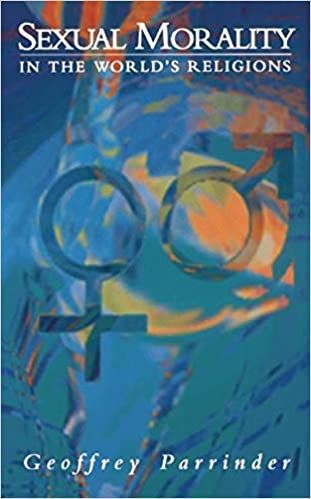
An exploration of sex and religion together within the historical andontemporary contexts of each of the world’s major living religions, from thencient traditions and practices of both Eastern and Western religions to theodern influences of medicine, psychology and women’s rights. The book covers wide range of subjects, including marriage and celibacy, monogamy andolygamy, homosexuality, passion and love, veiling and harems, Yoga andantra, Yin and Yang, mystical union and symbolism.
Aquinas, Aristotle, and the Promise of the Common Good claims that contemporary theory and practice have much to gain from engaging Aquinas’s normative concept of the common good and his way of reconciling religion, philosophy, and politics. Examining the relationship between personal and common goods, and the relation of virtue and law to both, Mary M. Keys shows why Aquinas should be read in addition to Aristotle on these perennial questions. She focuses on Aquinas’s Commentaries as mediating statements between Aristotle’s Nicomachean Ethics and Politics and, Aquinas’s own Summa Theologiae, showing how this serves as the missing link for grasping Aquinas’s understanding of Aristotle’s thought, in relation to Aquinas’s own considered views. Keys argues provocatively that Aquinas’s Christian faith opens up new panoramas and possibilities for philosophical inquiry and insights into ethics and politics. Her book shows how religious faith can assist sound philosophical inquiry into the foundation and proper purposes of society and politics.
Published in 1785, the Groundwork of the Metaphysics of Morals is one of the most powerful texts in the history of ethical thought. In this book, Immanuel Kant formulates and justifies a supreme principle of morality that issues universal and unconditional moral commands. These commands receive their normative force from the fact that rational agents autonomously impose the moral law upon themselves. As such, they are laws of freedom. This volume contains the first facing-page German-English edition of Kant’s Groundwork. It presents a new, authentic edition of the German text and a carefully revised version of Mary Gregor’s acclaimed English translation, as well as editorial notes and a full bilingual index. It will be the edition of choice for any student or scholar who is not content with reading this central contribution to modern moral philosophy through the veil of English translation.
The demand to be beautiful is increasingly important in today’s visual and virtual culture. Rightly or wrongly, being perfect has become an ethical ideal to live by, and according to which we judge ourselves good or bad, a success or a failure. Perfect Me explores the changing nature of the beauty ideal, showing how it is more dominant, more demanding, and more global than ever before. Heather Widdows argues that our perception of the self is changing. More and more, we locate the self in the body–not just our actual, flawed bodies but our transforming and imagined ones. As this happens, we further embrace the beauty ideal. Nobody is firm enough, thin enough, smooth enough, or buff enough-not without significant effort and cosmetic intervention. And as more demanding practices become the norm, more will be required of us, and the beauty ideal will be harder and harder to resist. If you have ever felt the urge to “make the best of yourself” or worried that you were “letting yourself go,” this book explains why. Perfect Me examines how the beauty ideal has come to define how we see ourselves and others and how we structure our daily practices-and how it enthralls us with promises of the good life that are dubious at best. Perfect Me demonstrates that we must first recognize the ethical nature of the beauty ideal if we are ever to address its harms.
ما از اخلاق چه انتظاری داریم؟ این سوال شاید تاحدودی برای عموم مردم و یا متخصصان این رشته قابل پاسخ باشد؛ اینکه خوب بودن را به ما بیاموزد و در تنظیم روابط فردی م...

جشن کتاب تهران به ایستگاه سی و یکم رسیده است. حال و احوال نشر کتاب خوب نیست و باید فرهنگدوستان را به خرید و هدیه دادن کتاب ترغیب نمود. خانه اخلاقپژوهان جوان ب...

بنیاد کتابهای اخلاق اسلامی عمدتا پالایش جان از آلودگیها و آراستن آن به زیباییها است. اندیشه محوری این قبیل کتابها آن است که انسان فعلی آنی نیست که باید باشد...

-
0 Comments