Notice: تابع WP_Block_Type_Registry::register به طورنادرست فراخوانی شد. نامهای نوع بلوک نباید حروف بزرگ داشته باشند. لطفاً برای اطلاعات بیشتر، اشکال زدایی در وردپرس را مشاهده کنید. (این پیام در نگارش 5.0.0 افزوده شده است.) in /home/ethicsho/public_html/wp-includes/functions.php on line 5313
Warning: Use of undefined constant TDC_PATH_LEGACY - assumed 'TDC_PATH_LEGACY' (this will throw an Error in a future version of PHP) in /home/ethicsho/public_html/wp-content/plugins/td-composer/td-composer.php on line 109
Warning: Use of undefined constant TDSP_THEME_PATH - assumed 'TDSP_THEME_PATH' (this will throw an Error in a future version of PHP) in /home/ethicsho/public_html/wp-content/plugins/td-composer/td-composer.php on line 113 بایگانیهای 294.35677 - خانه اخلاق پژوهان جوان Notice: Trying to access array offset on value of type bool in /home/ethicsho/public_html/wp-content/plugins/wp-ulike/inc/general-functions.php on line 807
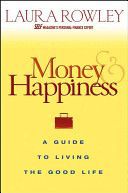
“Laura Rowley makes us all understand the money-happiness connection in our own lives so that we spend our time and our efforts wisely. She gets to the heart of why money can bring feelings of stress, joy, and freedom, and Rowley offers insight that every reader can use to make smarter decisions that will lead to living a rich life in every possible definition of the term.”Lucy Danziger, Editor-in-Chief, Self magazin “This is a wry and companionable guide to getting your finances in better sync with your values, and who wouldn’t be enriched by that?” Melinda Henneberger, Contributing Editor, Newsweek “Money and Happiness takes cold, hard, financial information and warms it up through the voice of your best friend. You’ll find out how to achieve your life dreams, and avoid money nightmares. The cost of this book may be the best investment you’ll ever make.”Kevin McKinley, CFP™, author of Make Your Kid a Millionaire and host of public radio’s On Your Mone “Laura Rowley helps demystify the age-old connection between money and happiness while providing lots of helpful hints on how to find the right balance of both in your life.” Terry Keenan, Anchor, Fox News Channe “Let Laura Rowley guide you to a rational and rewarding life by helping you re-order your approach to your financial well-being. This book covers all the dimensions you need to know about how to plan properly for your reality. She teaches that you need not be loaded to be happy. And she shows you how to set, then achieve, your goals. For your sanity, Rowley is a welcome antidote to the wave of materialism washing over our culture.”Allan Dodds Frank, Bloomberg Televisio
Epistemology has for a long time focused on the concept of knowledge and tried to answer questions such as whether knowledge is possible and how much of it there is. Often missing from this inquiry, however, is a discussion on the value of knowledge. In The Value of Knowledge and the Pursuit of Understanding Jonathan Kvanvig argues that epistemology properly conceived cannot ignore the question of the value of knowledge. He also questions one of the most fundamental assumptions in epistemology, namely that knowledge is always more valuable than the value of its subparts. Taking Platos’ Meno as a starting point of his discussion, Kvanvig tackles the different arguments about the value of knowledge and comes to the conclusion that knowledge is less valuable than generally assumed. Clearly written and well argued, the book will appeal to students and professionals in epistemology.
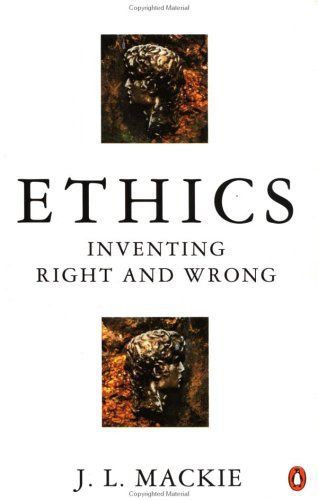
John Mackie’s stimulating book is a complete and clear treatise on moral theory. His writings on normative ethics-the moral principles he recommends-offer a fresh approach on a much neglected subject, and the work as a whole is undoubtedly a major contribution to modern philosophy.The author deals first with the status of ethics, arguing that there are not objective values, that morality cannot be discovered but must be made. He examines next the content of ethics, seeing morality as a functional device, basically the same at all times but changing significantly in response to changes in the human condition. He sketches a practical moral system, criticizing but also borrowing from both utilitarian and absolutist views. Thirdly, the frontiers of ethics, areas of contact with psychology, metaphysics, theology, law and politcs, are explored.Throughout, his aim is to discuss a wide range of questions that are both philosophical and practical, working within a distinctive version of subjectivism-an “error” theory of the apparent objectivity of values. John Mackie has drawn on the contributions of such classic thinkers as Plato, Aristotle, Hobbes, Hume, Kant and Sidgwick, and on more recent discussions, to produce a thought-provoking account that will inspire both the general reader and the student of philosophy.
Jacques Cory’s second book Activist Business Ethics expands upon the theoretical concepts developed in his first book Business Ethics: The Ethical Revolution of Minority Shareholders published by Kluwer Academic Publishers in March 2001. Activist business ethics is needed in order to remedy the wrongdoing committed to stakeholders and minority shareholders. This will be achieved by cooperation between ethical businessmen, activist academics, stakeholders and minority shareholders. We should treat others as we would want others to treat us, not through interest, but by conviction. Yet this principle is not the guideline of many companies in the modern business world, despite the fact that most religions and philosophers have advocated it in the last 3,000 years. How can we convince or compel modern business to apply this principle? And is it essential to the success of economy? In order to answer these questions this book examines the evolution of activist business ethics in business, in democracies, in Christianity, Judaism, Islam, Buddhism, in philosophy and psychology. The book examines international aspects, the personification of stakeholders, the predominance of values and ethics for CEOs and the inefficient safeguards of the stakeholders’ interests. The book presents new vehicles for the safeguard of those interests, such as the Internet, Transparency, Ethical Funds and Activist Associations, and future activist vehicles, such as the Supervision Board and the Institute of Ethics. Today everybody is a stakeholder and a minority shareholder of a company, directly or through our pension funds, or as a client, a supplier, a member of a community and a citizen. The principal premise of the book is, therefore, that ultimately the wrongdoers act against themselves. The book is woven with many references on ethics and business ethics from the professional and classic world literature, the Bible and other religious texts, poetry, maxims, and folk tales; showing that ethical problems are similar throughout the ages and cultures, but some of the solutions given in this book are new and original. Activist Business Ethics is primarily intended for the academic market and is particularly appropriate for academics in business administration, ethics and finance. It should also appeal strongly to the professional business/finance market, and to stakeholders and minority shareholders as well, who are aware of the wrongdoing committed to them and who want to remedy the situation by activist conduct.
ما از اخلاق چه انتظاری داریم؟ این سوال شاید تاحدودی برای عموم مردم و یا متخصصان این رشته قابل پاسخ باشد؛ اینکه خوب بودن را به ما بیاموزد و در تنظیم روابط فردی م...

جشن کتاب تهران به ایستگاه سی و یکم رسیده است. حال و احوال نشر کتاب خوب نیست و باید فرهنگدوستان را به خرید و هدیه دادن کتاب ترغیب نمود. خانه اخلاقپژوهان جوان ب...

بنیاد کتابهای اخلاق اسلامی عمدتا پالایش جان از آلودگیها و آراستن آن به زیباییها است. اندیشه محوری این قبیل کتابها آن است که انسان فعلی آنی نیست که باید باشد...

-
0 Comments