Notice: تابع WP_Block_Type_Registry::register به طورنادرست فراخوانی شد. نامهای نوع بلوک نباید حروف بزرگ داشته باشند. لطفاً برای اطلاعات بیشتر، اشکال زدایی در وردپرس را مشاهده کنید. (این پیام در نگارش 5.0.0 افزوده شده است.) in /home/ethicsho/public_html/wp-includes/functions.php on line 5313
Warning: Use of undefined constant TDC_PATH_LEGACY - assumed 'TDC_PATH_LEGACY' (this will throw an Error in a future version of PHP) in /home/ethicsho/public_html/wp-content/plugins/td-composer/td-composer.php on line 109
Warning: Use of undefined constant TDSP_THEME_PATH - assumed 'TDSP_THEME_PATH' (this will throw an Error in a future version of PHP) in /home/ethicsho/public_html/wp-content/plugins/td-composer/td-composer.php on line 113 بایگانیهای 291.1/7 - خانه اخلاق پژوهان جوان Notice: Trying to access array offset on value of type bool in /home/ethicsho/public_html/wp-content/plugins/wp-ulike/inc/general-functions.php on line 807
Pioneers in the study of forgiveness, Robert Enright and Joanna North have compiled a collection of twelve essays ranging from a first-person account of the mother of a murdered child to an assessment of the United States’ post-war reconciliations with Germany and Vietnam. This book explores forgiveness in interpersonal relationships, family relationships, the individual and society relationship, and international relations through the eyes of philosophers and educators as well as a psychologist, police chief-turned-minister, law professor, sociologist, psychiatrist, social worker, and theologian.
What shapes political behavior more: the situations in which individuals find themselves, or the internal psychological makeup-beliefs, values, and so on-of those individuals? This is perhaps the leading division within the psychological study of politics today. Political Psychology: Situations, Individuals, and Cases provides a concise, readable, and conceptually-organized introduction to the topic of political psychology by examining this very question.Using this situationism-dispositionism frameworkâwhich roughly parallels the concerns of social and cognitive psychologyâthis book focuses on such key explanatory mechanisms as behaviorism, obedience, personality, groupthink, cognition, affect, emotion, and neuroscience to explore topics ranging from voting behavior and racism to terrorism and international relations.Houghton’s clear and engaging examples directly challenge students to place themselves in both real and hypothetical situations which involve intense moral and political dilemmas. This highly readable text will provide students with the conceptual foundation they need to make sense of the rapidly changing and increasingly important field of political psychology.David Patrick Houghton is Associate Professor of Political Science at the University of Central Florida.
‘We know much more about the global politics of intellectual property than we do about national political contests over the ownership of knowledge. Haunss and Shadlen have identified this gap in the literature and have done a fine job of bringing together a set of essays that helps to fill this gap in our understanding of the multi-layered nature of intellectual property politics.’ Peter Drahos, Australian National University ‘This thought-provoking volume provides invaluable new insights and is a major contribution to the debate on the politics of intellectual property rights.’ Duncan Matthews, Queen Mary, University of London, UK This book offers empirical analyses of conflicts over the ownership, control, and use of knowledge and information in developed and developing countries. Sebastian Haunss and Kenneth C. Shadlen, along with a collection of eminent contributors, focus on how business organizations, farmers, social movements, legal communities, state officials, transnational enterprises, and international organizations shape IP policies in areas such as health, information-communication technologies, indigenous knowledge, genetic resources, and many others. The innovative and original chapters examine conflicts over the rules governing various dimensions of IP, including patents, copyrights, traditional knowledge, and biosafety regulations. Written from a political perspective, this book is a must-read for political scientists, sociologists and anthropologists who study IP and conflicts over property. It is also an essential read for stakeholders in institutions, NGOs and industry interested in knowledge governance and IP politics.
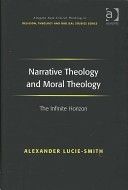
Moral thinking today finds itself stranded between the particular and the universal. Alasdair MacIntyre’s work on narrative, discussed here along with that of Stanley Hauerwas and H. T. Engelhardt, aims to undo the perceived damage done by the Enlightenment by returning to narrative and abandoning the illusion of a disembodied reason that claims to be able give a coherent explanation for everything. It is precisely this – a theory that holds good for all cases – that John Rawls proposed, drawing on the heritage of Emmanuel Kant. Who is right? Must universality be abandoned? Must we only think about morality in terms that are relative, bound by space and time? Alexander Lucie-Smith attempts to answer these questions by examining the nature of narrative itself as well as the particular narratives of Rawls and St Augustine. Bound and rooted as they are in history and personal experience, narratives nevertheless strain at the limits imposed on them. It is Lucie-Smith’s contention that each narrative that points to a lived morality exists against the background of an infinite horizon; and thus it is that the particular and the rooted can also make us aware of the universal and unchanging.
ما از اخلاق چه انتظاری داریم؟ این سوال شاید تاحدودی برای عموم مردم و یا متخصصان این رشته قابل پاسخ باشد؛ اینکه خوب بودن را به ما بیاموزد و در تنظیم روابط فردی م...

جشن کتاب تهران به ایستگاه سی و یکم رسیده است. حال و احوال نشر کتاب خوب نیست و باید فرهنگدوستان را به خرید و هدیه دادن کتاب ترغیب نمود. خانه اخلاقپژوهان جوان ب...

بنیاد کتابهای اخلاق اسلامی عمدتا پالایش جان از آلودگیها و آراستن آن به زیباییها است. اندیشه محوری این قبیل کتابها آن است که انسان فعلی آنی نیست که باید باشد...

-
0 Comments