Notice: تابع WP_Block_Type_Registry::register به طورنادرست فراخوانی شد. نامهای نوع بلوک نباید حروف بزرگ داشته باشند. لطفاً برای اطلاعات بیشتر، اشکال زدایی در وردپرس را مشاهده کنید. (این پیام در نگارش 5.0.0 افزوده شده است.) in /home/ethicsho/public_html/wp-includes/functions.php on line 5313
Warning: Use of undefined constant TDC_PATH_LEGACY - assumed 'TDC_PATH_LEGACY' (this will throw an Error in a future version of PHP) in /home/ethicsho/public_html/wp-content/plugins/td-composer/td-composer.php on line 109
Warning: Use of undefined constant TDSP_THEME_PATH - assumed 'TDSP_THEME_PATH' (this will throw an Error in a future version of PHP) in /home/ethicsho/public_html/wp-content/plugins/td-composer/td-composer.php on line 113 بایگانیهای 241.6495765 - خانه اخلاق پژوهان جوان Notice: Trying to access array offset on value of type bool in /home/ethicsho/public_html/wp-content/plugins/wp-ulike/inc/general-functions.php on line 807
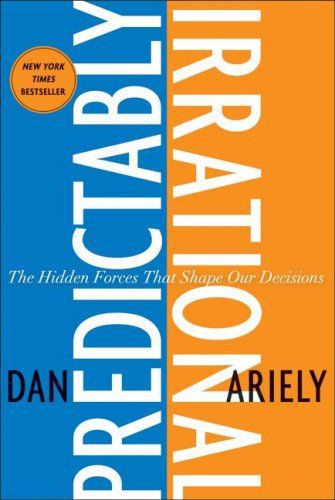
An evaluation of the sources of illogical decisions explores the reasons why irrational thought often overcomes level-headed practices, offering insight into the structural patterns that cause people to make the same mistakes repeatedly.
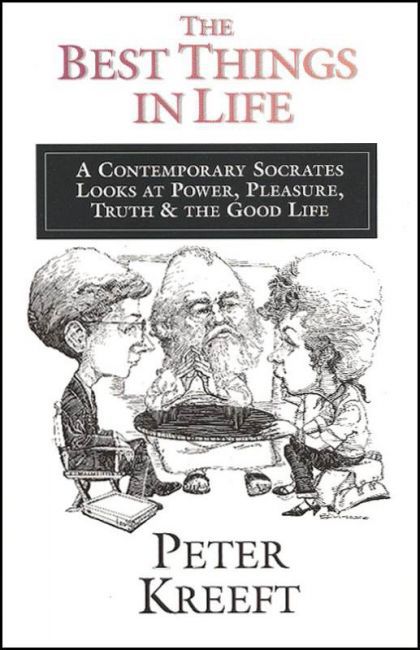
What are the best things in life? Questions like that may boggle your mind. But they don’t boggle Socrates. The indomitable old Greek brings his unending questions to Desperate State University. With him come the same mind-opening and spirit-stretching challenge that disrupted ancient Athens. What is the purpose of education? Why do we make love?What good is money? Can computers think like people? Is there a difference between Capitalism and Communism? What is the greatest good? Is belief in God like belief in Santa Claus?
In twelve short, Socratic dialogues Peter Kreeft explodes contemporary values like success, power and pleasure. And he bursts the modern bubbles of agnosticism and subjectivism. He leaves you richer, wiser and more able to discern what the best things in life actually are.
The intellectual scope and courage to contend with the largest puzzles of human existence and organization distinguish great social thinkers. Barrington Moore’s Social Origins of Dictatorship and Democracy was a foundational work of historical sociology that influenced a generation of social scientists and, decades later, continues to be widely read and taught. Here, Moore takes up the same tools of historical comparison to investigate why groups of people kill and torture each other. His answer is arrestingly simple: people persecute those whom they perceive as polluting due to their “impure” religious, political, or economic ideas.Moore’s search begins with the Old Testament’s restrictions on sexual behavior, idolatry, diet, and handling unclean objects. He argues that religious authorities seeking to distinguish the ancient Hebrews from competing groups invented, along with monotheism, the association of impure things with moral failure and the violation of God’s will. This allowed people to view those holding competing ideas as contaminated and, more important, contaminating. Moore moves next to the French Wars of Religion, in which Protestants and Catholics massacred each other over the control of purity, and the French Revolution, which perfected terror and secularized purity. He then combs the major Asian religions and finds–to his surprise–that violent efforts to eradicate the “impure” were largely absent before substantial Western influence.Moore’s provocative conclusion is that monotheism–with its monopoly on virtue and failure to provide supernatural scapegoats–is responsible for some of the most virulent forms of intolerance and is a major cause of human nastiness and suffering. Moore does not say that the monotheist tradition was the primary source of Nazism, Stalinism, Maoism, violent Hindu fundamentalism, or ethnic cleansing in Rwanda and the former Yugoslavia, but he does identify it as an indispensable cause because it justified, encouraged, and spread vindictive persecution throughout the world.Once again, Moore has drawn on his comprehensive understanding of history and talent for speaking directly to readers to address one of the most crucial questions about human past and future. This book is for anyone who has ever heard the word genocide and asked why.
Gottfried Wilhelm Leibniz (1646-1716) was hailed by Bertrand Russell as ‘one of the supreme intellects of all time’. A towering figure in seventeenth-century philosophy, his complex thought has been championed and satirized in equal measure, most famously in Voltaire’s Candide. In this outstanding introduction to his philosophy, Nicholas Jolley introduces and assesses the whole of Leibniz’s philosophy. Beginning with an introduction to Leibniz’s life and work, he carefully introduces the core elements of Leibniz’s metaphysics: his theories of substance, identity and individuation; monads and space and time; and his important debate over the nature of space and time with Newton’s champion, Samuel Clarke. He then introduces Leibniz’s theories of mind, knowledge, and innate ideas, showing how Leibniz anticipated the distinction between conscious and unconscious states, before examining his theory of free will and the problem of evil. An important feature of the book is its introduction to Leibniz’s moral and political philosophy, an overlooked aspect of his work. The final chapter assesses legacy and the impact of his philosophy on philosophy as a whole, particularly on the work of Immanuel Kant. Throughout, Nicholas Jolley places Leibniz in relation to some of the other great philosophers, such as Descartes, Spinoza and Locke, and discusses Leibniz’s key works, such as the Monadology and Discourse on Metaphysics.
ما از اخلاق چه انتظاری داریم؟ این سوال شاید تاحدودی برای عموم مردم و یا متخصصان این رشته قابل پاسخ باشد؛ اینکه خوب بودن را به ما بیاموزد و در تنظیم روابط فردی م...

جشن کتاب تهران به ایستگاه سی و یکم رسیده است. حال و احوال نشر کتاب خوب نیست و باید فرهنگدوستان را به خرید و هدیه دادن کتاب ترغیب نمود. خانه اخلاقپژوهان جوان ب...

بنیاد کتابهای اخلاق اسلامی عمدتا پالایش جان از آلودگیها و آراستن آن به زیباییها است. اندیشه محوری این قبیل کتابها آن است که انسان فعلی آنی نیست که باید باشد...

-
0 Comments