Notice: تابع WP_Block_Type_Registry::register به طورنادرست فراخوانی شد. نامهای نوع بلوک نباید حروف بزرگ داشته باشند. لطفاً برای اطلاعات بیشتر، اشکال زدایی در وردپرس را مشاهده کنید. (این پیام در نگارش 5.0.0 افزوده شده است.) in /home/ethicsho/public_html/wp-includes/functions.php on line 5313
Warning: Use of undefined constant TDC_PATH_LEGACY - assumed 'TDC_PATH_LEGACY' (this will throw an Error in a future version of PHP) in /home/ethicsho/public_html/wp-content/plugins/td-composer/td-composer.php on line 109
Warning: Use of undefined constant TDSP_THEME_PATH - assumed 'TDSP_THEME_PATH' (this will throw an Error in a future version of PHP) in /home/ethicsho/public_html/wp-content/plugins/td-composer/td-composer.php on line 113 بایگانیهای 241/.042/092 - خانه اخلاق پژوهان جوان Notice: Trying to access array offset on value of type bool in /home/ethicsho/public_html/wp-content/plugins/wp-ulike/inc/general-functions.php on line 807
Ethical values in computing are essential for understanding and maintaining the relationship between computing professionals and researchers and the users of their applications and programs. While concerns about cyber ethics and cyber law are constantly changing as technology changes, the intersections of cyber ethics and cyber law are still underexplored.Investigating Cyber Law and Cyber Ethics: Issues, Impacts and Practices discusses the impact of cyber ethics and cyber law on information technologies and society. Featuring current research, theoretical frameworks, and case studies, the book will highlight the ethical and legal practices used in computing technologies, increase the effectiveness of computing students and professionals in applying ethical values and legal statues, and provide insight on ethical and legal discussions of real-world applications.
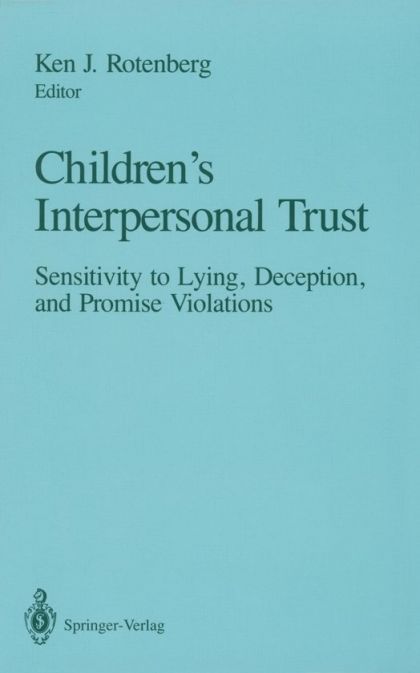
Social philosophers during the course of history and modern day researchers have expressed the belief that interpersonal trust is essential for harmonious and cooperative social relationships among people. Interpersonal trust has been described as the social cement that binds interpersonal relationships in society and is necessary for its survival. This book provides researchers and professionals who deal with children an insight into a critical facet of children’s social functioning. Interpersonal trust is conceptualized as children’ s confidence that a person’s verbal or nonverbal communication accurately conveys facts or internal states. This includes children’s sensitivity to lying, deception and promise violations.
It’s time for an introduction to philosophy textbook that you can relate to and enjoy reading! THE BIG QUESTIONS: A SHORT INTRODUCTION TO PHILOSOPHY tackles the tough issues and helps you form your own opinions while presenting the best philosophical selections available.
“I encourage all adults to teach children the basic principles of online safety that are found in this book.” –First Lady Laura Bush, from the Foreword Wait ’til you hear what almost happened to me! The Internet is like a big city with great places to go, but you have to be careful! I know. I had a REAL adventure on the Internet, and it wasn’t the fun kind. When I tell you what almost happened, you’ll see why it’s so important to follow the rules for online safety! Read this book and you’ll find out what I’m talking about. Keep safe, okay? G2G (that’s “got to go” online–but you knew that!) These “3 KEEPs” help me keep safe online * I KEEP SAFE all my personal information * I KEEP AWAY from online strangers * I KEEP TELLING my parents or a trusted adult what I see on the Internet A word to adults If there’s a child in your life who uses the Internet, it’s your job to help them keep safe from online predators. Created for the Internet Keep Safe Coalition, Faux Paw–an adventurous, six-toed, Web-surfing cat–is here to help! With a foreword by First Lady Laura Bush, this colorful book and animated movie will give kids wise advice and you a place to start talking to them.
Jacques Cory’s second book Activist Business Ethics expands upon the theoretical concepts developed in his first book Business Ethics: The Ethical Revolution of Minority Shareholders published by Kluwer Academic Publishers in March 2001. Activist business ethics is needed in order to remedy the wrongdoing committed to stakeholders and minority shareholders. This will be achieved by cooperation between ethical businessmen, activist academics, stakeholders and minority shareholders. We should treat others as we would want others to treat us, not through interest, but by conviction. Yet this principle is not the guideline of many companies in the modern business world, despite the fact that most religions and philosophers have advocated it in the last 3,000 years. How can we convince or compel modern business to apply this principle? And is it essential to the success of economy? In order to answer these questions this book examines the evolution of activist business ethics in business, in democracies, in Christianity, Judaism, Islam, Buddhism, in philosophy and psychology. The book examines international aspects, the personification of stakeholders, the predominance of values and ethics for CEOs and the inefficient safeguards of the stakeholders’ interests. The book presents new vehicles for the safeguard of those interests, such as the Internet, Transparency, Ethical Funds and Activist Associations, and future activist vehicles, such as the Supervision Board and the Institute of Ethics. Today everybody is a stakeholder and a minority shareholder of a company, directly or through our pension funds, or as a client, a supplier, a member of a community and a citizen. The principal premise of the book is, therefore, that ultimately the wrongdoers act against themselves. The book is woven with many references on ethics and business ethics from the professional and classic world literature, the Bible and other religious texts, poetry, maxims, and folk tales; showing that ethical problems are similar throughout the ages and cultures, but some of the solutions given in this book are new and original. Activist Business Ethics is primarily intended for the academic market and is particularly appropriate for academics in business administration, ethics and finance. It should also appeal strongly to the professional business/finance market, and to stakeholders and minority shareholders as well, who are aware of the wrongdoing committed to them and who want to remedy the situation by activist conduct.
ما از اخلاق چه انتظاری داریم؟ این سوال شاید تاحدودی برای عموم مردم و یا متخصصان این رشته قابل پاسخ باشد؛ اینکه خوب بودن را به ما بیاموزد و در تنظیم روابط فردی م...

جشن کتاب تهران به ایستگاه سی و یکم رسیده است. حال و احوال نشر کتاب خوب نیست و باید فرهنگدوستان را به خرید و هدیه دادن کتاب ترغیب نمود. خانه اخلاقپژوهان جوان ب...

بنیاد کتابهای اخلاق اسلامی عمدتا پالایش جان از آلودگیها و آراستن آن به زیباییها است. اندیشه محوری این قبیل کتابها آن است که انسان فعلی آنی نیست که باید باشد...

-
0 Comments