Notice: تابع WP_Block_Type_Registry::register به طورنادرست فراخوانی شد. نامهای نوع بلوک نباید حروف بزرگ داشته باشند. لطفاً برای اطلاعات بیشتر، اشکال زدایی در وردپرس را مشاهده کنید. (این پیام در نگارش 5.0.0 افزوده شده است.) in /home/ethicsho/public_html/wp-includes/functions.php on line 5313
Warning: Use of undefined constant TDC_PATH_LEGACY - assumed 'TDC_PATH_LEGACY' (this will throw an Error in a future version of PHP) in /home/ethicsho/public_html/wp-content/plugins/td-composer/td-composer.php on line 109
Warning: Use of undefined constant TDSP_THEME_PATH - assumed 'TDSP_THEME_PATH' (this will throw an Error in a future version of PHP) in /home/ethicsho/public_html/wp-content/plugins/td-composer/td-composer.php on line 113 بایگانیهای 190 - صفحه 4 از 4 - خانه اخلاق پژوهان جوان Notice: Trying to access array offset on value of type bool in /home/ethicsho/public_html/wp-content/plugins/wp-ulike/inc/general-functions.php on line 807
Book Summary of Guilt And Its Vicissitudes: Psychoanalytic Reflections On MoralityHow do psychoanalysts explain human morality? Guilt and Its Vicissitudes: Psychoanalytic Reflections on Morality focuses on the way Melanie Klein and successive generations of her followers pursued and deepened Freud’s project of explaining man’s moral sense as a wholly natural phenomenon. With the introduction of the superego, Freud laid claim to the study of moral development as part of the psychoanalytic enterprise. At the same time he reconceptualized guilt: he thought of it not only as conscious, but as unconscious as well, and it was the unconscious sense of guilt that became a particular concern of the discipline he was founding. As Klein saw it, his work merely pointed the way. Judith M. Hughes argues that Klein and contemporary Kleinians went on to provide a more consistent and comprehensive psychological account of moral development. Hughes shows how Klein and her followers came to appreciate that moral and cognitive questions are complexly interwoven and makes clear how this complexity prompted them to extend the range of their theory. Hughes demonstrates both a detailed knowledge of the major figures in post-war British psychoanalysis, and a keen sensitivity to the way clinical experience informed theory-building. She writes with vigor and grace, not only about Freud and Klein, but also about such key thinkers as Riviere, Isaacs, Heimann, Segal, Bion and Joseph. Guilt and Its Vicissitudes speaks to those concerned with the clinical application of psychoanalytic theory and to those interested in the contribution psychoanalysis makes to understanding questions of human morality..
A new investigation into how the advent of precision-guided munitions affects the likelihood of US policy makers to use force. As such, this is an inquiry into the impact of ethics, strategy and military technology on the decision calculus of national leaders. Following the first Gulf War in 1991, this new study shows how US Presidents increasingly used stand-off precision guided munitions (or “PGMs,” especially the Tomahawk cruise missile) either to influence foreign adversaries to make specific policy choices or to signal displeasure with their actions. Such uses of force are attractive because they can lead to desirable policy outcomes where conventional diplomacy has failed but without the large cost of lives, economic resources, or political capital that result from large-scale military operations. In a post-9/11 world, understanding alternative uses of force under significant policy constraints is still of supreme importance.
This thorough study answers those who would revise the message of Scripture. Using the Bible, Jewish literature, and information from ancient cultures, it provides the knowledge necessary to respond with confidence, compassion, and honesty to demands that Christians accept active homosexuality.
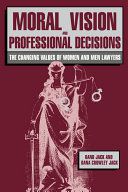
What does it mean today to “think like a lawyer”? Drawing on extensive interviews with men and women attorneys, the authors explore how moral reasoning affects lawyers’ understanding of justice and their own role in promoting it. This examination of personal and institutional imperatives in the legal profession, illustrated with quotations from the lawyers themselves, raises questions that transcend traditional discussions of legal ethics. The authors examine: the relationship between gender and patterns of moral thinking; the ways that personal morality affects public and professional responsibility; the legal system’s response to social changes in public ethics and in women’s roles. For example, has the recent influx of women to the legal profession brought moral views that challenge the traditional defining characteristics of a lawyer’s job? What happens when a lawyer’s personal morality conflicts with the role demands of the profession? In conclusion the authors offer suggestions for constructive changes in legal education and the code of professional ethics to foster morally responsive democracy. All those concerned with moral reasoning, gender roles, and the evolution of the legal system will find this stimulating and timely reading.
Distributed networks such as the Internet have altered the fundamental way a record is created, captured, accessed and managed over time. Law and ethics provide the major sources of regulatory controls over participants in such networks. This book analyses the interrelationship of recordkeeping, ethics and law in terms of existing regulatory models and their application to the Internet environment. It proposes an Internet model based on the notion of a legal and social relationship as a means of identifying the legal and ethical rights and obligations of recordkeeping participants in networked transactions. Medical, business and governmental relationships within communities of common interest based on trust illustrate the practical application of the model. As legal relationships have their basis in the law of obligations found in common and civil law systems, as well as archival science, the model has a broad-based application. The relationship model also provides a unique ethical and legal approach to property, access, privacy and evidence. Most importantly, the book provides an interdisciplinary approach to Internet regulation, which contributes to closer ties between those who research, teach and work in fields of ethics, law and archival science.
ما از اخلاق چه انتظاری داریم؟ این سوال شاید تاحدودی برای عموم مردم و یا متخصصان این رشته قابل پاسخ باشد؛ اینکه خوب بودن را به ما بیاموزد و در تنظیم روابط فردی م...

جشن کتاب تهران به ایستگاه سی و یکم رسیده است. حال و احوال نشر کتاب خوب نیست و باید فرهنگدوستان را به خرید و هدیه دادن کتاب ترغیب نمود. خانه اخلاقپژوهان جوان ب...

بنیاد کتابهای اخلاق اسلامی عمدتا پالایش جان از آلودگیها و آراستن آن به زیباییها است. اندیشه محوری این قبیل کتابها آن است که انسان فعلی آنی نیست که باید باشد...

-
0 Comments