


Notice: تابع WP_Block_Type_Registry::register به طورنادرست فراخوانی شد. نامهای نوع بلوک نباید حروف بزرگ داشته باشند. لطفاً برای اطلاعات بیشتر، اشکال زدایی در وردپرس را مشاهده کنید. (این پیام در نگارش 5.0.0 افزوده شده است.) in /home/ethicsho/public_html/wp-includes/functions.php on line 5313
Warning: Use of undefined constant TDC_PATH_LEGACY - assumed 'TDC_PATH_LEGACY' (this will throw an Error in a future version of PHP) in /home/ethicsho/public_html/wp-content/plugins/td-composer/td-composer.php on line 109
Warning: Use of undefined constant TDSP_THEME_PATH - assumed 'TDSP_THEME_PATH' (this will throw an Error in a future version of PHP) in /home/ethicsho/public_html/wp-content/plugins/td-composer/td-composer.php on line 113 بایگانیهای 190 - صفحه 2 از 4 - خانه اخلاق پژوهان جوان Notice: Trying to access array offset on value of type bool in /home/ethicsho/public_html/wp-content/plugins/wp-ulike/inc/general-functions.php on line 807
This is a selection of essays on moral responsibility that represent the major components of John Martin Fischer’s overall approach to freedom of the will and moral responsibility. The collection exhibits the overall structure of Fischer’s view and shows how the various elements fit together to form a comprehensive framework for analyzing free will and moral responsibility. The topics include deliberation and practical reasoning, freedom of the will, freedom of action, various notions of control, and moral accountability. The essays seek to provide a foundation for our practices of holding each other (and ourselves) morally and legally accountable for our behavior. A crucial move is the distinction between two kinds of control. According to Fischer, “regulative control” involves freedom to choose and do otherwise (“alternative possibilities”), whereas “guidance control” does not. Fischer contends that guidance control is all the freedom we need to be morally responsible agents. Further, he contends that such control is fully compatible with causal determinism. Additionally, Fischer argues that we do not need genuine access to alternative possibilities in order for there to be a legitimate point to practical reasoning. Fischer’s overall framework contains an argument for the contention that guidance control, and not regulative control, is associated with moral responsibility, a sketch of a comprehensive theory of moral responsibility (that ties together responsibility for actions, omissions, consequences, and character), and an account of the value of moral responsibility. On this account, the value of exhibiting freedom (of the relevant sort) and thus being morally responsible for one’s behavior is a species of the value of artistic self-expression.
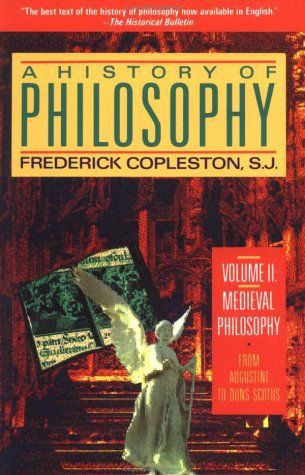
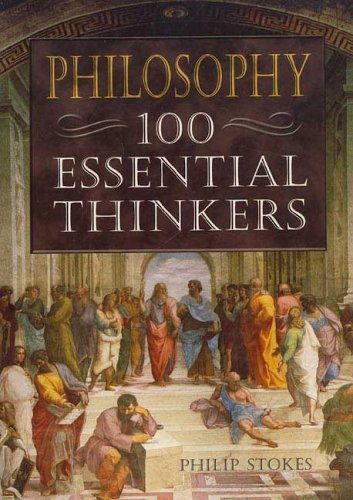
An engaging and informative introduction to the birth and development of ethics in western civilization. From Aristotle to Zeno, this volume examines the foundations on which later philosophers built their understandings of the place — and meaning-of human life.
Development as Freedomis a general exposition of the economic ideas and analyses of Amartya Sen, winner of the 1998 Nobel Prize in Economic Science. This brilliant and indispensable treatise compellingly analyzes the nature of contemporary economic development from the perspective of human freedom. Freedom, Sen persuasively argues, is at once the ultimate goal of economic life and the most efficient means of realizing general welfare. It is a good to be enjoyed by the world’s entire population. Drawing on moral and political philosophy and technical economic analysis, this work gives the nonspecialist reader powerful access to Sen’s paradigm-altering vision and vividly shows how he, in the words of the Nobel Prize committee, has both “restored an ethical dimension to the discussion of economic problems” and “opened up new fields of study for subsequent generations of researchers.” To a world divided between those who fear the ruthlessness of the free market under prevailing conditions of global capitalism and those who fear the terror of authoritarian states that stifle indi- vidual liberty as well as initiative,Development as Freedompresents a necessary intellectual and moral framework of analysis and scrutiny. By rigorously addressing one of the largest questions of all–“What is the relation between our economic wealth and our ability to live as we would like?”–Sen allows economics once again, as it did in the time of Adam Smith, to address the social basis of individual well-being and freedom. He also confronts the human dilemma that “despite unprecedented increases in overall opulence, the contemporary world denies elementary freedoms to vast numbers–perhaps even the majority–of people.” This is a landmark work that shows how in individual human freedom–the exclusive possession, Sen shows, of no particular nation, region or historical, intellectual or religious tradition–lies the capacity for political participation, economic development and social progress.
Bioethics, still in its infancy, is routinely called on by the government to provide political cover for controversial public health decisions involving the life and death of Americans. Doomsday or worst-case scenarios are often at the heart of these biopolitical decisions. A central feature of science fiction, these scenarios can impart useful insights. But worst-case scenarios, like Frankenstein’s monster, can also be unpredictably destructive, undermining both preparedness and the very values bioethics seeks to promote. Discovering a new flu strain, for example, leads immediately to visions of the 1918 flu pandemic, the worst in human history. Likewise, a “ticking time bomb” scenario leads to the use of physicians for torture, and he all purpose worst case charge of “socialism” threatens to derail meaningful healthcare reform. In Worst Case Bioethics George Annas employs contemporary disputes involving death and disaster to explore the radical changes underway in public health practice, the application of constitutional law to medicine, and human rights discourse to promote human health and wellbeing. Worst-case scenarios, especially worst-case bioethics scenarios, distort debate, limit options, rationalize human rights abuses, and undermine equality and social justice. It is, nonetheless, possible to temper worst-case scenarios in ways that promote both the development of a meaningful American bioethics, and a life and liberty affirming global health and human rights movement. Written at the intersection of law, bioethics, public health, and human rights, Worst Case Bioethics will interest not only bioethicists but scholars in public health, public policy, and human rights law, as well as members of the public who want to participate in these policy debates. Written at the intersection of law, bioethics, public health, and human rights, Worse Case Bioethics will interest not only bioethicists but scholars in public health, public policy, and human rights law.
ما از اخلاق چه انتظاری داریم؟ این سوال شاید تاحدودی برای عموم مردم و یا متخصصان این رشته قابل پاسخ باشد؛ اینکه خوب بودن را به ما بیاموزد و در تنظیم روابط فردی م...

جشن کتاب تهران به ایستگاه سی و یکم رسیده است. حال و احوال نشر کتاب خوب نیست و باید فرهنگدوستان را به خرید و هدیه دادن کتاب ترغیب نمود. خانه اخلاقپژوهان جوان ب...

بنیاد کتابهای اخلاق اسلامی عمدتا پالایش جان از آلودگیها و آراستن آن به زیباییها است. اندیشه محوری این قبیل کتابها آن است که انسان فعلی آنی نیست که باید باشد...

-
0 Comments