Notice: تابع WP_Block_Type_Registry::register به طورنادرست فراخوانی شد. نامهای نوع بلوک نباید حروف بزرگ داشته باشند. لطفاً برای اطلاعات بیشتر، اشکال زدایی در وردپرس را مشاهده کنید. (این پیام در نگارش 5.0.0 افزوده شده است.) in /home/ethicsho/public_html/wp-includes/functions.php on line 5313
Warning: Use of undefined constant TDC_PATH_LEGACY - assumed 'TDC_PATH_LEGACY' (this will throw an Error in a future version of PHP) in /home/ethicsho/public_html/wp-content/plugins/td-composer/td-composer.php on line 109
Warning: Use of undefined constant TDSP_THEME_PATH - assumed 'TDSP_THEME_PATH' (this will throw an Error in a future version of PHP) in /home/ethicsho/public_html/wp-content/plugins/td-composer/td-composer.php on line 113 بایگانیهای 180.5 - خانه اخلاق پژوهان جوان Notice: Trying to access array offset on value of type bool in /home/ethicsho/public_html/wp-content/plugins/wp-ulike/inc/general-functions.php on line 807
Philosophers have long suspected that thought and discourse about what we ought to do differ in some fundamental way from statements about what is. But the difference has proved elusive, in part because the two kinds of statement look alike. Focusing on judgments that express decisions–judgments about what is to be done, all things considered–Allan Gibbard offers a compelling argument for reconsidering, and reconfiguring, the distinctions between normative and descriptive discourse–between questions of “ought” and “is.” Gibbard considers how our actions, and our realities, emerge from the thousands of questions and decisions we form for ourselves. The result is a book that investigates the very nature of the questions we ask ourselves when we ask how we should live, and that clarifies the concept of “ought” by understanding the patterns of normative concepts involved in beliefs and decisions. An original and elegant work of metaethics, this book brings a new clarity and rigor to the discussion of these tangled issues, and will significantly alter the long-standing debate over “objectivity” and “factuality” in ethics. Table of Contents: I. Preliminaries 1. Introduction: A Possibility Proof 2. Intuitionism as Template: Emending Moore II. The Thing to Do 3. Planning and Ruling Out: The “Frege-Geach” Problem 4. Judgment, Disagreement, Negation 5. Supervenience and Constitution 6. Character and Import III. Normative Concepts 7. Ordinary Oughts: Meaning and Motivation 8. Normative Kinds: Patterns of Engagement 9. What to Say about the Thing to Do: The Expressivistic Turn and What it Gains Us IV. Knowing What to Do 10. Explaining with Plans 11. Knowing What to Do 12. Ideal Response Concepts 13. Deep Vindication and Practical Confidence 14. Impasse and Dissent References Index This is a remarkable book. It takes up a central and much-discussed problem – the difference between normative thought (and discourse) and “descriptive” thought (and discourse). It develops a compelling response to that problem with ramifications for much else in philosophy. But perhaps most importantly, it brings new clarity and rigor to the discussion of these tangled issues. It will take some time to come to terms with the details of Gibbard’s discussion. It is absolutely clear, however, that the book will reconfigure the debate over objectivity and “factuality” in ethics.–Gideon Rosen, Professor of Philosophy, Princeton UniversityGibbard,/author> writes elegantly, and the theory he develops is innovative, philosophically sophisticated, and challenging. Gibbard defends his theory vigorously and with admirable intellectual honesty.–David Copp, Professor of Philosophy, Bowling Green State University
This volume is the first English-language book-length text to trace the development of bioethics in the Ibero-American context. Coverage is given to many particular countries within Latin America with an aim to present the historical development of bioethics therein. This history takes place against the backdrop of a tumultuous period of time in the history of Latin America. The volume also discusses the relationship of bioethics in Latin America to questions and issues in Roman Catholic moral theology and philosophy. Moreover, it specifically touches on how these issues affect women in the region.”Ibero-American Bioethics: History and Perspectives” is a landmark work, collecting the voices of those who participated in the founding and development of bioethics in Latin America, the Caribbean, and the Iberian Peninsula. The volume offers the reader a cluster of perspectives on the various births of bioethics in this region. The essays in part are irreplaceable first-person voices that give an account of how bioethics took shape within the Spanish and Portuguese cultures both in Europe and in the Americas. As such, the volume is a collection of primary sources, otherwise not available in English, that presents historical panoramas and explores the new perspectives born of the different phases of bioethics in Ibero-America – from its assimilation of bioethics to its creation of its own authentic voices. The volume also encompasses critical reflections from this region on the quite different ways in which its local bioethics have taken shape. As such, this volume also offers an introduction into the quite different concerns that frame and direct bioethics in the cultural context of Ibero-America.The book gives a rich, deep, broad, and pluralist presentation of Ibero-American bioethics and its contribution to the international phenomenon of bioethics. It is a volume for all readers interested in bioethics, Ibero-American studies, and international approaches to health care policy.
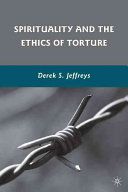
This book shows how torture spiritually assaults the person. The “war on terror” has sparked great debate about torture. What exactly is torture? Should we torture suspected terrorists if they have information about future violent acts? Defining torture carefully, the book defends the idea that all people are valuable, and rejects moral defenses of torture. It focuses particularly on practices like sensory deprivation, which perniciously attack the human psyche. It also calls for an absolute ban on all torture, and urges Americans to repent for the torture the U.S. committed in the “war on terror.”
ما از اخلاق چه انتظاری داریم؟ این سوال شاید تاحدودی برای عموم مردم و یا متخصصان این رشته قابل پاسخ باشد؛ اینکه خوب بودن را به ما بیاموزد و در تنظیم روابط فردی م...

جشن کتاب تهران به ایستگاه سی و یکم رسیده است. حال و احوال نشر کتاب خوب نیست و باید فرهنگدوستان را به خرید و هدیه دادن کتاب ترغیب نمود. خانه اخلاقپژوهان جوان ب...

بنیاد کتابهای اخلاق اسلامی عمدتا پالایش جان از آلودگیها و آراستن آن به زیباییها است. اندیشه محوری این قبیل کتابها آن است که انسان فعلی آنی نیست که باید باشد...

-
0 Comments