Notice: تابع WP_Block_Type_Registry::register به طورنادرست فراخوانی شد. نامهای نوع بلوک نباید حروف بزرگ داشته باشند. لطفاً برای اطلاعات بیشتر، اشکال زدایی در وردپرس را مشاهده کنید. (این پیام در نگارش 5.0.0 افزوده شده است.) in /home/ethicsho/public_html/wp-includes/functions.php on line 5313
Warning: Use of undefined constant TDC_PATH_LEGACY - assumed 'TDC_PATH_LEGACY' (this will throw an Error in a future version of PHP) in /home/ethicsho/public_html/wp-content/plugins/td-composer/td-composer.php on line 109
Warning: Use of undefined constant TDSP_THEME_PATH - assumed 'TDSP_THEME_PATH' (this will throw an Error in a future version of PHP) in /home/ethicsho/public_html/wp-content/plugins/td-composer/td-composer.php on line 113 بایگانیهای 174.95 - خانه اخلاق پژوهان جوان Notice: Trying to access array offset on value of type bool in /home/ethicsho/public_html/wp-content/plugins/wp-ulike/inc/general-functions.php on line 807
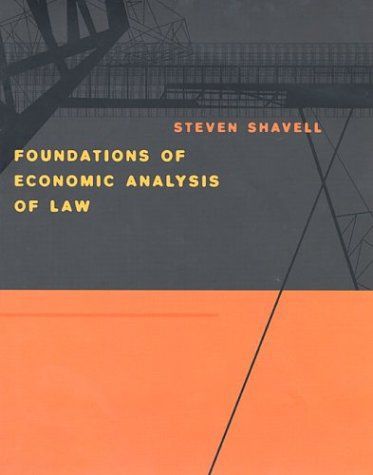
What effects do laws have? Do individuals drive more cautiously, clear ice from sidewalks more diligently, and commit fewer crimes because of the threat of legal sanctions? Do corporations pollute less, market safer products, and obey contracts to avoid suit? And given the effects of laws, which are socially best? Such questions about the influence and desirability of laws have been investigated by legal scholars and economists in a new, rigorous, and systematic manner since the 1970s. Their approach, which is called economic, is widely considered to be intellectually compelling and to have revolutionized thinking about the law. In this book Steven Shavell provides an in-depth analysis and synthesis of the economic approach to the building blocks of our legal system, namely, property law, tort law, contract law, and criminal law. He also examines the litigation process as well as welfare economics and morality. Aimed at a broad audience, this book requires neither a legal background nor technical economics or mathematics to understand it. Because of its breadth, analytical clarity, and general accessibility, it is likely to serve as a definitive work in the economic analysis of law.
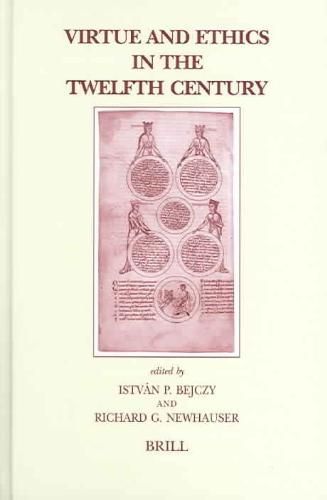
This volume analyses the renewal of Western moral thought in the twelfth century. This renewal was marked by a burgeoning of increasingly systematized texts, a lively reception of ancient moral philosophy and a greater emphasis on the psychology of the moral agent. Five contributions are devoted to monastic morality (Anselm of Canterbury, Bernard of Clairvaux, Hugh of Folieto, Hugh of Saint Victor, Peter Abelard); another five to (proto-)scholastic thought (John of Salisbury, Peter Abelard, Stephen Langton, the idea of natural virtue, the justification of lying); three discuss moral issues in a wider social context (liberality vs. avarice, royal justice in England, the cardinal virtues and the French monarchy). The two remaining contributions explore ethical traditions in Islamic and Jewish philosophy.
This book is a systematic and constructive treatment of a number of traditional issues at the foundations of ethics. These issues concern the objectivity of ethics, the possibility and nature of moral knowledge, the relationship between the moral point of view and a scientific or naturalist world-view, the nature of moral value and obligation, and the role of morality in a person’s rational lifeplan. In striking contrast to traditional and more recent work in the field, David Brink offers an integrated defense of the objectivity of ethics.
ما از اخلاق چه انتظاری داریم؟ این سوال شاید تاحدودی برای عموم مردم و یا متخصصان این رشته قابل پاسخ باشد؛ اینکه خوب بودن را به ما بیاموزد و در تنظیم روابط فردی م...

جشن کتاب تهران به ایستگاه سی و یکم رسیده است. حال و احوال نشر کتاب خوب نیست و باید فرهنگدوستان را به خرید و هدیه دادن کتاب ترغیب نمود. خانه اخلاقپژوهان جوان ب...

بنیاد کتابهای اخلاق اسلامی عمدتا پالایش جان از آلودگیها و آراستن آن به زیباییها است. اندیشه محوری این قبیل کتابها آن است که انسان فعلی آنی نیست که باید باشد...

-
0 Comments