Notice: تابع WP_Block_Type_Registry::register به طورنادرست فراخوانی شد. نامهای نوع بلوک نباید حروف بزرگ داشته باشند. لطفاً برای اطلاعات بیشتر، اشکال زدایی در وردپرس را مشاهده کنید. (این پیام در نگارش 5.0.0 افزوده شده است.) in /home/ethicsho/public_html/wp-includes/functions.php on line 5313
Warning: Use of undefined constant TDC_PATH_LEGACY - assumed 'TDC_PATH_LEGACY' (this will throw an Error in a future version of PHP) in /home/ethicsho/public_html/wp-content/plugins/td-composer/td-composer.php on line 109
Warning: Use of undefined constant TDSP_THEME_PATH - assumed 'TDSP_THEME_PATH' (this will throw an Error in a future version of PHP) in /home/ethicsho/public_html/wp-content/plugins/td-composer/td-composer.php on line 113 بایگانیهای 174.20941 - خانه اخلاق پژوهان جوان Notice: Trying to access array offset on value of type bool in /home/ethicsho/public_html/wp-content/plugins/wp-ulike/inc/general-functions.php on line 807
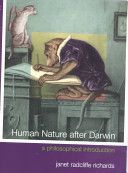
“Human Nature After Darwin” is an original investigation of the implications of Darwinism for our understanding of ourselves and our situation. It casts new light on current Darwinian controversies, and in doing so provides an introduction to philosophical reasoning and a range of philosophical problems. Janet Radcliffe Richards claims that many current battles about Darwinism, in particular about evolutionary psychology and religion, are based on mistaken assumptions about the implications of the rival views. Her analysis of these implications provides a much-needed guide to the fundamentals of Darwinism and the so-called Darwin-wars, as well as providing a set of philosophical techniques relevant to wide areas of moral and political debate. It also raises philosophical problems of knowledge and certainly, free will and responsibility, altruism, the status of ethics, and the relevance of Darwinism to questions of ethics, politics and religion. The lucid presentation makes the book an ideal introduction to both philosophy and Darwinism, as well as a substantive contribution to topics of intense current controversy. It will be of interest to students of philosophy, science and the social sciences, and critical thinking.
This book shows through accessible argument and numerous examples how understanding moral philosophy can improve economic analysis, how moral philosophy can benefit from economists’ analytical tools, and how economic analysis and moral philosophy together can inform public policy. Part I explores rationality and its connections to morality. It argues that in defending their model of rationality, mainstream economists implicitly espouse contestable moral principles. Part II concerns welfare, utilitarianism and standard welfare economics, while Part III considers important moral notions that are left out of standard welfare economics, such as freedom, rights, equality, and justice. Part III also emphasizes the variety of moral considerations that are relevant to evaluating policies. Part IV then introduces technical work in social choice theory and game theory that is guided by ethical concepts and relevant to moral theorizing. Chapters include recommended readings and the book includes a glossary of relevant terms.
Which political principles should govern global politics? In his new book, Simon Caney engages with the work of philosophers, political theorists, and international relations scholars in order to examine some of the most pressing global issues of our time. Are there universal civil, political, and economic human rights? Should there be a system of supra-state institutions? Can humanitarian intervention be justified?
The author offers an emotional account of her amazing journey from a 15-year-old living on the streets and eating garbage to her acceptance into Harvard, a feat that prompted a Lifetime movie and a successful motivational-speaking career.
ما از اخلاق چه انتظاری داریم؟ این سوال شاید تاحدودی برای عموم مردم و یا متخصصان این رشته قابل پاسخ باشد؛ اینکه خوب بودن را به ما بیاموزد و در تنظیم روابط فردی م...

جشن کتاب تهران به ایستگاه سی و یکم رسیده است. حال و احوال نشر کتاب خوب نیست و باید فرهنگدوستان را به خرید و هدیه دادن کتاب ترغیب نمود. خانه اخلاقپژوهان جوان ب...

بنیاد کتابهای اخلاق اسلامی عمدتا پالایش جان از آلودگیها و آراستن آن به زیباییها است. اندیشه محوری این قبیل کتابها آن است که انسان فعلی آنی نیست که باید باشد...

-
0 Comments