Notice: تابع WP_Block_Type_Registry::register به طورنادرست فراخوانی شد. نامهای نوع بلوک نباید حروف بزرگ داشته باشند. لطفاً برای اطلاعات بیشتر، اشکال زدایی در وردپرس را مشاهده کنید. (این پیام در نگارش 5.0.0 افزوده شده است.) in /home/ethicsho/public_html/wp-includes/functions.php on line 5313
Warning: Use of undefined constant TDC_PATH_LEGACY - assumed 'TDC_PATH_LEGACY' (this will throw an Error in a future version of PHP) in /home/ethicsho/public_html/wp-content/plugins/td-composer/td-composer.php on line 109
Warning: Use of undefined constant TDSP_THEME_PATH - assumed 'TDSP_THEME_PATH' (this will throw an Error in a future version of PHP) in /home/ethicsho/public_html/wp-content/plugins/td-composer/td-composer.php on line 113 بایگانیهای 170.922 - خانه اخلاق پژوهان جوان Notice: Trying to access array offset on value of type bool in /home/ethicsho/public_html/wp-content/plugins/wp-ulike/inc/general-functions.php on line 807
The incredible medical breakthroughs of today, like genetic engineering, in-vitro fertilizations, and cloning, have transformed long-held beliefs on the nature of both life and death, raising difficult moral and religious questions. In Matters of Life and Death Elliot Dorff thoroughly addresses this unavoidable confluence of medical technology and Jewish law and ethics.
This exceptional book examines and explains Plato’s answer to the normative question, “How ought we to live?” It discusses Plato’s conception of the virtues; his views about the connection between the virtues and happiness; and the account of reason, desire, and motivation that underlies his arguments about the virtues. Plato’s answer to the epistemological question, “How can we know how we ought to live?” is also discussed. His views on knowledge, belief, and inquiry, and his theory of Forms, are examined, insofar as they are relevant to his ethical view. Terence Irwin traces the development of Plato’s moral philosophy, from the Socratic dialogues to its fullest exposition in the Republic. Plato’s Ethics discusses Plato’s reasons for abandoning or modifying some aspects of Socratic ethics, and for believing that he preserves Socrates’ essential insights. A brief and selective discussion of the Statesmen, Philebus, and Laws is included. Replacing Irwin’s earlier Plato’s Moral Theory (Oxford, 1977), this book gives a clearer and fuller account of the main questions and discusses some recent controversies in the interpretation of Plato’s ethics. It does not presuppose any knowledge of Greek or any extensive knowledge of Plato.
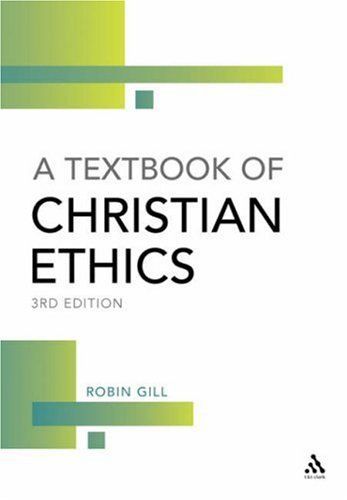
Sets out modern contributions to Christian ethics alongside texts from Augustine, Aquinas and Luther. The modern writers range from thinkers such as Niebuhr, Barth and Bonhoeffer to liberation and Third World theologians. The differing ethical positions and arguments are examined together with social and historical factors which shaped them.
This work brings together leading defenders of Natural Law and Liberalism for a series of frank and lively exchanges touching upon critical issues of contemporary moral and political theory. The book is an outstanding example of the fruitful engagement of traditions of thought about fundamental matters of ethics and justice.
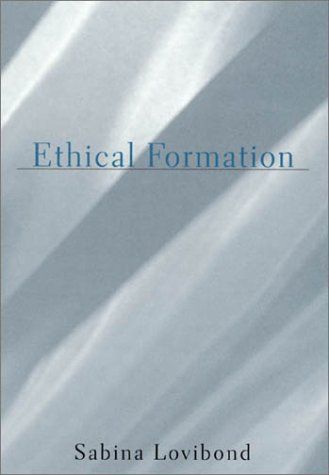
Sabina Lovibond invites her readers to see how the “practical reason view of ethics” can survive challenges from within philosophy and from the antirationalist postmodern critique of reason.She elaborates and defends a modern practical-reason view of ethics by focusing on virtue or ideal states of character that involve sensitivity to the objective reasons circumstances bring into play. At the heart of her argument is the Aristotelian idea of the formation of character through upbringing; these ancient ideas can be made contemporary if one understands them in a naturalized way. She then explores the implications that arise from the naturalization of the classical view, weaving into her theory ideas of Jacques Derrida and J. L. Austin. The book also discusses two modes of resistance to an existing ethical culture–one committed to the critical employment of shared norms of rationality, the other aspiring to a more radical attitude, grounded in hostility to the “universal.” Lovibond tries to determine what may be correct in this second, admittedly paradoxical, tendency. This is a timely and valuable effort to connect the most advanced forms of thinking in the analytic tradition and in the Continental tradition, and to extend our understanding of the intimacies and resistances between these two prominent strands of contemporary philosophy.
ما از اخلاق چه انتظاری داریم؟ این سوال شاید تاحدودی برای عموم مردم و یا متخصصان این رشته قابل پاسخ باشد؛ اینکه خوب بودن را به ما بیاموزد و در تنظیم روابط فردی م...

جشن کتاب تهران به ایستگاه سی و یکم رسیده است. حال و احوال نشر کتاب خوب نیست و باید فرهنگدوستان را به خرید و هدیه دادن کتاب ترغیب نمود. خانه اخلاقپژوهان جوان ب...

بنیاد کتابهای اخلاق اسلامی عمدتا پالایش جان از آلودگیها و آراستن آن به زیباییها است. اندیشه محوری این قبیل کتابها آن است که انسان فعلی آنی نیست که باید باشد...

-
0 Comments