Notice: تابع WP_Block_Type_Registry::register به طورنادرست فراخوانی شد. نامهای نوع بلوک نباید حروف بزرگ داشته باشند. لطفاً برای اطلاعات بیشتر، اشکال زدایی در وردپرس را مشاهده کنید. (این پیام در نگارش 5.0.0 افزوده شده است.) in /home/ethicsho/public_html/wp-includes/functions.php on line 5313
Warning: Use of undefined constant TDC_PATH_LEGACY - assumed 'TDC_PATH_LEGACY' (this will throw an Error in a future version of PHP) in /home/ethicsho/public_html/wp-content/plugins/td-composer/td-composer.php on line 109
Warning: Use of undefined constant TDSP_THEME_PATH - assumed 'TDSP_THEME_PATH' (this will throw an Error in a future version of PHP) in /home/ethicsho/public_html/wp-content/plugins/td-composer/td-composer.php on line 113 بایگانیهای 170.9034 - خانه اخلاق پژوهان جوان Notice: Trying to access array offset on value of type bool in /home/ethicsho/public_html/wp-content/plugins/wp-ulike/inc/general-functions.php on line 807
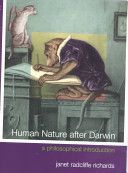
“Human Nature After Darwin” is an original investigation of the implications of Darwinism for our understanding of ourselves and our situation. It casts new light on current Darwinian controversies, and in doing so provides an introduction to philosophical reasoning and a range of philosophical problems. Janet Radcliffe Richards claims that many current battles about Darwinism, in particular about evolutionary psychology and religion, are based on mistaken assumptions about the implications of the rival views. Her analysis of these implications provides a much-needed guide to the fundamentals of Darwinism and the so-called Darwin-wars, as well as providing a set of philosophical techniques relevant to wide areas of moral and political debate. It also raises philosophical problems of knowledge and certainly, free will and responsibility, altruism, the status of ethics, and the relevance of Darwinism to questions of ethics, politics and religion. The lucid presentation makes the book an ideal introduction to both philosophy and Darwinism, as well as a substantive contribution to topics of intense current controversy. It will be of interest to students of philosophy, science and the social sciences, and critical thinking.
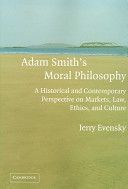
Adam Smith is the best known among economists for his book, The Wealth of Nations, often viewed as the keystone of modern economic thought. Others, often heterodox economists and social philosophers, on the contrary, focus on Smith’s Theory of Moral Sentiments, and explore his moral theory. This work treats these dimensions of Smith’s work as elements in a seamless moral philosophical vision, demonstrating the integrated nature of these works and Smith’s other writings. Although many practitioners today see the study of Smith as an antiquarian exercise, this book weaves Smith into a constructive critique of modern ecnomic analysis (engaging along the way the work of Nobel Laureates Gary Becker, Amarty Sen, Douglass North, and James Buchanan) and builds bridges between that discourse and the other social sciences.
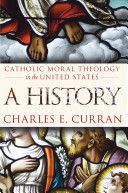
In this magisterial volume Charles E. Curran surveys the historical development of Catholic moral theology in the United States from its 19th century roots to the present day. He begins by tracing the development of pre-Vatican II moral theology that, with the exception of social ethics, had the limited purpose of training future confessors to know what actions are sinful and the degree of sinfulness. Curran then explores and illuminates the post-Vatican II era with chapters on the effect of the Council on the scope and substance of moral theology, the impact of Humanae vitae, Pope Paul VI’s encyclical condemning artificial contraception, fundamental moral theology, sexuality and marriage, bioethics, and social ethics. Curran’s perspective is unique: For nearly 50 years, he has been a major influence on the development of the field and has witnessed first-hand the dramatic increase in the number and diversity of moral theologians in the academy and the Church. No one is more qualified to write this first and only comprehensive history of Catholic moral theology in the United States.
ما از اخلاق چه انتظاری داریم؟ این سوال شاید تاحدودی برای عموم مردم و یا متخصصان این رشته قابل پاسخ باشد؛ اینکه خوب بودن را به ما بیاموزد و در تنظیم روابط فردی م...

جشن کتاب تهران به ایستگاه سی و یکم رسیده است. حال و احوال نشر کتاب خوب نیست و باید فرهنگدوستان را به خرید و هدیه دادن کتاب ترغیب نمود. خانه اخلاقپژوهان جوان ب...

بنیاد کتابهای اخلاق اسلامی عمدتا پالایش جان از آلودگیها و آراستن آن به زیباییها است. اندیشه محوری این قبیل کتابها آن است که انسان فعلی آنی نیست که باید باشد...

-
0 Comments