

Notice: تابع WP_Block_Type_Registry::register به طورنادرست فراخوانی شد. نامهای نوع بلوک نباید حروف بزرگ داشته باشند. لطفاً برای اطلاعات بیشتر، اشکال زدایی در وردپرس را مشاهده کنید. (این پیام در نگارش 5.0.0 افزوده شده است.) in /home/ethicsho/public_html/wp-includes/functions.php on line 5313
Warning: Use of undefined constant TDC_PATH_LEGACY - assumed 'TDC_PATH_LEGACY' (this will throw an Error in a future version of PHP) in /home/ethicsho/public_html/wp-content/plugins/td-composer/td-composer.php on line 109
Warning: Use of undefined constant TDSP_THEME_PATH - assumed 'TDSP_THEME_PATH' (this will throw an Error in a future version of PHP) in /home/ethicsho/public_html/wp-content/plugins/td-composer/td-composer.php on line 113 بایگانیهای 128/.3 - خانه اخلاق پژوهان جوان Notice: Trying to access array offset on value of type bool in /home/ethicsho/public_html/wp-content/plugins/wp-ulike/inc/general-functions.php on line 807
This exceptional book examines and explains Plato’s answer to the normative question, “How ought we to live?” It discusses Plato’s conception of the virtues; his views about the connection between the virtues and happiness; and the account of reason, desire, and motivation that underlies his arguments about the virtues. Plato’s answer to the epistemological question, “How can we know how we ought to live?” is also discussed. His views on knowledge, belief, and inquiry, and his theory of Forms, are examined, insofar as they are relevant to his ethical view. Terence Irwin traces the development of Plato’s moral philosophy, from the Socratic dialogues to its fullest exposition in the Republic. Plato’s Ethics discusses Plato’s reasons for abandoning or modifying some aspects of Socratic ethics, and for believing that he preserves Socrates’ essential insights. A brief and selective discussion of the Statesmen, Philebus, and Laws is included. Replacing Irwin’s earlier Plato’s Moral Theory (Oxford, 1977), this book gives a clearer and fuller account of the main questions and discusses some recent controversies in the interpretation of Plato’s ethics. It does not presuppose any knowledge of Greek or any extensive knowledge of Plato.
What rational justification is there for conceiving of all living things as possessing inherent worth? In Respect for Nature, Paul Taylor draws on biology, moral philosophy, and environmental science to defend a biocentric environmental ethic in which all life has value. Without making claims for the moral rights of plants and animals, he offers a reasoned alternative to the prevailing anthropocentric view–that the natural environment and its wildlife are valued only as objects for human use or enjoyment. Respect for Nature provides both a full account of the biological conditions for life–human or otherwise–and a comprehensive view of the complex relationship between human beings and the whole of nature. This classic book remains a valuable resource for philosophers, biologists, and environmentalists alike–along with all those who care about the future of life on Earth. A new foreword by Dale Jamieson looks at how the original 1986 edition of Respect for Nature has shaped the study of environmental ethics, and shows why the work remains relevant to debates today.
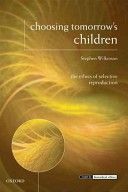
To what extent should parents be allowed to use reproductive technologies to determine the characteristics of their future children? And is there something morally wrong with parents who wish to do this? Choosing Tomorrow’s Children provides answers to these (and related) questions. In particular, the book looks at issues raised by selective reproduction, the practice of choosing between different possible future persons by selecting or deselecting (for example) embryos, eggs, and sperm. Wilkinson offers answers to questions including the following. Do children have a ‘right to an open future’ and, if they do, what moral constraints does this place upon selective reproduction? Should parents be allowed to choose their future children’s sex? Should we ‘screen out’ as much disease and disability as possible before birth, or would that be an objectionable form of eugenics? Is it acceptable to create or select a future person in order to provide lifesaving tissue for an existing relative? Is there a moral difference between selecting to avoid disease and selecting to produce an ‘enhanced’ child? Should we allow deaf parents to use reproductive technologies to ensure that they have a deaf child?
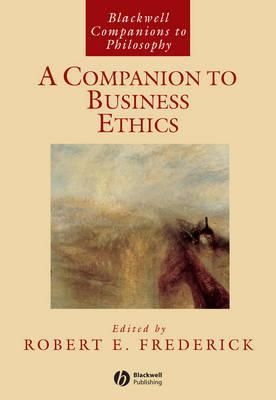
In a series of articles specifically commissioned for this volume, some of today’s most distinguished business ethicists survey the main areas of interest and concern in the field of business ethics.Sections of the book cover topics such as the often easy relation between business ethics and capitalism, the link between business ethics and ethical theory, how ethics applies to specific problems in the business world, the connection between business ethics and related academic disciplines, and the practice of business ethics in modern corporations.Includes extensive, accessible discussion of all of the main areas of interest and debate in business ethics Features all original contributions by distinguished authors in business ethics Includes an annotated table of contents, bibliographies of the relevant literature and a list of internet sources of material on business ethics Perfect, comprehensive book for use in business ethics courses
ما از اخلاق چه انتظاری داریم؟ این سوال شاید تاحدودی برای عموم مردم و یا متخصصان این رشته قابل پاسخ باشد؛ اینکه خوب بودن را به ما بیاموزد و در تنظیم روابط فردی م...

جشن کتاب تهران به ایستگاه سی و یکم رسیده است. حال و احوال نشر کتاب خوب نیست و باید فرهنگدوستان را به خرید و هدیه دادن کتاب ترغیب نمود. خانه اخلاقپژوهان جوان ب...

بنیاد کتابهای اخلاق اسلامی عمدتا پالایش جان از آلودگیها و آراستن آن به زیباییها است. اندیشه محوری این قبیل کتابها آن است که انسان فعلی آنی نیست که باید باشد...

-
0 Comments