
Notice: تابع WP_Block_Type_Registry::register به طورنادرست فراخوانی شد. نامهای نوع بلوک نباید حروف بزرگ داشته باشند. لطفاً برای اطلاعات بیشتر، اشکال زدایی در وردپرس را مشاهده کنید. (این پیام در نگارش 5.0.0 افزوده شده است.) in /home/ethicsho/public_html/wp-includes/functions.php on line 5313
Warning: Use of undefined constant TDC_PATH_LEGACY - assumed 'TDC_PATH_LEGACY' (this will throw an Error in a future version of PHP) in /home/ethicsho/public_html/wp-content/plugins/td-composer/td-composer.php on line 109
Warning: Use of undefined constant TDSP_THEME_PATH - assumed 'TDSP_THEME_PATH' (this will throw an Error in a future version of PHP) in /home/ethicsho/public_html/wp-content/plugins/td-composer/td-composer.php on line 113 بایگانیهای 123.5 - خانه اخلاق پژوهان جوان Notice: Trying to access array offset on value of type bool in /home/ethicsho/public_html/wp-content/plugins/wp-ulike/inc/general-functions.php on line 807
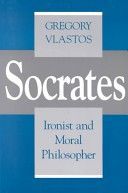
This long-awaited study of the most enigmatic figure of Greek philosophy reclaims Socrates’ ground-breaking originality. Written by a leading historian of Greek thought, it argues for a Socrates who, though long overshadowed by his successors Plato and Aristotle, marked the true turning point in Greek philosophy, religion and ethics. The quest for the historical figure focuses on the Socrates of Plato’s earlier dialogues, setting him in sharp contrast to that other Socrates of later dialogues, where he is used as a mouthpiece for Plato’s often anti-Socratic doctrine. At the heart of the book is the paradoxical nature of Socratic thought. But the paradoxes are explained, not explained away. The book highlights the tensions in the Socratic search for the answer to the question ‘How should we live?’ Conceived as a divine mandate, the search is carried out through elenctic argument, and dominated by an uncompromising rationalism. The magnetic quality of Socrates’ personality is allowed to emerge throughout the book. Clearly and forcefully written, philosophically sophisticated but entirely accessible to non-specialists, this book will be of major importance and interest to all those studying ancient philosophy and the history of Western thought.
An original study of the philosophical problems associated with inductive reasoning. Like most of the main questions in epistemology, the classical problem of induction arises from doubts about a mode of inference used to justify some of our most familiar and pervasive beliefs. The experience of each individual is limited and fragmentary, yet the scope of our beliefs is much wider; and it is the relation between belief and experience, in particular the belief that the future will in some respects resemble the past and the unobserved the observed, which forms the subject of this book. Dr Blackburn’s first aim is to state the problem of induction properly, to show that there does exist a genuine problem immune to the solutions in vogue at present, yet no tin principle insoluble. He gives an extended and original account of the concept of a reason and goes on to discuss prediction. In the end Dr Blackburn produces a rationale for belief in certain short-term predictions based on his reinterpretation of the classical principle of indifference. He claims that a justification for induction can be found along the lines he has suggested and must indeed be found there if anywhere.
This textbook looks at the main ethical questions that confront the criminal justice system – legislature, law enforcement, courts, and corrections – and those who work within that system, especially police officers, prosecutors, defence lawyers, judges, juries, and prison officers. John Kleinig sets the issues in the context of a liberal democratic society and its ethical and legislative underpinnings, and illustrates them with a wide and international range of real-life case studies. Topics covered include discretion, capital punishment, terrorism, restorative justice, and re-entry. Kleinig’s discussion is both philosophically acute and grounded in institutional realities, and will enable students to engage productively with the ethical questions which they encounter both now and in the future – whether as criminal justice professionals or as reflective citizens.
The vast amount of suffering in the world is often held as a particularly powerful reason to deny that God exists. Now, one of the world’s most distinguished philosophers of religion presents his own position on the problem of evil. Highly accessible and sensitively argued, Peter van Inwagen’s book argues that such reasoning does not hold: his conclusion is not that God exists, but that suffering cannot be shown to prove that He does not.
ما از اخلاق چه انتظاری داریم؟ این سوال شاید تاحدودی برای عموم مردم و یا متخصصان این رشته قابل پاسخ باشد؛ اینکه خوب بودن را به ما بیاموزد و در تنظیم روابط فردی م...

جشن کتاب تهران به ایستگاه سی و یکم رسیده است. حال و احوال نشر کتاب خوب نیست و باید فرهنگدوستان را به خرید و هدیه دادن کتاب ترغیب نمود. خانه اخلاقپژوهان جوان ب...

بنیاد کتابهای اخلاق اسلامی عمدتا پالایش جان از آلودگیها و آراستن آن به زیباییها است. اندیشه محوری این قبیل کتابها آن است که انسان فعلی آنی نیست که باید باشد...

-
0 Comments