Notice: تابع WP_Block_Type_Registry::register به طورنادرست فراخوانی شد. نامهای نوع بلوک نباید حروف بزرگ داشته باشند. لطفاً برای اطلاعات بیشتر، اشکال زدایی در وردپرس را مشاهده کنید. (این پیام در نگارش 5.0.0 افزوده شده است.) in /home/ethicsho/public_html/wp-includes/functions.php on line 5313
Warning: Use of undefined constant TDC_PATH_LEGACY - assumed 'TDC_PATH_LEGACY' (this will throw an Error in a future version of PHP) in /home/ethicsho/public_html/wp-content/plugins/td-composer/td-composer.php on line 109
Warning: Use of undefined constant TDSP_THEME_PATH - assumed 'TDSP_THEME_PATH' (this will throw an Error in a future version of PHP) in /home/ethicsho/public_html/wp-content/plugins/td-composer/td-composer.php on line 113 بایگانیهای 070.4/3 - خانه اخلاق پژوهان جوان Notice: Trying to access array offset on value of type bool in /home/ethicsho/public_html/wp-content/plugins/wp-ulike/inc/general-functions.php on line 807
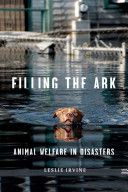
When disasters strike, people are not the only victims. Hurricane Katrina raised public attention about how disasters affect dogs, cats, and other animals considered members of the human family. In this short but powerful book, noted sociologist Leslie Irvine goes beyond Katrina to examine how disasters like oil spills, fires, and other calamities affect various animal populations-on factory farms, in research facilities, and in the wild.Filling the Arkargues that humans cause most of the risks faced by animals and urges for better decisions about the treatment of animals in disasters. Furthermore, it makes a broad appeal for the ethical necessity of better planning to keep animals out of jeopardy. Irvine not only offers policy recommendations and practical advice for evacuating animals, she also makes a strong case for rethinking our use of animals, suggesting ways to create more secure conditions.
Morals from Motives develops a virtue ethics inspired more by Hume and Hutcheson’s moral sentimentalism than by recently-influential Aristotelianism. It argues that a reconfigured and expanded “morality of caring” can offer a general account of right and wrong action as well as social justice. Expanding the frontiers of ethics, it goes on to show how a motive-based “pure” virtue theory can also help us to understand the nature of human well-being and practical reason.
Dagan’s book provides a dynamic and much needed account of the American law of restitution. The book reviews the existing doctrine, including the forthcoming (third) Restatement, using an ethical perspective to expose and examine critically the normative underpinnings of the core categories of restitution. Dagan also discusses some of the most controversial issues in the area, such as cohabitation, improper tax payments, and the role of constructive trusts as trumps in bankruptcy. He further tackles the recent restitution claims of slave laborers (or their descendants) against corporations that benefited from their enslavements, and of governmental bodies against injurious industries. Dagan argues that the concept of unjust enrichment is not an independent reason for restitution but, rather, serves as a loose framework, structuring the contextual application of commitments to autonomy, utility, and community in situations where either the cause of action or the measure of recovery is benefit-based. By integrating doctrinal and ethical analyses of restitution across the spectrum of restitution contexts, the author offers significant and provocative insights on existing law as well as possible reforms.
Marc A. Rodwin draws on his own experience as a health lawyer–and his research in health ethics, law, and policy–to reveal how financial conflicts of interest can and do negatively affect the quality of patient care. He shows that the problem has become worse over the last century and provides many actual examples of how doctors’ decisions are influenced by financial considerations. We learn how two California physicians, for example, resumed referrals to Pasadena General Hospital only after the hospital started paying $70 per patient (their referrals grew from 14 in one month to 82 in the next). As Rodwin writes, incentives such as this can inhibit a doctor from taking action when a hospital fails to provide proper service, and may also lead to the unnecessary hospitalization of patients. We also learn of a Wyeth-Ayerst Labs promotion in which physicians who started patients on INDERAL (a drug for high blood pressure, angina, and migraines) received 1000 mileage points on American Airlines for each patient (studies show that promotions such as this have a direct effect on a doctor’s choice of drug). Rodwin reveals why the medical community has failed to regulate conflicts of interest: peer review has little authority, state licensing boards are usually ignorant of abuses, and the AMA code of ethics has historically been recommended rather than required. He examines what can be learned from the way society has coped with the conflicts of interest of other professionals –lawyers, government officials, and businessmen–all of which are held to higher standards of accountability than doctors. And he recommends that efforts be made to prohibit and regulate certain kinds of activity (such as kickbacks and self-referrals), to monitor and regulate conduct, and to provide penalties for improper conduct. Our failure to face physicians’ conflicts of interest has distorted the way medicine is practiced, compromised the loyalty of doctors to patients, and harmed society, the integrity of the medical profession, and patients. For those concerned with the quality of health care or medical ethics, Medicine, Money and Morals is a provocative look into the current health care crisis and a powerful prescription for change.
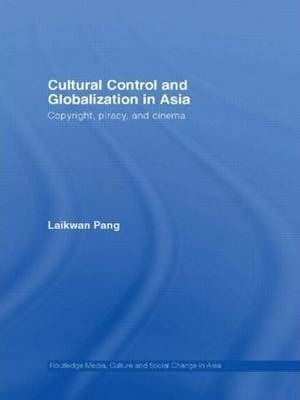
This book challenges the prevailing view of cinema and cinema culture that Hollywood/the US creates, produces and exports, with other countries importing, sometimes modifying and sometimes pirating ‘original’ American work. Instead the book argues that the ‘original ideas’ which underpin the moneymaking activities of the ‘creative industries’, and for which ‘ownership’ is secured through copyright, are often imported, ‘borrowed’ and modified by Hollywood itself from other cultures and national cinemas. The book considers especially Chinese and Korean cinema, and film ‘piracy’ in these countries, to show that ideas of cultural ownership and copyright are not as straightforward as they may at first seem, and that copyright is perhaps primarily a lever through which cultural control is exercised by the cultural big business of the dominant power.
ما از اخلاق چه انتظاری داریم؟ این سوال شاید تاحدودی برای عموم مردم و یا متخصصان این رشته قابل پاسخ باشد؛ اینکه خوب بودن را به ما بیاموزد و در تنظیم روابط فردی م...

جشن کتاب تهران به ایستگاه سی و یکم رسیده است. حال و احوال نشر کتاب خوب نیست و باید فرهنگدوستان را به خرید و هدیه دادن کتاب ترغیب نمود. خانه اخلاقپژوهان جوان ب...

بنیاد کتابهای اخلاق اسلامی عمدتا پالایش جان از آلودگیها و آراستن آن به زیباییها است. اندیشه محوری این قبیل کتابها آن است که انسان فعلی آنی نیست که باید باشد...

-
0 Comments