Notice: تابع WP_Block_Type_Registry::register به طورنادرست فراخوانی شد. نامهای نوع بلوک نباید حروف بزرگ داشته باشند. لطفاً برای اطلاعات بیشتر، اشکال زدایی در وردپرس را مشاهده کنید. (این پیام در نگارش 5.0.0 افزوده شده است.) in /home/ethicsho/public_html/wp-includes/functions.php on line 5313
Warning: Use of undefined constant TDC_PATH_LEGACY - assumed 'TDC_PATH_LEGACY' (this will throw an Error in a future version of PHP) in /home/ethicsho/public_html/wp-content/plugins/td-composer/td-composer.php on line 109
Warning: Use of undefined constant TDSP_THEME_PATH - assumed 'TDSP_THEME_PATH' (this will throw an Error in a future version of PHP) in /home/ethicsho/public_html/wp-content/plugins/td-composer/td-composer.php on line 113 بایگانیهای 004 - خانه اخلاق پژوهان جوان Notice: Trying to access array offset on value of type bool in /home/ethicsho/public_html/wp-content/plugins/wp-ulike/inc/general-functions.php on line 807
How ought we to live? What really exists? How do we know? This book introduces important themes in ethics, knowledge, and the self, via readings from Plato, Hume, Descartes, Hegel, Darwin, and Buddhist writers. It emphasizes throughout the point of doing philosophy, explains how different areas of philosophy are related, and explores the contexts in which philosophy was and is done.
Is all human behavior based on self-interest? Many social and biological theories would argue so, but such a perspective does not explain the many truly heroic acts committed by people willing to risk their lives to help others. In The Heart of Altruism, Kristen Renwick Monroe boldly lays the groundwork for a social theory receptive to altruism by examining the experiences described by altruists themselves: from Otto, a German businessman who rescued over a hundred Jews in Nazi Germany, to Lucille, a newspaper poetry editor, who, armed with her cane, saved a young girl who was being raped. Monroe’s honest and moving interviews with these little-known heroes enable her to explore the causes of altruism and the differences between altruists and other people. By delineating an overarching perspective of humanity shared by altruists, Monroe demonstrates how social theories may begin to account for altruism and debunks the notions of scientific inevitability that stem from an overemphasis on self-interest.As Monroe has discovered, the financial and religious backgrounds of altruists vary greatly–as do their views on issues such as welfare, civil rights, and morality. Altruists do, however, share a certain way of looking at the world: where the rest of us see a stranger, altruists see a fellow human being. It is this perspective that many social theories overlook. Monroe restores altruism to a general theory of ethical political behavior. She argues that to understand what makes one person act out of concern for others and not the self, we need to ask how that individual’s perspective sets the range of options he or she finds available.
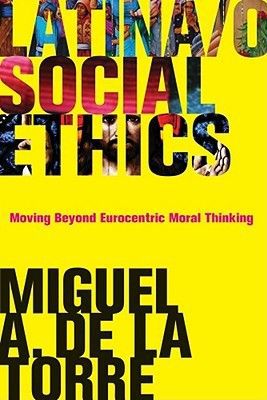
A groundbreaking corrective work, Latina/o Social Ethics strives to create a liberative ethical approach to the Hispanic experience by using its own tools and materials. First explaining why Eurocentric ethical paradigms are inadequate in their attempts to liberate oppressed communities, Miguel De La Torre looks with Hispanic eyes at three major ethicists of the twentieth century–Walter Rauschenbusch, Reinhold Niebuhr, and Stanley Hauerwas–and how ethics is presented in U.S. culture wars, from the Religious Right to the Religious Left. He deconstructs these ethical paradigms and demonstrates why all are detrimental to and irreconcilable with the Hispanic social location.With a clean slate, then, De La Torre moves to constructing a new Hispanic-centered ethical paradigm that is rooted in the Latino community way of being. Reviewing the field of Hispanic ethical thought, De La Torre pays special attention to specific concepts ripe with potential that have been developed over the past generation. In the final chapter, De La Torre offers his own constructive paradigm–an ethics para joder , which is rooted in the Latina/o experience, and by which, he argues, the Hispanic community can survive within U.S. culture.
Philips defends a middle ground between the view that there is a set of standards binding on rational beings as such (universalism) and the view that differences in morals reduce ultimately to matters of taste (skepticism). He begins with a sustained critique of universalist moral theories and of certain familiar approaches to concrete moral questions that presuppose them (most appeals to intuitions, respect-for-persons moralities, and versions of contractarianism and wide reflective equilibrium). He goes on to criticize major recent attempts to develop nonuniversalist alternatives to skepticism, arguing that they rely on excessively abstract and philosophically indefensible preference satisfaction theories of the good. According to Philips’s positive alternative, ethics as social artifact, moral codes are social instruments and they are justified to the extent that they effectively do their jobs, which is to promote reasonably valued ways of life. Accordingly, he argues that different standards may be justified for different societies, depending on their circumstances, traditions, and current institutions. His account of a reasonably valued way of life depends on a “falsifiability” approach to reasonable values according to which existing values are treated as reasonable unless good arguments can be made against them. He describes many strategies for making such arguments, the upshot being an approach to the justification of moral standards that is sufficiently “grounded” to settle many controversies and to mark off areas in which rational persons are free to disagree. It also explains why the weight of a moral consideration may vary reasonably from one “domain” of social life toanother. An original approach to the uses and limits of reason in ethics, Between Universalism and Skepticism provides a theoretical basis for approaching actual moral controversies and questions of applied and professional ethics in a systematic way.
ما از اخلاق چه انتظاری داریم؟ این سوال شاید تاحدودی برای عموم مردم و یا متخصصان این رشته قابل پاسخ باشد؛ اینکه خوب بودن را به ما بیاموزد و در تنظیم روابط فردی م...

جشن کتاب تهران به ایستگاه سی و یکم رسیده است. حال و احوال نشر کتاب خوب نیست و باید فرهنگدوستان را به خرید و هدیه دادن کتاب ترغیب نمود. خانه اخلاقپژوهان جوان ب...

بنیاد کتابهای اخلاق اسلامی عمدتا پالایش جان از آلودگیها و آراستن آن به زیباییها است. اندیشه محوری این قبیل کتابها آن است که انسان فعلی آنی نیست که باید باشد...

-
0 Comments