Notice: تابع WP_Block_Type_Registry::register به طورنادرست فراخوانی شد. نامهای نوع بلوک نباید حروف بزرگ داشته باشند. لطفاً برای اطلاعات بیشتر، اشکال زدایی در وردپرس را مشاهده کنید. (این پیام در نگارش 5.0.0 افزوده شده است.) in /home/ethicsho/public_html/wp-includes/functions.php on line 5313
Warning: Use of undefined constant TDC_PATH_LEGACY - assumed 'TDC_PATH_LEGACY' (this will throw an Error in a future version of PHP) in /home/ethicsho/public_html/wp-content/plugins/td-composer/td-composer.php on line 109
Warning: Use of undefined constant TDSP_THEME_PATH - assumed 'TDSP_THEME_PATH' (this will throw an Error in a future version of PHP) in /home/ethicsho/public_html/wp-content/plugins/td-composer/td-composer.php on line 113 بایگانیهای World Federation of Khoja Shia Ithna-Asheri Muslim Communities - خانه اخلاق پژوهان جوان Notice: Trying to access array offset on value of type bool in /home/ethicsho/public_html/wp-content/plugins/wp-ulike/inc/general-functions.php on line 807
(۳)۴z(BThis book is a comprehensive and comprehensible coverage of the philosophical underpinning of the integrity construct as reflected in the Western literature—a must read for researchers and scholars interested in integrity assessments. The authors have integrated insights from several disciplines, and have written in a clear and engaging style. The Czech historical sketch gives an interesting background to these discussions.(3)4y (BProfessor Vish C. Viswesvaran, Florida International University, USA This book discusses outcomes of a study by the National Institute of Mental Health, Czech Republic, examining moral integrity in the post-communist Czech-speaking environment. Chapters map the history of the Euro-Atlantic ethical disciplines from moral philosophy and psychology to evolutionary neuroscience and socio-biology. The authors emphasize the biological and social conditionality of ethics and call for greater differentiation of both research and applied psychological standards in today’s globalised world. Using a non-European ethical system – Theravada Buddhism – as a case study, the authors explore the differences in English and Czech interpretations of the religion. They analyse cognitive styles and language as central variables in formatting and interpreting moral values, with important consequences for cultural transferability of psychological instruments. This book will appeal to academics and other specialists in psychology, psychiatry, sociology and related fields, as well as to readers interested in the psychology of ethics. .
Sorting Out Ethics is a characteristically lucid and lively survey of rival ethical theories by one of the most influential moral philosophers of the century. It also constitutes a definitive summary of Hare’s own fundamental ethical position. The book’s main theme is that objectivity in moral thinking is not to be sought by making moral questions into questions of fact; this leads inevitably to relativism, tying us to particular cultures and languages. Objectivity is to be sought, rather, by emphasizing the universally prescriptive character of moral language, which all cultures can share, and so using it to resolve their moral differences. An objective moral prescription, as Kant saw, is one upon which all rational thinkers can agree.
Delineating implications for administrative ethics from other fields such as sociology, psychology, and philosophy, this reference provides a comprehensive review of administrative ethics in the public sector. Detailing the context within which contemporary ethics training has developed, the book examines the effectiveness of ethics training, legal and organizational devices for encouraging desired conduct, and other topics of particular relevance to the political and social contexts of public administration. Written by over 25 leading scholars in public administration ethics, the book creates a taxonomy for administrative ethics using the categories of modern philosophy.
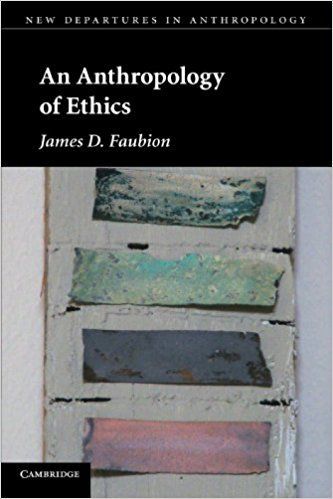
“Through an ambitious and critical revision of Michel Foucault’s investigation of ethics, James Faubion develops an original program of empirical inquiry into the ethical domain. From an anthropological perspective, Faubion argues that Foucault’s specification of the analytical parameters of this domain is the most productive point of departure in conceptualizing its distinctive features. He further argues that Foucault’s framework is in need of substantial revision to be of genuinely anthropological scope. In making this revision, Faubion illustrates his program with two extended case studies: one of a Portuguese marquis and the other of a dual subject made up of the author and a millenarian prophetess. The result is a conceptual apparatus that is able to accommodate ethical pluralism and yield an account of the limits of ethical variation, providing a novel resolution of the problem of relativism that has haunted anthropological inquiry into ethics since its inception”–
ما از اخلاق چه انتظاری داریم؟ این سوال شاید تاحدودی برای عموم مردم و یا متخصصان این رشته قابل پاسخ باشد؛ اینکه خوب بودن را به ما بیاموزد و در تنظیم روابط فردی م...

جشن کتاب تهران به ایستگاه سی و یکم رسیده است. حال و احوال نشر کتاب خوب نیست و باید فرهنگدوستان را به خرید و هدیه دادن کتاب ترغیب نمود. خانه اخلاقپژوهان جوان ب...

بنیاد کتابهای اخلاق اسلامی عمدتا پالایش جان از آلودگیها و آراستن آن به زیباییها است. اندیشه محوری این قبیل کتابها آن است که انسان فعلی آنی نیست که باید باشد...

-
0 Comments