Notice: تابع WP_Block_Type_Registry::register به طورنادرست فراخوانی شد. نامهای نوع بلوک نباید حروف بزرگ داشته باشند. لطفاً برای اطلاعات بیشتر، اشکال زدایی در وردپرس را مشاهده کنید. (این پیام در نگارش 5.0.0 افزوده شده است.) in /home/ethicsho/public_html/wp-includes/functions.php on line 5313
Warning: Use of undefined constant TDC_PATH_LEGACY - assumed 'TDC_PATH_LEGACY' (this will throw an Error in a future version of PHP) in /home/ethicsho/public_html/wp-content/plugins/td-composer/td-composer.php on line 109
Warning: Use of undefined constant TDSP_THEME_PATH - assumed 'TDSP_THEME_PATH' (this will throw an Error in a future version of PHP) in /home/ethicsho/public_html/wp-content/plugins/td-composer/td-composer.php on line 113 بایگانیهای William O. Stephens - خانه اخلاق پژوهان جوان Notice: Trying to access array offset on value of type bool in /home/ethicsho/public_html/wp-content/plugins/wp-ulike/inc/general-functions.php on line 807
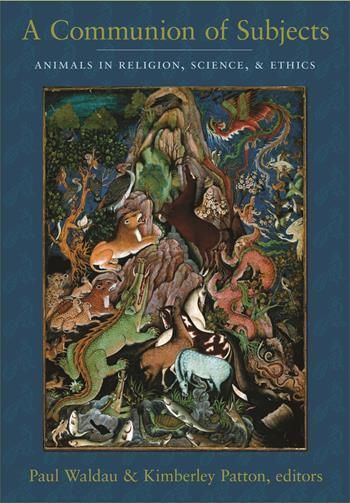
A Communion of Subjectsis the first comparative and interdisciplinary study of the conceptualization of animals in world religions. Scholars from a wide range of disciplines, including Thomas Berry (cultural history), Wendy Doniger (study of myth), Elizabeth Lawrence (veterinary medicine, ritual studies), Marc Bekoff (cognitive ethology), Marc Hauser (behavioral science), Steven Wise (animals and law), Peter Singer (animals and ethics), and Jane Goodall (primatology) consider how major religious traditions have incorporated animals into their belief systems, myths, rituals, and art. Their findings offer profound insights into humans’ relationships with animals and a deeper understanding of the social and ecological web in which we all live.Contributors examine Judaism, Christianity, Islam, Hinduism, Buddhism, Jainism, Daoism, Confucianism, African religions, traditions from ancient Egypt and early China, and Native American, indigenous Tibetan, and Australian Aboriginal traditions, among others. They explore issues such as animal consciousness, suffering, sacrifice, and stewardship in innovative methodological ways. They also address contemporary challenges relating to law, biotechnology, social justice, and the environment. By grappling with the nature and ideological features of various religious views, the contributors cast religious teachings and practices in a new light. They reveal how we either intentionally or inadvertently marginalize “others,” whether they are human or otherwise, reflecting on the ways in which we assign value to living beings.Though it is an ancient concern, the topic of “Religion and Animals” has yet to be systematically studied by modern scholars. This groundbreaking collection takes the first steps toward a meaningful analysis.
Film & Ethics considers a range of films and texts of film criticism alongside disparate philosophical discourses of ethics by Levinas, Derrida, Foucault, Lacanian psychoanalysts and postmodern theorists. While an ethics of looking is implicitly posited in most strands of cinema theory, there is no established body of work that might be called ethical film criticism. This book, therefore, redresses the reluctance of many existing works to address cinema from an explicitly ethical perspective. Readings range across popular Hollywood films such as Thelma and Louise, Alfred Hitchcock’s canonical corpus, and films from European and World cinemas, including Dreyer’s The Passion of Joan of Arc and the little-known African film Bamako. The book engages with debates concerning censorship and pornography; the ethical implications of ‘positive representation’; the ethics of making and viewing images of atrocity and suffering; and the relationship between ethics and aesthetics. Lisa Downing and Libby Saxton re-invigorate debates in film studies by foregrounding the ethical dimensions of the moving image, and create dialogues between ostensibly incompatible philosophical and political trends of thought, without seeking to reconcile their differences.
When the noted political philosopher Iris Marion Young died in 2006, her death was mourned as the passing of “one of the most important political philosophers of the past quarter-century” (Cass Sunstein) and as an important and innovative thinker working at the conjunction of a number of important topics: global justice; democracy and difference; continental political theory; ethics and international affairs; and gender, race and public policy. In her long-awaited RESPONSIBILITY FOR JUSTICE, Young discusses our responsibilities to address “structural” injustices in which we among many are implicated (but for which we not to blame), often by virtue of participating in a market, such as buying goods produced in sweatshops, or participating in booming housing markets that leave many homeless. Young argues that addressing these structural injustices requires a new model of responsibility, which she calls the “social connection” model. She develops this idea by clarifying the nature of structural injustice; developing the notion of political responsibility for injustice and how it differs from older ideas of blame and guiWith a foreword by Martha C. Nussbaum, this last statement by a revered and highly influential thinker will be of great interest to political theorists and philosophers, ethicists, and feminist and political philosophers. ‘Iris Marion Young’s death in 2006 was a tragic loss for the field of political theory, and this manuscript is evidence of how much she had yet to contribute. Like all her work, it addresses issues of enormous philosophical and political importance, and does so in a way that is original and insightful. It integrates a rich array of examples, concepts, theories and resources, from empirical social science to continental philosophy, and does so in a way that is seamless and effortless… it’s an important manuscript and a fitting testament to Young’s career.”- Will Kymlicka, Philosophy, Queens University ‘[The book] is both very distinctively the work of Iris Marion Young in its topic, style of argument and presentation, but it also makes a number of important contributions to contemporary political philosophy, through trying to work out a ‘social connection’ theory of responsibility. It is particularly impressive in the open way it draws on sources – equally at home discussing Derrida, Sartre and Levinas, as contemporary analytic philosophers such as G.A. Cohen, Alan Buchanan and Robert Goodin.’ Jonathan Wolff, Philosophy, University College London
ما از اخلاق چه انتظاری داریم؟ این سوال شاید تاحدودی برای عموم مردم و یا متخصصان این رشته قابل پاسخ باشد؛ اینکه خوب بودن را به ما بیاموزد و در تنظیم روابط فردی م...

جشن کتاب تهران به ایستگاه سی و یکم رسیده است. حال و احوال نشر کتاب خوب نیست و باید فرهنگدوستان را به خرید و هدیه دادن کتاب ترغیب نمود. خانه اخلاقپژوهان جوان ب...

بنیاد کتابهای اخلاق اسلامی عمدتا پالایش جان از آلودگیها و آراستن آن به زیباییها است. اندیشه محوری این قبیل کتابها آن است که انسان فعلی آنی نیست که باید باشد...

-
0 Comments