Notice: تابع WP_Block_Type_Registry::register به طورنادرست فراخوانی شد. نامهای نوع بلوک نباید حروف بزرگ داشته باشند. لطفاً برای اطلاعات بیشتر، اشکال زدایی در وردپرس را مشاهده کنید. (این پیام در نگارش 5.0.0 افزوده شده است.) in /home/ethicsho/public_html/wp-includes/functions.php on line 5313
Warning: Use of undefined constant TDC_PATH_LEGACY - assumed 'TDC_PATH_LEGACY' (this will throw an Error in a future version of PHP) in /home/ethicsho/public_html/wp-content/plugins/td-composer/td-composer.php on line 109
Warning: Use of undefined constant TDSP_THEME_PATH - assumed 'TDSP_THEME_PATH' (this will throw an Error in a future version of PHP) in /home/ethicsho/public_html/wp-content/plugins/td-composer/td-composer.php on line 113 بایگانیهای Vicki D. Lachman - خانه اخلاق پژوهان جوان Notice: Trying to access array offset on value of type bool in /home/ethicsho/public_html/wp-content/plugins/wp-ulike/inc/general-functions.php on line 807
Bioethics, still in its infancy, is routinely called on by the government to provide political cover for controversial public health decisions involving the life and death of Americans. Doomsday or worst-case scenarios are often at the heart of these biopolitical decisions. A central feature of science fiction, these scenarios can impart useful insights. But worst-case scenarios, like Frankenstein’s monster, can also be unpredictably destructive, undermining both preparedness and the very values bioethics seeks to promote. Discovering a new flu strain, for example, leads immediately to visions of the 1918 flu pandemic, the worst in human history. Likewise, a “ticking time bomb” scenario leads to the use of physicians for torture, and he all purpose worst case charge of “socialism” threatens to derail meaningful healthcare reform. In Worst Case Bioethics George Annas employs contemporary disputes involving death and disaster to explore the radical changes underway in public health practice, the application of constitutional law to medicine, and human rights discourse to promote human health and wellbeing. Worst-case scenarios, especially worst-case bioethics scenarios, distort debate, limit options, rationalize human rights abuses, and undermine equality and social justice. It is, nonetheless, possible to temper worst-case scenarios in ways that promote both the development of a meaningful American bioethics, and a life and liberty affirming global health and human rights movement. Written at the intersection of law, bioethics, public health, and human rights, Worst Case Bioethics will interest not only bioethicists but scholars in public health, public policy, and human rights law, as well as members of the public who want to participate in these policy debates. Written at the intersection of law, bioethics, public health, and human rights, Worse Case Bioethics will interest not only bioethicists but scholars in public health, public policy, and human rights law.
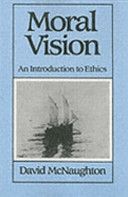
This book introduces the reader to ethics by examining a current and important debate. During the last fifty years the orthodox position in ethics has been a broadly non-cognitivist one: since there are no moral facts, moral remarks are best understood, not as attempting to describe the world, but as having some other function – such as expressing the attitudes or preferences of the speaker. In recent years this position has been increasingly challenged by moral realists who maintain that there are moral facts; there is a truth of the matter in ethics, which is independent of our views, and which we seek to discover. Unfortunately much of this interesting debate found in the work of McDowell, Wiggins, Putnam, Blackburn and others is not easily accessible to undergraduates. McNaughton presents many of the major issues in ethics by way of a clear exposition of both sides of this argument and assumes no prior knowledge of philosophy. Topics discussed include: moral observation, moral motivation, amoralism and wickedness, moral weakness, cultural relativism and utilitarianism. The book concludes that a convincing case can be made out for a radical form of moral realism in which moral virtue is found, not in the following of correct moral principles, but rather in the development of moral sensitivity. Moral Vision is a clear and engaged introduction to an important, and often troubling, debate.
Enlightenment philosophers are often credited with formulating many theories about humankind and society, and in our post-modern age, we still live with some of the very same compelling, contentious and often unresolved questions about ourselves and the world we live in. Author Aubrey Neal suggests that one of these issues that lingers with us today is scepticism, and in ‘How Skeptics do Ethics’, he unravels the thread of this philosophy from its origins in enlightenment thinking down to our present age. He contends that linguistics and language have not brought modern philosophy any closer to understanding the role and nature of ethics in our current science-based society. Going further, Neal suggests the contemporary reader meets traditional terms for ethical theory, plausible belief and moral action in a different world from the one in which they were coined. Instead, these considerations for modern thinkers require a coherent language practice suitable for the social context in which we live, and thus raise the question of the meaning of old philosophical debates and their value for our society today. Referencing such luminary thinkers as Hume, Kant, and Hegel, Neal seeks to re-ignite age old questions and awaken the reader to a sense that our contemporary modes of reference and understanding should be seen from a substantially different point of view. Challenging, bracing, and entirely unflinching, ‘How Skeptics do Ethics’ is a wake-up call for anyone who thinks seriously about our society, ourselves, and the world in which we live.
ما از اخلاق چه انتظاری داریم؟ این سوال شاید تاحدودی برای عموم مردم و یا متخصصان این رشته قابل پاسخ باشد؛ اینکه خوب بودن را به ما بیاموزد و در تنظیم روابط فردی م...

جشن کتاب تهران به ایستگاه سی و یکم رسیده است. حال و احوال نشر کتاب خوب نیست و باید فرهنگدوستان را به خرید و هدیه دادن کتاب ترغیب نمود. خانه اخلاقپژوهان جوان ب...

بنیاد کتابهای اخلاق اسلامی عمدتا پالایش جان از آلودگیها و آراستن آن به زیباییها است. اندیشه محوری این قبیل کتابها آن است که انسان فعلی آنی نیست که باید باشد...

-
0 Comments