Notice: تابع WP_Block_Type_Registry::register به طورنادرست فراخوانی شد. نامهای نوع بلوک نباید حروف بزرگ داشته باشند. لطفاً برای اطلاعات بیشتر، اشکال زدایی در وردپرس را مشاهده کنید. (این پیام در نگارش 5.0.0 افزوده شده است.) in /home/ethicsho/public_html/wp-includes/functions.php on line 5313
Warning: Use of undefined constant TDC_PATH_LEGACY - assumed 'TDC_PATH_LEGACY' (this will throw an Error in a future version of PHP) in /home/ethicsho/public_html/wp-content/plugins/td-composer/td-composer.php on line 109
Warning: Use of undefined constant TDSP_THEME_PATH - assumed 'TDSP_THEME_PATH' (this will throw an Error in a future version of PHP) in /home/ethicsho/public_html/wp-content/plugins/td-composer/td-composer.php on line 113 بایگانیهای Vernon J. Bourke - خانه اخلاق پژوهان جوان Notice: Trying to access array offset on value of type bool in /home/ethicsho/public_html/wp-content/plugins/wp-ulike/inc/general-functions.php on line 807
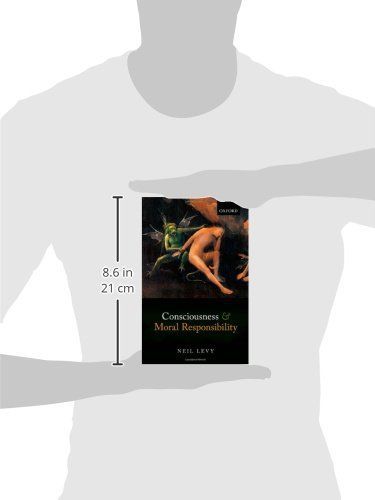
Neil Levy presents an original theory of freedom and responsibility. Cognitive neuroscience and psychology provide a great deal of evidence that our actions are often shaped by information of which we are not conscious; some psychologists have concluded that we are actually conscious of very few of the facts we respond to. But most people seem to assume that we need to be conscious of the facts we respond to in order to be responsible for what we do. Some thinkers have argued that this naive assumption is wrong, and we need not be conscious of these facts to be responsible, while others think it is correct and therefore we are never responsible. Levy argues that both views are wrong. He sets out and defends a particular account of consciousness-the global workspace view-and argues this account entails that consciousness plays an especially important role in action. We exercise sufficient control over the moral significance of our acts to be responsible for them only when we are conscious of the facts that give to our actions their moral character. Further, our actions are expressive of who we are as moral agents only when we are conscious of these same facts. There are therefore good reasons to think that the naive assumption, that consciousness is needed for moral responsibility, is in fact true. Levy suggests that this entails that people are responsible less often than we might have thought, but the consciousness condition does not entail that we are never morally responsible. — Provided by publisher.
This exceptional book examines and explains Plato’s answer to the normative question, “How ought we to live?” It discusses Plato’s conception of the virtues; his views about the connection between the virtues and happiness; and the account of reason, desire, and motivation that underlies his arguments about the virtues. Plato’s answer to the epistemological question, “How can we know how we ought to live?” is also discussed. His views on knowledge, belief, and inquiry, and his theory of Forms, are examined, insofar as they are relevant to his ethical view. Terence Irwin traces the development of Plato’s moral philosophy, from the Socratic dialogues to its fullest exposition in the Republic. Plato’s Ethics discusses Plato’s reasons for abandoning or modifying some aspects of Socratic ethics, and for believing that he preserves Socrates’ essential insights. A brief and selective discussion of the Statesmen, Philebus, and Laws is included. Replacing Irwin’s earlier Plato’s Moral Theory (Oxford, 1977), this book gives a clearer and fuller account of the main questions and discusses some recent controversies in the interpretation of Plato’s ethics. It does not presuppose any knowledge of Greek or any extensive knowledge of Plato.
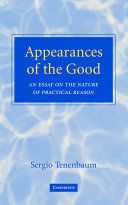
‘We desire all and only those things we conceive to be good; we avoid what we conceive to be bad.’ This slogan was once the standard view of the relationship between desire or motivation and rational evaluation. Many critics have rejected this scholastic formula as either trivial or wrong. It appears to be trivial if we just define the good as ‘what we want’, and wrong if we consider apparent conflicts between what we seem to want and what we seem to think is good. In Appearances of the Good, Sergio Tenenbaum argues that the old slogan is both significant and right, even in cases of apparent conflict between our desires and our evaluative judgments. Maintaining that the good is the formal end of practical inquiry in much the same way as truth is the formal end of theoretical inquiry, he provides a fully unified account of motivation and evaluation.
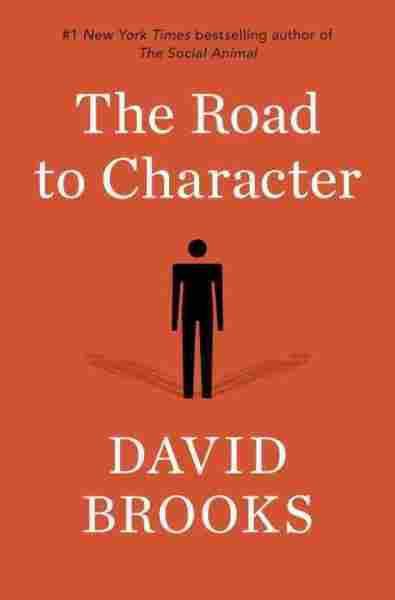
#۱ NEW YORK TIMES BESTSELLER • David Brooks challenges us to rebalance the scales between the focus on external success—“résumé virtues”—and our core principles. NAMED ONE OF THE BEST BOOKS OF THE YEAR BY THE ECONOMIST With the wisdom, humor, curiosity, and sharp insights that have brought millions of readers to his New York Times column and his previous bestsellers, David Brooks has consistently illuminated our daily lives in surprising and original ways. In The Social Animal, he explored the neuroscience of human connection and how we can flourish together. Now, in The Road to Character, he focuses on the deeper values that should inform our lives. Looking to some of the world’s greatest thinkers and inspiring leaders, Brooks explores how, through internal struggle and a sense of their own limitations, they have built a strong inner character. Labor activist Frances Perkins understood the need to suppress parts of herself so that she could be an instrument in a larger cause. Dwight Eisenhower organized his life not around impulsive self-expression but considered self-restraint. Dorothy Day, a devout Catholic convert and champion of the poor, learned as a young woman the vocabulary of simplicity and surrender. Civil rights pioneers A. Philip Randolph and Bayard Rustin learned reticence and the logic of self-discipline, the need to distrust oneself even while waging a noble crusade. Blending psychology, politics, spirituality, and confessional, The Road to Character provides an opportunity for us to rethink our priorities, and strive to build rich inner lives marked by humility and moral depth. “Joy,” David Brooks writes, “is a byproduct experienced by people who are aiming for something else. But it comes.”Praise for The Road to Character“A hyper-readable, lucid, often richly detailed human story.”—The New York Times Book Review “This profound and eloquent book is written with moral urgency and philosophical elegance.”—Andrew Solomon, author of Far from the Tree and The Noonday Demon “A powerful, haunting book that works its way beneath your skin.”—The Guardian“Original and eye-opening . . . Brooks is a normative version of Malcolm Gladwell, culling from a wide array of scientists and thinkers to weave an idea bigger than the sum of its parts.”—USA Today
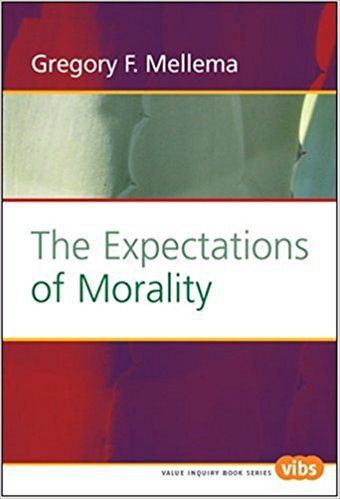
ما از اخلاق چه انتظاری داریم؟ این سوال شاید تاحدودی برای عموم مردم و یا متخصصان این رشته قابل پاسخ باشد؛ اینکه خوب بودن را به ما بیاموزد و در تنظیم روابط فردی م...

جشن کتاب تهران به ایستگاه سی و یکم رسیده است. حال و احوال نشر کتاب خوب نیست و باید فرهنگدوستان را به خرید و هدیه دادن کتاب ترغیب نمود. خانه اخلاقپژوهان جوان ب...

بنیاد کتابهای اخلاق اسلامی عمدتا پالایش جان از آلودگیها و آراستن آن به زیباییها است. اندیشه محوری این قبیل کتابها آن است که انسان فعلی آنی نیست که باید باشد...

-
0 Comments