Notice: تابع WP_Block_Type_Registry::register به طورنادرست فراخوانی شد. نامهای نوع بلوک نباید حروف بزرگ داشته باشند. لطفاً برای اطلاعات بیشتر، اشکال زدایی در وردپرس را مشاهده کنید. (این پیام در نگارش 5.0.0 افزوده شده است.) in /home/ethicsho/public_html/wp-includes/functions.php on line 5313
Warning: Use of undefined constant TDC_PATH_LEGACY - assumed 'TDC_PATH_LEGACY' (this will throw an Error in a future version of PHP) in /home/ethicsho/public_html/wp-content/plugins/td-composer/td-composer.php on line 109
Warning: Use of undefined constant TDSP_THEME_PATH - assumed 'TDSP_THEME_PATH' (this will throw an Error in a future version of PHP) in /home/ethicsho/public_html/wp-content/plugins/td-composer/td-composer.php on line 113 بایگانیهای Vernon Bouke - خانه اخلاق پژوهان جوان Notice: Trying to access array offset on value of type bool in /home/ethicsho/public_html/wp-content/plugins/wp-ulike/inc/general-functions.php on line 807
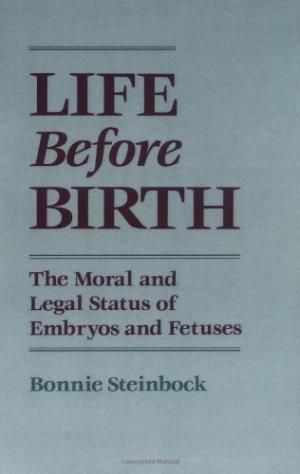
Life Before Birth provides a coherent framework for addressing bioethical issues in which the moral status of embryos and fetuses is relevant. It is based on the “interest view” which ascribes moral standing to beings with interests, and connects the possession of interests with the capacity for conscious awareness or sentience. The theoretical framework is applied to ethical and legal topics, including abortion, prenatal torts, wrongful life, the crime of feticide, substance abuse by pregnant women, compulsory cesareans, assisted reproduction, and stem cell research. Along the way, difficult philosophical problems, such as identity and the non-identity problem are thoroughly explored. The book will be of interest not only to philosophers, but also physicians, lawyers, policy makers, and anyone perplexed by the many difficulties surrounding the unborn.”Bonnie Steinbock’s excellent book is . . . consistent, thoroughgoing, and intelligible.” –Nature”Steinbock’s book is valuable for all interested in the ethical/legal issues surrounding abortion, prenatal injury and liability, maternal-fetal conflict, and fetal/embryo research. The author provides an excellent historical overview of these issues, but she also addresses the issues from the stance of a particular theory of moral status, namely, interest theory. This gives coherence to her discussion as well as allowing testing of the viability of interest theory.” –Choice”A focused, lucid, analytically fine-grained discussion of a wide variety of problems. . . extremely useful as a survey of the current state of the debate.” –Religious Studies Review”Merits serious consideration by physicians. Steinbock’s interests-based approach treats all questions as open — another and most welcome breath of fresh air.” -New England Journal of Medicine”An extremely valuable contribution to the literature. The author carefully identifies the many bioethical issues to which the status of embryos and fetuses is relevant….She thoroughly reviews the extensive medical, bioethical, and legal literature on all of these issues, offering well-developed critiques of many standard positions. She articulates and thoughtfully defends interesting positions on all of theses topics. Anyone with an interest in these issues will learn a great deal from her knowledgeable and judicious treatment of them.” — The Journal of Clinical Ethics
Powerful emotion and pursuit of self-interest have many times led people to break the law with the belief that they are doing so with sound moral reasons. This study is a comprehensive philosophical and legal analysis of the gray area in which the foundations of law and morality clash. This objective book views these oblique circumstances from two perspectives: that of the person who faces a possible conflict between the claims of morality and law and must choose whether or not to obey the penal code; and that of the people who make and uphold laws and must decide whether to treat someone with a moral claim to disobey differently from ordinary lawbreakers. In examining the extent of the obligations owed by citizens to their government, Greenawalt concentrates on the possible existence of a single source of obligation that reaches all citizens and all laws. He also discusses techniques of amelioration of punishment for conscientious lawbreakers, asking how far legal systems should go to accomodate individuals who break the law for reason of conscience. Drawing from numerous examples of conflicts between law and morality, Greenawalt illustrates in detail the positions and predicaments of potential lawbreakers and lawmakers alike.
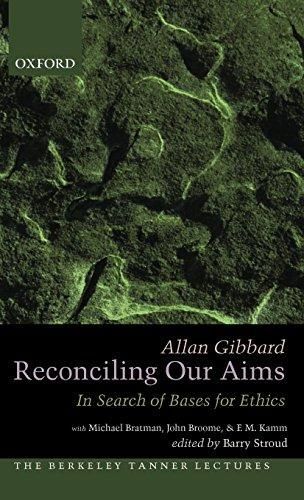
In these three Tanner lectures, distinguished ethical theorist Allan Gibbard explores the nature of normative thought and the bases of ethics. In the first lecture he explores the role of intuitions in moral thinking and offers a way of thinking about the intuitive method of moral inquiry that both places this activity within the natural world and makes sense of it as an indispensable part of our lives as planners. In the second and third lectures he takes up the kind of substantive ethical inquiry he has described in the first lecture, asking how we might live together on terms that none of us could reasonably reject. Since working at cross purposes loses fruits that might stem from cooperation, he argues, any consistent ethos that meets this test would be, in a crucial way, utilitarian. It would reconcile our individual aims to establish, in Kant’s phrase, a “kingdom of ends.” The volume also contains an introduction by Barry Stroud, the volume editor, critiques by Michael Bratman (Stanford University), John Broome (Oxford University), and F. M. Kamm (Harvard University), and Gibbard’s responses.
ما از اخلاق چه انتظاری داریم؟ این سوال شاید تاحدودی برای عموم مردم و یا متخصصان این رشته قابل پاسخ باشد؛ اینکه خوب بودن را به ما بیاموزد و در تنظیم روابط فردی م...

جشن کتاب تهران به ایستگاه سی و یکم رسیده است. حال و احوال نشر کتاب خوب نیست و باید فرهنگدوستان را به خرید و هدیه دادن کتاب ترغیب نمود. خانه اخلاقپژوهان جوان ب...

بنیاد کتابهای اخلاق اسلامی عمدتا پالایش جان از آلودگیها و آراستن آن به زیباییها است. اندیشه محوری این قبیل کتابها آن است که انسان فعلی آنی نیست که باید باشد...

-
0 Comments